


The Hypershell X Ultra is part hiking companion, part wearable robot. After climbing hills with an AI-powered exoskeleton, David Castle explores why this remarkable device could mark the beginning of a new era of assisted human movement
The first few steps feel strange, but then something unexpected happens.
As I begin walking up a steep incline, it feels as though someone has placed a gentle but determined hand on the back of each thigh, encouraging every stride forward. It’s not dragging me or pulling me, just quietly helping in a way that’s surprisingly natural and, before long, oddly addictive.
For a brief moment, I understand what it must have felt like the first time someone rode an e-bike after decades of cycling under their own steam.
This isn’t science fiction anymore. It’s the Hypershell X Ultra – a consumer exoskeleton that promises to make walking, hiking and climbing easier through AI-powered electric assistance – and after trying it at its UK launch, I came away convinced that while the technology is still in its infancy, we’re witnessing the start of something much bigger than another outdoor gadget.
First impressions
Let’s get one thing out of the way: yes, you look slightly ridiculous.
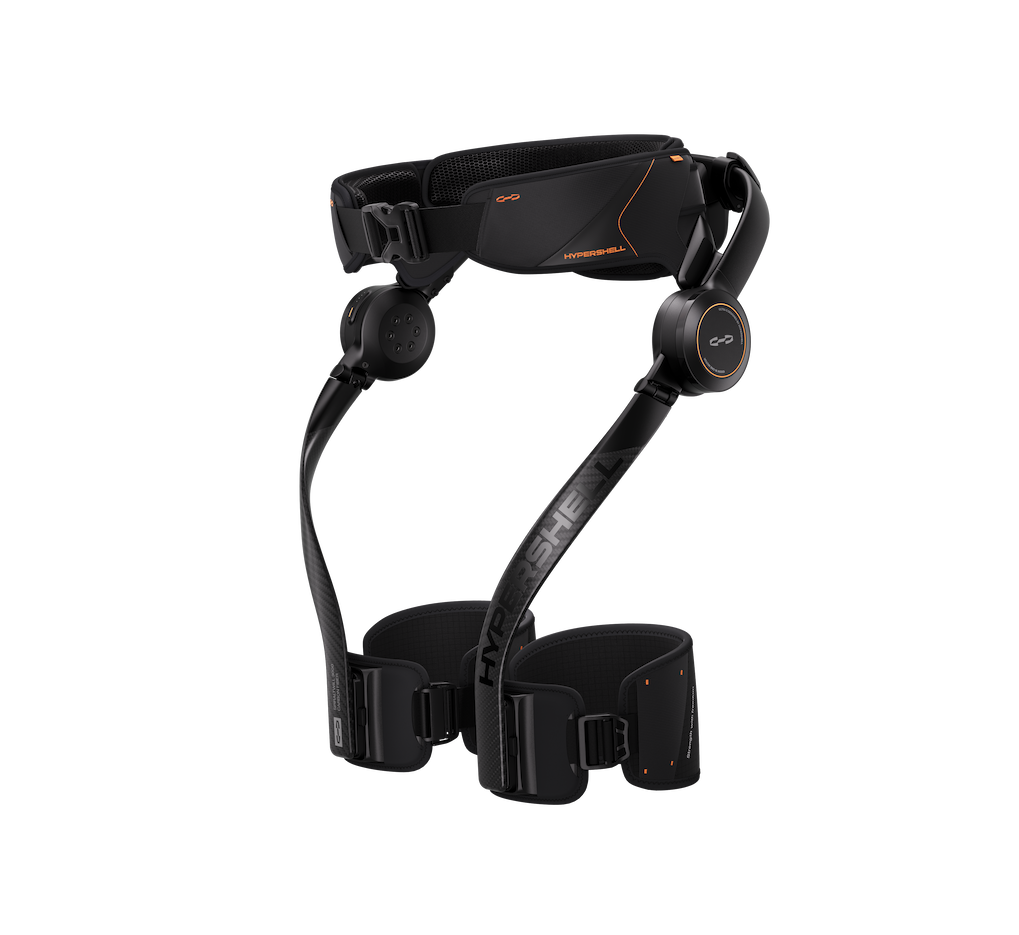
The carbon fibre frame wraps around your waist before extending down to motorised hip joints attached to padded thigh supports, making you feel like Iron Man wearing a hiking backpack or perhaps Inspector Gadget after a trip to an outdoor retailer.
But once it’s fitted, the self-consciousness quickly fades.
At around 1.8kg it’s surprisingly light, and after just a few minutes you largely forget you’re wearing it. The straps are comfortable, the build quality feels excellent and everything about it suggests this is a serious piece of engineering rather than an ambitious Kickstarter curiosity. The flagship model combines carbon fibre and titanium with a 1,000W motor, is rated to work between -20°C and 60°C, and is clearly designed to withstand serious outdoor use.
Surprisingly simple
I expected the technology to be intimidating, but it turned out to be anything but.
Pairing the Hypershell with my phone via Bluetooth took only a few seconds, while the companion app guides you through the setup process before allowing you to choose different operating modes depending on exactly what you’re planning to do.
There are modes for walking, hiking, climbing, descending, trail running and even cycling, with Eco mode prioritising endurance, Hyper mode delivering maximum assistance and a dedicated Fitness mode that can deliberately add resistance if you’re looking for training rather than simply making life easier.
In practice, it all feels much more like setting up a smartwatch than configuring a wearable robot.

The moment it clicks
The real revelation comes when the path starts climbing. On the flat, the assistance is subtle enough that it’s easy to forget the motors are doing anything at all, although you do notice that your stride feels smoother and slightly more effortless.
Start walking uphill, however, and everything changes.
Every step suddenly feels boosted as the exoskeleton senses your movement using an array of onboard sensors, predicts where your leg wants to go next and applies torque through the hips at exactly the right moment. Rather than lifting you off the ground or taking over completely, it simply removes some of the effort required to swing your leg forwards.
The sensation is surprisingly difficult to describe because it never feels mechanical. It simply feels… lighter.
Walking uphill, I found myself naturally increasing my pace without consciously trying, while my legs simply felt fresher than they normally would.
That’s probably the biggest compliment I can give it because, after five minutes, you stop thinking about the technology altogether and simply walk.
Who is it actually for?
The obvious audience is hikers, because anyone tackling long-distance trails, mountain expeditions or multi-day treks could genuinely benefit from reducing fatigue over thousands of steps.
But after wearing it myself, I suspect that’s only the beginning.
I found myself thinking about older walkers wanting to continue exploring hills, photographers carrying heavy camera gear, mountain rescue volunteers hauling equipment across difficult terrain, wildlife researchers, search-and-rescue teams, people recovering from injuries who still have sufficient mobility but need a little assistance, and even parents carrying children in hiking backpacks.
The company already highlights rescue organisations as potential users, and after trying it, it’s easy to see why. The combination of reduced fatigue and extended endurance could prove genuinely valuable in demanding environments.
The limitations
The biggest obstacle isn’t the technology. It’s the price.
At launch, the flagship model costs around £1,699, with more affordable versions available lower down the range, placing it firmly in early-adopter territory.
Battery life is also highly dependent on how much assistance you demand. Eco mode can last all day, while maximum power understandably drains the battery much faster, although Hypershell claims an assisted hiking range of around 30km per battery under typical conditions.

There’s another question too. Do we really need powered walking?
Some people will inevitably argue that this is solving a problem that doesn’t exist, but exactly the same criticism was once levelled at electric bikes. Today, they’re everywhere.
The bigger story
That’s why I don’t think the Hypershell is really about hiking at all. It’s about where wearable robotics are heading.
For decades, exoskeletons existed almost exclusively inside hospitals, military research programmes and industrial warehouses, but now they’re becoming consumer products that are lighter, cheaper, smarter and far less obvious than the bulky machines that came before them.
Most importantly, they’re beginning to anticipate movement rather than merely reacting to it, with Hypershell’s system using multiple sensors and AI algorithms to predict how you’re moving and make the assistance feel remarkably natural instead of robotic.
Today’s e-bike moment?
If you’ve never ridden an e-bike before, the first experience is genuinely transformative because you’re still pedalling and still exercising, but suddenly the hills feel flatter, journeys become longer and adventure becomes more accessible.
I suspect consumer exoskeletons are about to follow exactly the same path.
At first they’ll appeal to enthusiasts and early adopters, but over time prices will fall, weight will halve, battery life will double and the motors themselves will gradually disappear inside clothing.
Eventually, we may stop thinking of them as exoskeletons altogether. They’ll simply become wearable mobility.
Beyond stronger legs
The implications stretch far beyond hiking. Imagine warehouse workers finishing long shifts without back pain, nurses moving patients with less physical strain, airport baggage handlers, delivery drivers, construction workers or older adults remaining independent for another decade.
Eventually these systems may integrate directly with health data, allowing your wearable to detect rising fatigue, an elevated heart rate or reduced muscle performance before automatically increasing assistance or gradually reducing support over time as your fitness improves.
Instead of replacing exercise, it could personalise it, turning your exoskeleton into both a coach and a training partner.
Where AI really matters
Everyone talks about AI writing emails, but I’m much more interested in AI moving bodies.
The truly impressive part of the Hypershell isn’t the motor because motors are relatively easy. The difficult challenge lies in predicting human intention quickly enough that the technology effectively disappears.
That’s exactly what companies are now trying to achieve, because when assistance feels invisible rather than mechanical, adoption accelerates.
Just as smartphones became successful when their interfaces disappeared behind intuitive gestures, exoskeletons will succeed when users stop thinking about the fact they’re wearing robots at all.
The verdict
The Hypershell X Ultra isn’t perfect. It’s expensive, undeniably niche and you’ll certainly attract a few curious looks while wearing one on public footpaths.
But none of those criticisms really matter because, after trying it, I no longer think the important question is whether consumer exoskeletons will become mainstream.
It’s when. Twenty years ago smartphones seemed unnecessary; 15 years ago smartwatches looked gimmicky; and ten years ago electric bikes were dismissed as cheating.
Today they’re all completely normal. Walking out of the demonstration, my overwhelming feeling wasn’t that I’d simply tried an interesting gadget, but that I’d experienced the opening chapter of an entirely new category of personal technology.
And for a few minutes on a steep hill, I really did feel just a little bit like Iron Man.
• for more information, visit Hypershell