

Muscle loss begins in your forties and accelerates with age, but changing how much protein you eat – and how you spread it throughout the day – can help preserve strength, mobility and metabolic health. A nutritionist explains the science and the simple changes that make the biggest difference
As we all know, protein’s efficacy for building muscle is well-documented. What gets talked about far less, however, is how important the macronutrient is for maintaining muscle mass, particularly once youʼre over 40-years-old.
To find out whatʼs actually going on inside ageing muscle, where protein comes into the occassion and, crucially, whether we should be paying closer attention to our plates, Men’s Fitness spoke to Rachel Butcher (ANutr, SENr), Head of Nutrition at Natural Fitness Food, about everything from anabolic resistance to whether protein really can protect your brain. Pull up a chair. Or a plate.
Muscle loss starts earlier than you think
“From our 40s onwards, we lose roughly 3–8% of muscle mass every decade, and that accelerates after 60-years-old,” says Butcher, describing a process known as sarcopenia.
Itʼs easy to file this under vanity, but she stresses that it goes beyond what we see in the mirror. Muscle acts as a metabolic reserve, influencing blood sugar control, mobility, fall risk and recovery from illness or hospital stays, each a fundamental part of our well-being as we age. Protein supplies the amino acids the body needs to keep repairing that tissue. “Protein is how we fight back.”
Why older muscles need a bigger hit of protein
This requirement to keep on top of your protein isnʼt just about eating more overall; itʼs about clearing a higher threshold at each meal. Butcher describes the concept of “anabolic resistance”, where ageing muscle needs a larger protein stimulus than younger muscle to trigger the same repair response.
While younger adults might get by on smaller portions, older adults typically need 30–40g per meal to properly kick-start that process. “They typically need larger protein servings per meal, around 0.4 g/kg, or roughly 30-40 g, to overcome this blunted response,” says Butcher.
The standard RDA of 0.8g/kg, she explains, is “really just the minimum to avoid deficiency”. Most nutrition bodies now recommend 1.0–1.2g/kg/day for healthy older adults, spread across three or four meals rather than saved for dinner. Your lunchbox will never look the same.
The brain connection is real, but overstated
Given proteinʼs reputation, itʼs tempting to assume it protects our cognition as well as our muscle mass. Butcher describes that while some studies have linked higher fish and poultry protein intake to a lower risk of cognitive decline, a systematic review looking specifically at this question found the evidence “weak”, concluding that adequate protein is more likely a marker of good overall nutrition than a standalone brain booster.
“Protein supports the muscle and metabolic health that indirectly protects the brain,” she explains, “but itʼs not a proven cognitive intervention” in the way omega-3s or B-vitamins are more commonly framed.

Food first, supplements second
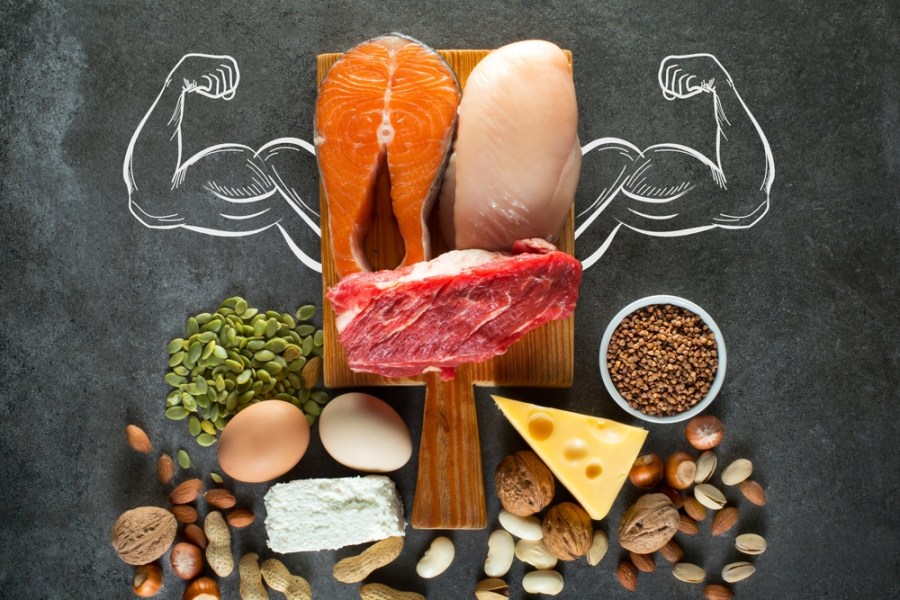
Butcherʼs approach to upping your protein intake is about prioritising whole foods. Eggs, dairy, fish, poultry, legumes and tofu all help hit that 30–40g target while bringing along useful extras like choline, calcium, iron and fibre.
However, Butcher acknowledges reality gets in the way for many older adults, whether thatʼs reduced appetite, dental issues or simply smaller meals. “Thatʼs where a whey or plant-based protein powder earns its place,” she says, “not as a replacement for real food, but as an efficient top-up.”
A slower-digesting casein option before bed, she adds, can support repair overnight. “Think of supplements as filling the gap between what someone can realistically eat and what their muscles now need.”
Donʼt forget creatine, omega-3s and vitamin D
Protein isnʼt the whole story. Butcher explains how creatine monohydrate another incredibly popular training supplement, also often linked with improved cognition – as “the standout”, citing a review of six studies and over 1,500 older adults, five of which found a positive relationship between creatine and cognition, especially memory and attention, alongside its well-established role in preserving muscle strength and explosive power.
Omega-3 evidence, however, is patchier: large trials in healthy older adults have found no significant cognitive benefit despite promising observational data. Vitamin D and calcium, meanwhile, remain “essential for the bone side of the ageing equation” and often get overlooked once protein takes centre stage in the conversation.
The final word
So where does this leave us? Should we stock up on rotisserie chickens, lentils, tins of tuna and five-kilo tubs of protein powder? Not quite, but equally its certainly worth paying attention to your overall intake as you age and as vairous niggles may appear.
“As we age, our muscles get worse at using the protein we consume,” says Butcher, “so we need more of it, spread more evenly across the day to get the same result.”