

Forget your bench press and your 5K time. This surprisingly simple test could reveal more about how well you’re likely to age than many traditional measures of fitness
A few months ago I watched a friend spend thousands on a new road bike. Carbon frame, electronic gears, wheels that looked as though they’d been borrowed from a Tour de France team. Yet when we stopped for coffee, he lowered himself into a chair with all the grace of a wardrobe being pushed down a staircase.
It struck me that many of us have become very good at training the things that impress people and surprisingly bad at training the things that matter.
For years, I’ve judged fitness the way most men do. How much can you lift? How fast can you run? How lean are you? These are the numbers we compare, celebrate and occasionally exaggerate. But recently I came across a test used by researchers, physiotherapists and ageing experts that measures something altogether different.
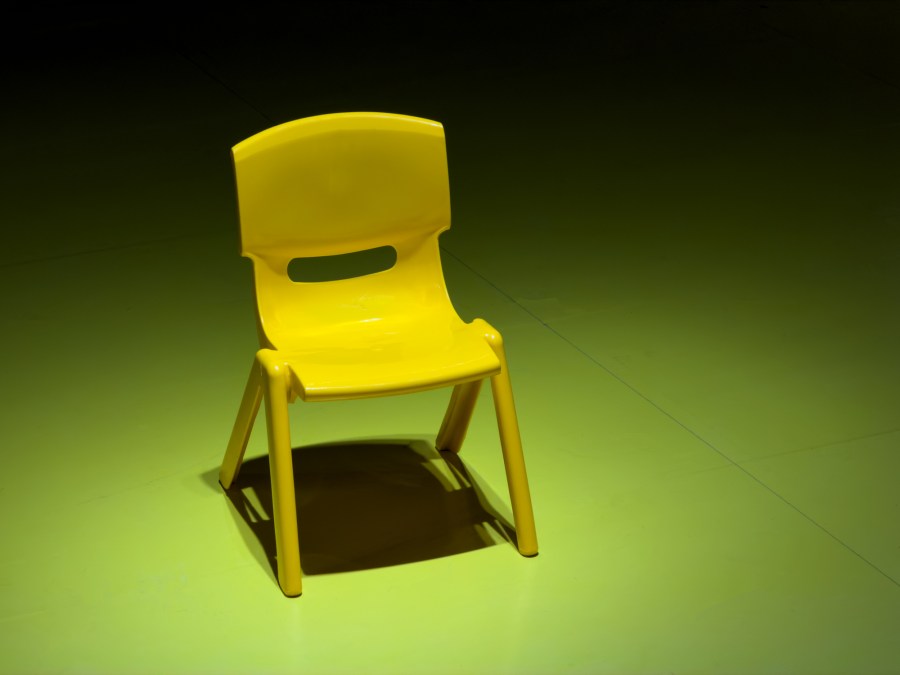
All you need is a chair and 30 seconds.
It’s called the 30-second sit-to-stand test, and the challenge is straightforward. Sit in a chair with your arms crossed over your chest. When the timer starts, stand up fully and sit back down as many times as you can within 30 seconds.
A simple test which reveals a lot
Simple? Yes. Easy? Not necessarily. The test was developed as part of the Fullerton Functional Fitness Test, a battery of assessments designed to measure physical function in older adults.
Researchers were interested in finding practical ways to assess lower-body strength without requiring expensive equipment or laboratory testing.
What they discovered was that this humble movement reveals a great deal about how well the body is functioning.
Standing up from a chair isn’t just about leg strength. It requires balance, coordination, mobility and muscular endurance. More importantly, it’s a movement we perform dozens of times every day without giving it a second thought. Until, of course, it becomes difficult.
That’s why many ageing experts place such emphasis on lower-body strength. The ability to rise from a chair, climb stairs, carry shopping and recover from a stumble are all closely linked to maintaining independence later in life.
In other words, the sit-to-stand test isn’t really measuring fitness. It’s measuring capability. And that’s where things become interesting for men over 50.

At 25, fitness is often about performance. You train to look better, run faster or lift heavier weights. By 55, the stakes are different. The goal isn’t simply to perform well in the gym. It’s to maintain the physical abilities that allow you to keep doing the things you enjoy for decades to come.
The uncomfortable truth is that many men continue to train as though they are preparing for a physique competition while neglecting the qualities that matter most as they age.
Research consistently shows that muscle mass and strength decline with age, a process known as sarcopenia. Without intervention, this gradual loss of muscle can affect mobility, balance and overall quality of life. The decline often begins earlier than people realise and accelerates during later decades.
The good news is that strength is remarkably trainable, even in older adults. Which brings us back to the chair.
Normative scores vary by age, but generally speaking, men aged 50 to 59 should be aiming for around 14 to 17 repetitions or more. For men in their sixties, scores above 12 are typically considered healthy, while men in their seventies often perform between 10 and 13 repetitions.
The exact number isn’t the most important thing. What matters is recognising whether everyday movements feel effortless or challenging.
Because if standing up from a chair repeatedly leaves your legs burning and your breathing laboured, it may be telling you something valuable.
Improvement is simple
Fortunately, improving your score doesn’t require any fancy biohacking protocol.
The exercises that matter are surprisingly familiar: squats, step-ups, lunges, loaded carries and regular walking. Even practising getting up and down from the floor can improve mobility, balance and confidence.
The common theme is functionality. These movements train the body for real life rather than for social media.
That’s what appealed to me about the sit-to-stand test. It cuts through the noise.
Fitness culture is obsessed with optimisation. We’re constantly searching for the perfect workout, supplement or wearable. Yet one of the most useful assessments of healthy ageing can be performed in your kitchen with a dining chair and a stopwatch.
After trying the test myself, I found it both reassuring and slightly humbling. Not because the result was particularly remarkable, but because it shifted my perspective.
In it for the long run
The older I get, the less interested I am in proving what my body can do on its very best day. I’m more interested in preserving what it can do every day.
Maybe that’s the real lesson of the 30-second sit-to-stand test.
The best measure of fitness after 50 isn’t necessarily how much weight you can lift. It’s whether you’re building a body capable of carrying you confidently through the decades ahead.