
From cognitive shuffling and cyclic sighing to smarter naps and morning sunlight, these expert-backed techniques can help you fall asleep faster and improve the quality of your rest
You can train harder than anyone in the gym and eat like an elite athlete, but you’ll still lose out if you’re struggling with your sleep. That’s because continued bouts of bad sleep won’t just leave you groggy; it will subtly wreck your reaction time, your mood and even your gains.
The fix isn’t complicated, thankfully. Researchers and scientists who study this for a living rely on a handful of simple, repeatable habits — including a mental trick to shut off racing thoughts, a breathing pattern that calms the nervous system, one specific supplement worth taking seriously and smarter use of naps and daylight – to name a few. Here’s what actually works.
Cognitive shuffling
Cognitive shuffling is exactly what it sounds like: deliberately scrambling your thoughts so your brain can’t latch onto anything stressful enough to keep you awake.
The technique, developed by cognitive scientist Luc Beaudoin, involves picking a random, neutral word — lamp, for example — then thinking of as many unrelated words starting with each letter as you can (llama, leaf, lane, for example, then aardvark, apple and audience), conjuring a quick mental image for each one. It sounds a little obtuse, but that’s the entire point.
Your brain associates focused, linear thinking with being awake, so feeding it disjointed, low-stakes imagery instead mimics the mental static that naturally occurs as you drift off, gently nudging you towards sleep rather than away from it. Give it a go and thank us later.
Cyclic sighing
Next, cyclic sighing works on your body rather than your mind. Also known as the slow sigh, it involves two inhales through the nose — one long, one short and sharp — followed by one long, slow exhale through the mouth.
Podcaster and neuroscientist Andrew Huberman has popularised the technique, and the mechanism is straightforward: the double inhale re-inflates collapsed air sacs in your lungs, while the extended exhale activates your parasympathetic nervous system, the ‘rest and digest’ switch that lowers heart rate and eases you out of fight-or-flight mode.
After a few rounds of this in bed, you’ll feel your shoulders drop.
Magnesium glycinate
There’s a reason why magnesium glycinate has become the internet’s favourite sleep supplement. Magnesium helps activate GABA receptors in the brain, the same ones responsible for quietening down neural activity, while the glycine it’s bound to is an inhibitory neurotransmitter linked to deeper, more restorative sleep.
The evidence isn’t quite as dramatic as some supplement marketing suggests, though. A 2025 randomised, double-blind, placebo-controlled trial of 155 adults with poor sleep found that magnesium bisglycinate did produce a statistically significant improvement in insomnia symptoms over four weeks compared with placebo — but the effect size was small.
In other words, it’s not a knockout cure, but it’s a legitimate, low-risk addition to a broader sleep routine rather than a stand-alone fix.
Nap time
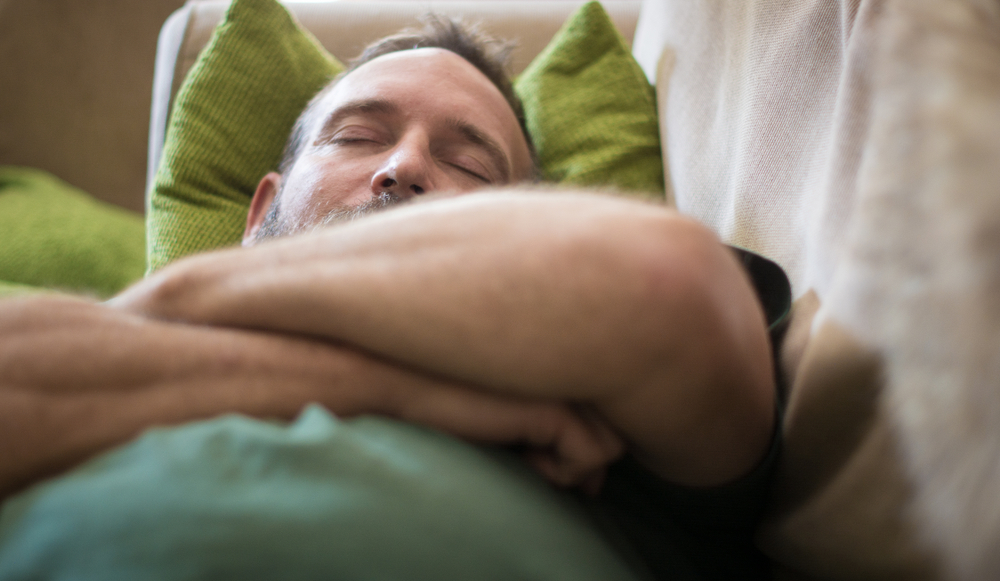
There are more similarities between sleep scientists and elite athletes than you may realise. One common denominator between the two is that they’re both huge advocates of taking a nap in the middle of the day.
Not only will it give your energy levels a top-up (a welcome boost for athletes training or competing multiple times each day), but it will help soften the blow of exhaustion. For example, if you’ve been awake for 24 hours or over, your reaction time slows by approximately 50%.
If you’re lifting heavy weights, or more simply driving to and from work, this means you’re not only putting yourself in danger, but you could be doing the same for others, too. Not only that, but taking a mid-afternoon daytime nap can significantly boost memory, improve positive mood, and reduce sleepiness for up to four hours after waking. Win, win, win.
Sunlight exposure
Being mindful of sunlight isn’t really about getting to sleep at night — especially in summer — it’s about setting the clock that decides when you’ll feel tired in the first place. Getting outside within the first half hour or so of waking, ideally for ten to thirty minutes, tells your circadian rhythm that the day has officially started.
That morning hit of light suppresses melatonin and helps to anchor a cortisol spike at the right time, which in turn dictates when melatonin gets released roughly fourteen to sixteen hours later, making you sleepy on schedule that evening.
Skip it, however, and your body clock can drift — which is why so many people who work from home under artificial light, then squint at a phone screen till midnight, end up feeling wired at midnight and wrecked in the morning.
You don’t need direct sun or cloudless skies for it to work, either; even on a grey morning, outdoor light is considerably brighter than anything indoors, so the effect still lands. The rest of your sleep architecture should fall into line afterwards.