

Want more power, faster reactions and fewer injuries on court? These are the mobility, endurance and strength drills used by tennis’s biggest stars
Wimbledon, the pinnacle of the tennis calendar is here, marking both the official start of summer, and the time of the year where we all remember we absolutely love tennis.
If you’re a semi-causal player looking to get a bit more serious about things this year, raising your game, or doing what you can to prevent injuries, we’ve put together a breakdown of essential training blocks specifically for tennis players. Add these to your routine for a little while, and you’ll find your tennis game improving too.
Mobility workouts for tennis
Strength, speed, and stamina are all important, and likely already byproducts of the workouts you do. Mobility is something people tend to either be very focused on, or neglect. But it is an integral part of training for tennis pros – covering court, changing direction, reaching shots and generating power are all largely to do with mobility.
It’s also a key area when it comes to injuries, your connective tissue will thank you, if you are mobile enough to not be overstretching when you lunge for a drop shot.
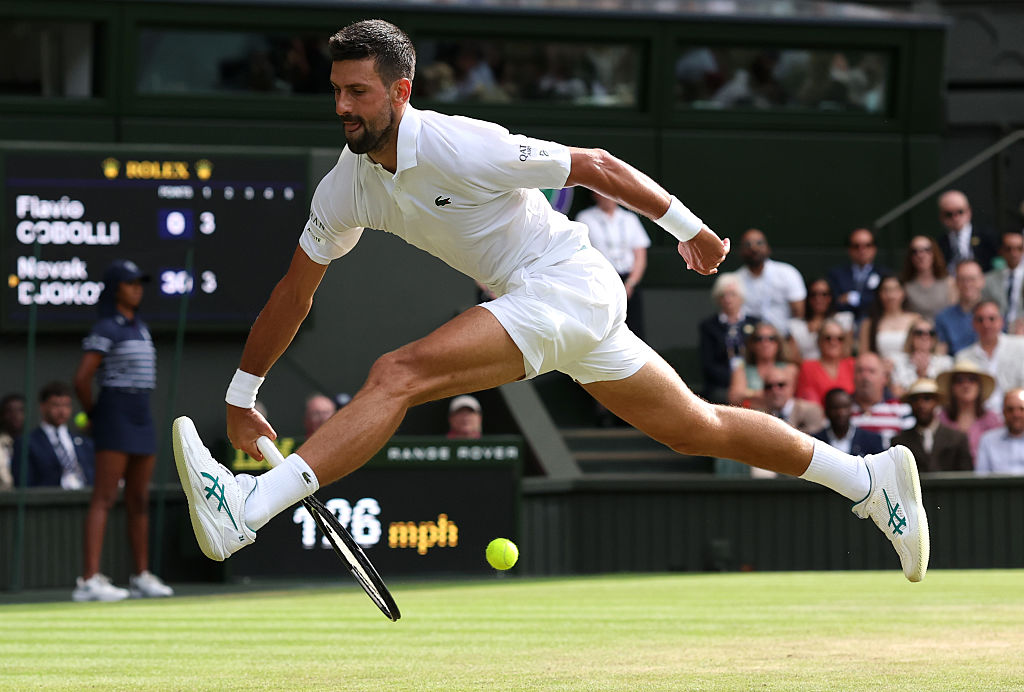
Few athletes have the mobility of Novak Djokovic. As well his devotion to yoga, which he does daily, dynamic stretches are a key part of his warm-up. According to geau sport, he will activate his body with a five minute gentle jog, before proceeding to dynamic stretches such as squat thrusts, jumping jacks, reverse lunge with backward reach, lunge with side bend, walking high knees, low side-to-side lunge, walking high kicks, and inchworms. He will spend 15 – 20 minutes going through these movements, keeping things controlled and steady, focusing on range of motion and form.
He’s also an advocate of foam rolling, using it to open his hip flexors, IT band and achilles, in particular. Typically he’ll focus on each area for about two minutes before switching to the next – again slow and precise is key.
Tennis-specific endurance
Tennis is a relentless game of explosiveness and agility, with the potential to last hours. In the longest professional match of all time, John Isner and Nicolas Mahut are said to have lost potentially as much as 6900 calories over their gruelling eleven hour match. A solid endurance routine is very, very important in this sport.
Shuttle runs, everybody’s favourite, are worked plenty. Which makes complete sense as it is essentially the bulk of tennis movement. Tennis players often use the Luc Léger test to gauge where their MAS (Maximal Aerobic Speed) is at, so these can be worth incorporating into training.
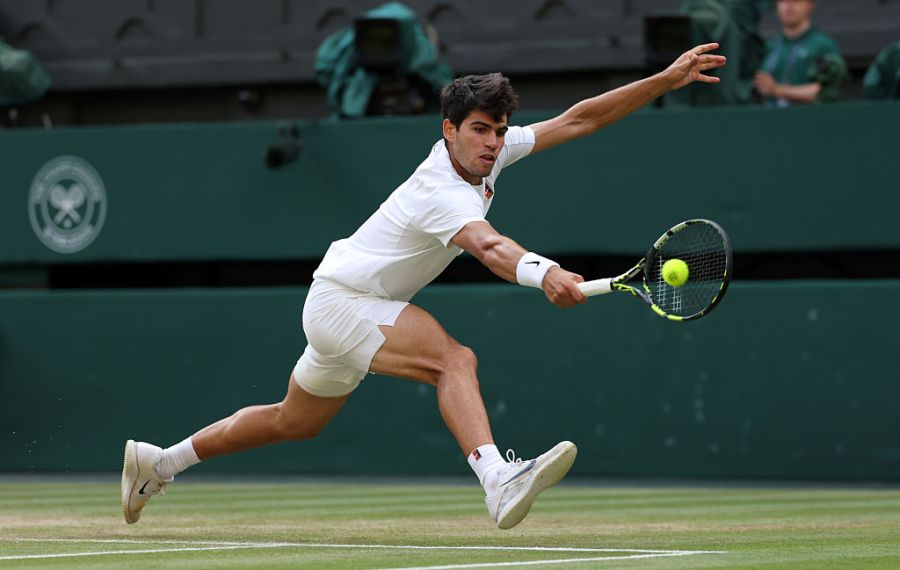
When it comes to specific workouts, much of the endurance work is about these high-intensity fast-recovery situations, alongside building agility. Carlos Alcaraz might be dealing with a wrist injury at the moment, but when it comes to court coverage and fitness, he is the current dominant force. His workouts include resistant band sprints, agility ladder routines such as in-in-out-out drills and reaction drills.
Typical cardio work such as HIIT sessions, and longer-distance running and cycling also fit into the routine to build VO2 and the mental fortitude of a never-ending match.
The strength work tennis professionals prioritise
Tennis players aren’t typically jacked, but their specific approach to strength is very dialled in. You can become the fittest person of all time, but you’re not going to outrun 124mph groundstrokes all day. Power-generation is a key part of the tennis routine. Lunges, squats, and chest presses are all key components, but you probably already do those.
Aryna Sabalenka is a particularly feared opponent for her strength and hitting power. The bulk of the strength work is based around helping her to increase rotational core stability and energy transfer (as well as explosive power, of course).
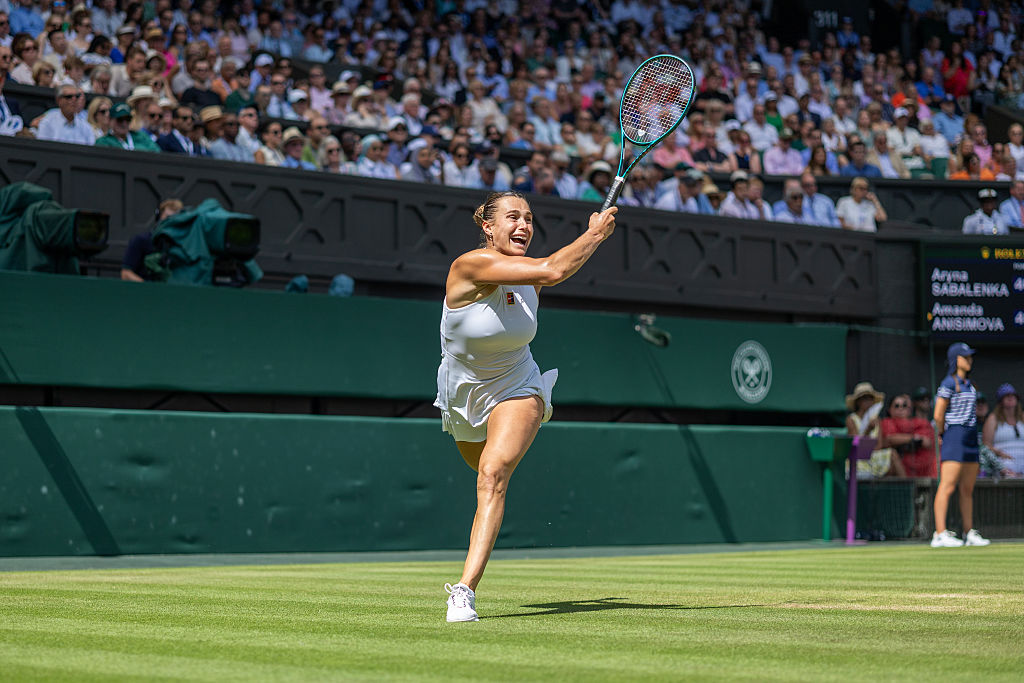
She is often seen incorporating medicine ball throws, cable rotations, and wood choppers into the routine will blast your core and build rotational power, while also building full-body coordination. Rotational throws are a tennis favourite, as they replicate twisting motions that are needed for returning the ball, but overhead slams can also be effective when it comes to serves and volleys.
You’re probably going to want to add wrist exercises in too. Ball squeeze are simple but effective. Grab a tennis ball if you don’t have a dedicated stress ball, powerful squeezes and releases done for 20 seconds on each hand will help to build strength, reducing pressure on tendons, which ultimately is where tennis elbow arises. Towel twists (essentially the motion you would do to wring out water) are also effective.
Plenty of these movements can fit within current routines, but will refine your goals toward getting the most out of your time on court this year. Plus, it’s always fun to mix up training here and there!