


This is the short breathwork practice renowned human biologist and biohacker Gary Brecka does every night to help his sleep hygiene, quieten his mind – and achieve consistent sleep
Sleep is incredibly important, we know this. Those who have read Matthew Walker’s seismic Why We Sleep have found themselves realising that sleep health is probably the single biggest setback to their wellbeing. According to the Mental Health Foundation, the average adult gets less than half the “good quality sleep” we need.
When it comes to quieting the mind and actually falling asleep, Mental Health UK reports that 25% of adults in the UK cite money worries as negatively impacting their sleep, while 37% of adults in the UK cite work as reducing the amount of control they feel they have over their sleep.
It’s a huge problem, but the renowned human biologist and biohacker Gary Brecka may have an answer that’s free and requires no equipment – breathwork.
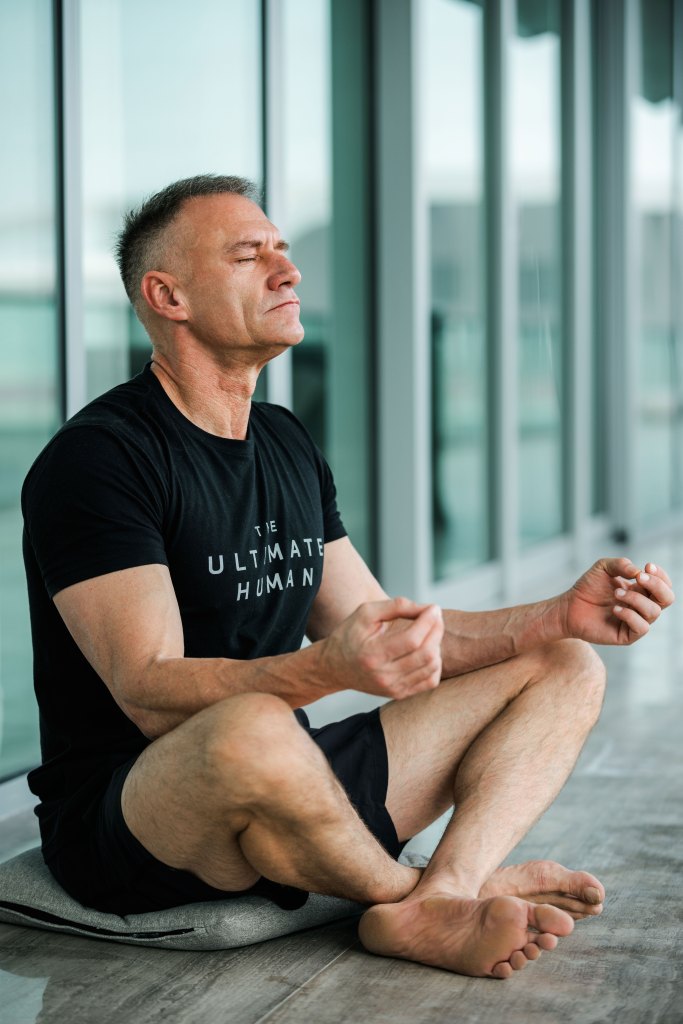
How breathwork helps sleep
A lot of us have a hard time quieting our mind, especially at night. “Most people are not sleeping, not because they’re not tired, but because their mind is awake or overstimulated,” Brecka says explaining that this is why people find themselves ruminating – the environment quietens but the mind keeps itself busy and alert.
“We’re circadian creatures, we have a biological clock. We used to be very, very tied to the circadian cycle of the earth – as the earth slept and woke, we slept and woke. We’ve very much lost touch of this in modern society,” he says. Because we control everything from indoor lighting to temperature, we have gotten out of sync with natural biological rhythms as a result.
One of the things that breathwork does is it helps reset your biological clock. It’s about association. “If you do the same breathwork technique, in relatively the same time frame, every day, your body will begin to rely on that as a cue for what’s about to happen. Here, it’ll help you to sleep quicker and with less stress,” he adds.
The sleep routine
Brecka’s routine begins with “putting an eye mask on, taking a slow inhale through the nose, pausing for two seconds, and then exhaling with a very extended release, of 10 to 12 seconds long through pursed lips.” Brecka emphasises that the exhale should feel like an exaggerated amount of time to get the air out.
“Imagine a small straw between your lips and blowing the air out through that straw,” he says. The idea is to get into a rhythm with this deep inhale and prolonged exhale, you’ll soon find yourself drifting off.
“It really calms the nervous system down, it shifts you from the noise of your day and fight or flight state, into a parasympathetic state – a rest and digest state, the opposite of fight and flight.”
Particularly with sleep, you don’t want to put too much pressure on what you’re doing. The technique is simple, provided you’re doing it right, there’s no need to overthink it. More than anything, it’s about association or classical conditioning, than being completely optimal day-to-day.
Why does this work?
Most of us are inconsistent with when we sleep and wake. We don’t have good sleep hygiene. We don’t have any mechanisms or signals to tell our mind and body that we’re going to bed, other than getting into bed – our workloads change, life gets in the way.
“By ending the day with breathwork, there is some consistency. It is astounding how much our body can respond to these cues. That’s why I say your breathing pattern is a remote control for your physiology. You can change your breath to change your state,” Brecka says. He also has a breathwork routine for waking up, and relies on both to top and tail each day with consistency.
“It’s one of those great biohacks, like a cold shower, that just pays dividends and doesn’t cost a dime,” he explains.
A device that allows us to switch off and find sleep consistently, for free, which can be done from anywhere, no equipment necessary. It’s worth a go, surely…