
Just 10 minutes each morning can improve mobility, ease stiffness and help protect your joints. These simple stretches target the areas that tighten most as we age
PICS: GETTY IMAGES
Imagine how you’d feel if within the first half hour of your waking day, you had done the basics to get your body moving well, energised, and protected from those sneaky domestic injuries like ‘pulling your back while reaching to pick something off the floor’. You’d feel great. And that, is why you need to start stretching every day.
Why is stretching important
According to Harvard Medical School stretching helps to keep flexibility in the muscles. A lack of flexibility in the muscles can lead to tightening, which means “when you call on the muscles for activity, they are unable to extend all the way. That puts you at risk for joint pain, strains, and muscle damage.”
How to stretch effectively
The key to stretching well is to be precise, controlled, and not to do it quite literally the second you get out of bed. The muscles need a little bit of movement in them to warm up before they’ll stretch safely – a very brief walk should do it, a stroll around the block perhaps, less than ten minutes. You may as well stretch outside, as you’re there, weather permitting. Nature, is good.
When it comes to the actual stretch, a slow and controlled approach is good. Aim for 30 – 60 seconds per hold. You don’t want to be bouncing at all, and if there’s pain as opposed to a stretch, stop. That pain could be an injury or damage in the tissue.
The best stretches to do as you age
These stretches focus on posture, core, releasing the lower back, opening up the hips, and activating the glutes. So it’s also great for people who spend a lot of time sitting down, at their desk or otherwise. Go through them all for two rounds, or 10 minutes total, it’ll be plenty.
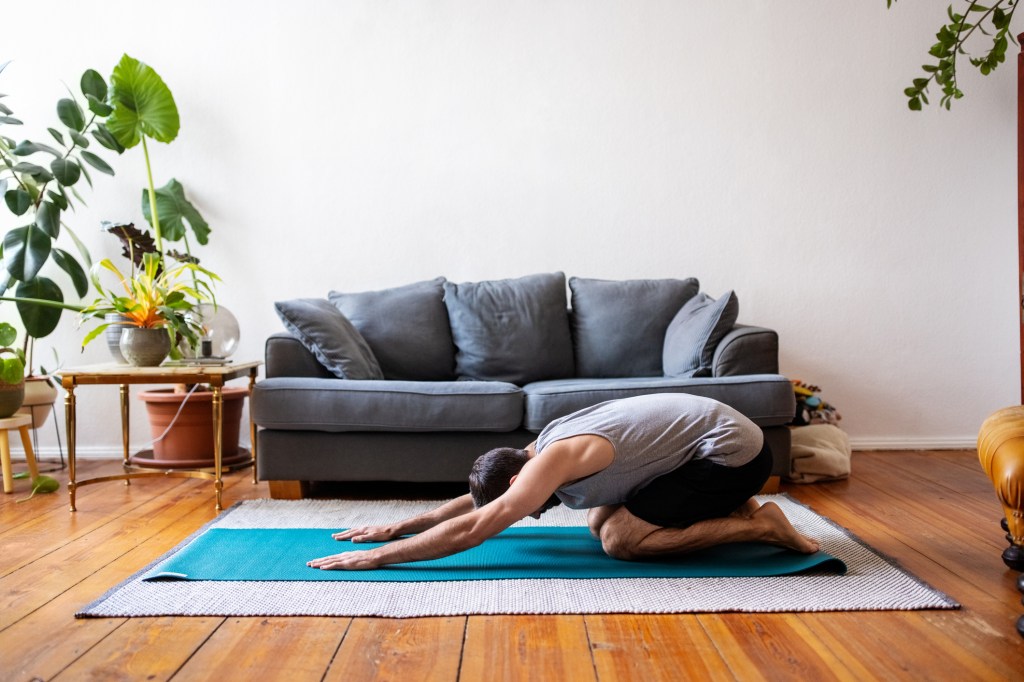
Child’s Pose
Opposite’s attract. Catch yourself creaking and thinking “I’m getting old”? The answer is, Child’s pose. Here, you want to focus on getting your forehead to the floor, with a relaxed head and neck. Some people may not be able to get their backside to rest on their legs, which is fine but if this is the case do your best to relax into a position, as opposed to bouncing. Child’s Pose stretches the lower back, hips, and ankles, gently release those decades of tension in the shoulders and neck, and is known to help calm the nervous system in yoga.
Sphinx Pose
Lying down never felt so healthy. This beginner-friendly pose counteracts the effects of slouching or crouching over a laptop all day long. It stretches the muscles across the chest and shoulders, while gently strengthening the spine, helping the body to open up and correct its posture. Lower back tension, be gone. To do this well, focus on having your elbows under your shoulders before you reach into the stretch.
Cobra Pose
Cobra combines well with the sphinx pose, it’s a very similar position to the beginning of a sphinx pose, but you’ll then lift the chest using your back muscles and by pushing your palms into the floor. It’s a little more active than the sphinx pose, so be gentle. Unlike the sphinx pose, which is about lengthening the thoracic spine, cobra pose is a deeper backbend that requires more flexibility and actively engages the spinal muscles.
Low Lunge
Hip flexors, those pesky things, grow tight from prolonged sitting but also tend to stiffen with age. It’s important to open them up, as they affect range of motion, even pulling the pelvis out of alignment which can cause everything from lower back and knee pain through to balance issues and walking difficulties. Low lunges are a great stretch for opening the hip flexors from a steady, balanced, position. Focus on driving your pelvis forward. This works the glutes and hamstrings well too, helping the posterior chain.
Figure Four Stretch
To finish up, the classic figure four stretch will further target the outer hips, glutes and lower back. Add a little spinal twist or some shoulder rotations (by reaching out with your arms and doing a swim-like motion, to activate the upper body more too, why not.