
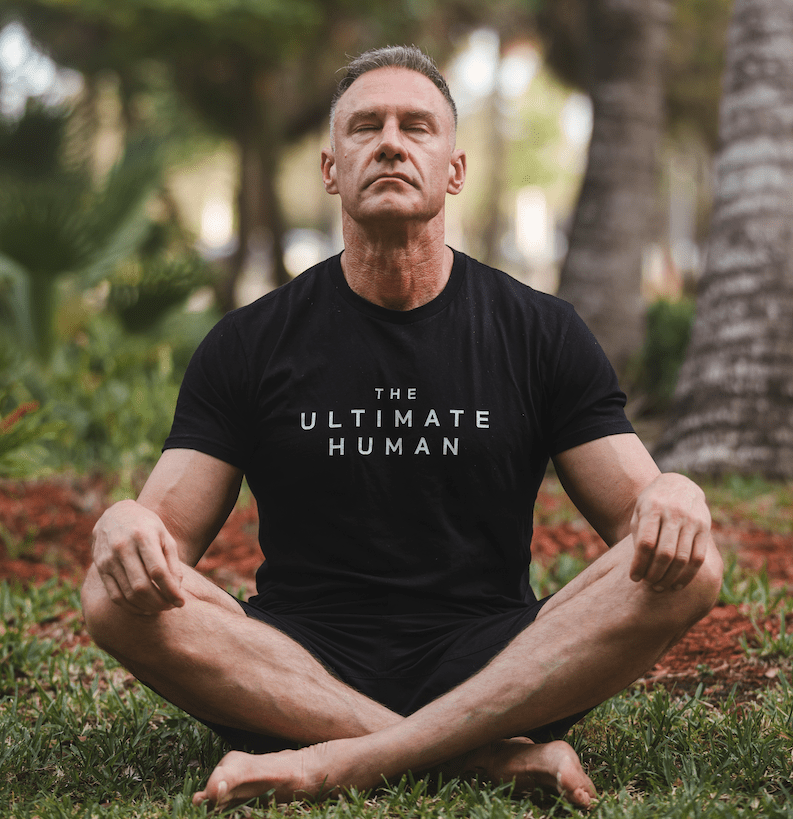
Done within 30 minutes of waking, this simple breathing practice – backed by renowned human biologist, and biohacker Gary Brecka – is designed to boost alertness, improve focus and help set your body clock for the day ahead.
Sometimes we feel things sound too good to be true, as though there has to be a catch of sorts. But that isn’t always the case! Now and then, we can just simply find magic. For Gary Brecka, one of these miraculous discoveries was breathwork.
Over the years, he has developed methods for utilising breath to reset the nervous system in a variety of ways including stress reduction and for promoting sleep.
But his main breathwork biohack happens first thing in the morning, as soon as he wakes up, absolutely before checking his phone in bed. This exercise has helped him to find a way to defeat morning fogginess, and find remarkable energy and focus. It is a routine that takes as little as ten minutes, and has become “the integral” part of his day.
He even goes as far as to say it’s “one of the best biohacking tools that we have as human beings”. Here, he lets us in on these secrets.
Why breathwork matters
“We’re circadian creatures, we have a biological clock,” says Brecka. “We used to be very tied to the circadian cycle of the Earth – as the Earth slept and woke, we slept and woke. We’ve very much lost touch of this in modern society. We control everything from indoor lighting to temperature. We’ve gotten very out of sync with our biological rhythms as a result.”
One of the things that breathwork does is it helps reset your biological clock. “So if you do the same breathwork technique, in relatively the same time frame, every day, your body will begin to rely on that, as a cue for what’s about to happen,” explains Brecka.
“Your body says, ‘when this breathwork technique starts, it is the morning, it is time to wake up and be alert’. And the more committed and consistent you are with it, the bigger impact it has had.”
How to breathe properly
If you’re rolling your eyes thinking: I have basically done breathing since birth – you’re almost right. Ever noticed how babies’ stomachs rise and fall quite a lot when they breathe? That’s because they’re doing it properly. “Focus on pushing your stomach out, not lifting your chest up,” explains Brecka.
“You want the breath to start from your stomach. Imagine your bellybutton is pushing out horizontally, not vertically. It feels very unnatural at first, but you’ll soon find it instinctive.”
The morning breathwork method
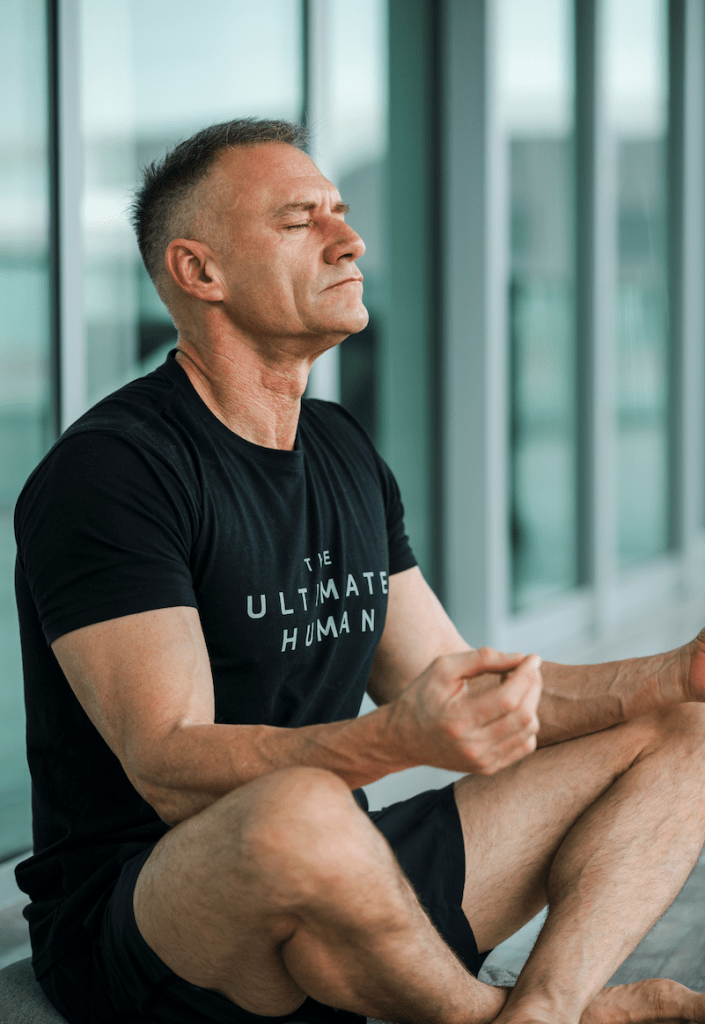
“Within 30 minutes of waking, I try to get outside in natural sunlight, wherever I am in the world, whatever the temperature is (you can tolerate it for six to eight minutes). And I started my breath work with three rounds of deep breaths, followed by a breath hold.,” says Brecka.
To start out, Brecka encourages five deep breaths before an extended breath hold, repeated three times. This deep breath is a long, slow, dramatic inhale through the nose followed by a pause, and an exhale through your mouth.
At the end of your fifth breath, you want to exhale and hold as long as you can. Engaging your diaphragm with each movement. Ideally do this outdoors, and if you can, facing the sun.
After your fifth breath and exhale, just sit quietly and fight the urge to breathe. When you can’t hold your breath any longer, take another inhale through the nose. Hold that for a few seconds, and exhale again. And you start over. Start with three rounds of five breaths, eventually increasing this to 10, 15, 20, 25, and then 30 breaths per round.
“I now do three rounds of 30 deep breaths, followed by an extended breath hold. When I began my breath hold, I could hold my breath for about 30 seconds. Now I can hold my breath for almost four minutes,” he says, adding: “It’s a simple technique.”
Brecka does caution not to do this standing up, in the shower and definitely not while driving. “You want to be sitting down in a comfortable place,” he says.
Why does this breathwork routine work?
Our autonomic nervous system regulates our breathing, and we have the capacity to override that through breathwork. With these exercises, you’re training the muscles to override the autonomic nervous system.
“And that’s why it’s a gateway into the nervous system – we can use it to tell our nervous system to calm, or to waken, in ways which we wouldn’t be able to do with our heart-rate for example,” Brecka says.
Additionally, the reason for this exhale and hold element is to allow carbon dioxide to build up in the bloodstream. Carbon dioxide is the main vasodilator in the human body. “People think it’s nitric oxide. It’s not. It’s carbon dioxide. The reason why we get vascular when we go to the gym is because of the CO2,” Brecka explains.
This prolonged breath hold is meant to help dilate the vascular, to open up the pathways for oxygen. And you do that, believe it or not, by depriving them of oxygen. You will notice that the longer you do breathwork, the longer you can hold your breath – and the more tolerant your system becomes to CO2.
“It’s about getting the air out of the apex of the lungs and into the lobes of the lungs. Two-thirds of our lung capacity is down low, right on top of our diaphragm. Not up near our shoulders – most of us shallow breathe all day long,” says Brecka.
What are the results?
That oxygen hit improves mood and your mental state, as well as blood circulation. It’s a very easy, calm way to wake your body up and to regulate circadian biology. “I truly feel my state shift in a very positive direction by the end of that breathwork technique,” says Brecka.
“I find it improves my mood, focus and mental concentration, even when you’re tired and you don’t feel like doing it, force yourself through it, because just like a cold plunge, even if it sucks getting in, it feels great getting out.”
Breathwork is free, easy, and quick. If you’ve a place to sit outside nearby, why not give it a go? You might lose ten minutes of screen time but you’ll gain an entirely new perspective on the day.