
Taking 10g, 20g or even 30g of creatine a day has become a social media trend, but does more really mean better? A registered nutritionist explains who can benefit from creatine, how much you actually need and whether higher doses are worth it
PICS: Shutterstock
Strictly speaking, creatine was once solely a training supplement, taken by people chasing bigger lifts. Now it comes up in conversations about healthy ageing, muscle maintenance and brain function, well outside the circles within which it started.
With that rise has come a trend for what’s become known as creatine ‘megadosing’, taking 10g, 20g or more a day — well above the standard 3 to 5g — on the assumption that more creatine correlates with better results. “Creatine has moved beyond the gym because the conversation around it has broadened,” says Rob Hobson, registered nutritionist and author of The Low Appetite Cookbook.
“People are now becoming more interested in its possible relevance to healthy ageing, maintaining muscle and supporting brain function, which is where some of the science is emerging.” While the research on strength, power and resistance training is well established at standard doses, the picture on brain health and any case for taking higher amounts is still developing.
Who actually needs creatine?
Hobson is clear that the supplement isn’t essential for everyone. “I wouldn’t say that every adult should take creatine, because it’s not some sort of miracle supplement,” he says. “It is often described as one of the most researched supplements available and that is fair within the context of sports nutrition because creatine monohydrate has been studied extensively and has consistently been shown to improve performance during repeated bouts of short, high-intensity activity.”
Those most likely to benefit, Hobson explains, include “people who resistance train, older adults trying to maintain muscle and physical function and vegetarians or vegans, who generally consume little or no dietary creatine.” That does not mean everyone in these groups needs it, he says, “but they may have more to gain.”
Food first, but only so far
Creatine occurs naturally in meat and fish, including beef, pork, salmon, tuna and herring, but barely at all in plant foods. “A balanced diet should always come first, but I wouldn’t recommend eating large amounts of meat purely to increase your creatine intake,” he says, noting you’d need to eat unrealistic quantities to reach the 3 to 5g used in most studies.
“Our bodies also make creatine naturally, so you don’t need to achieve a ‘supplement dose’ through food to be healthy. A supplement is just a convenient way of increasing muscle creatine stores beyond what most people get from their diet.”
The megadosing question
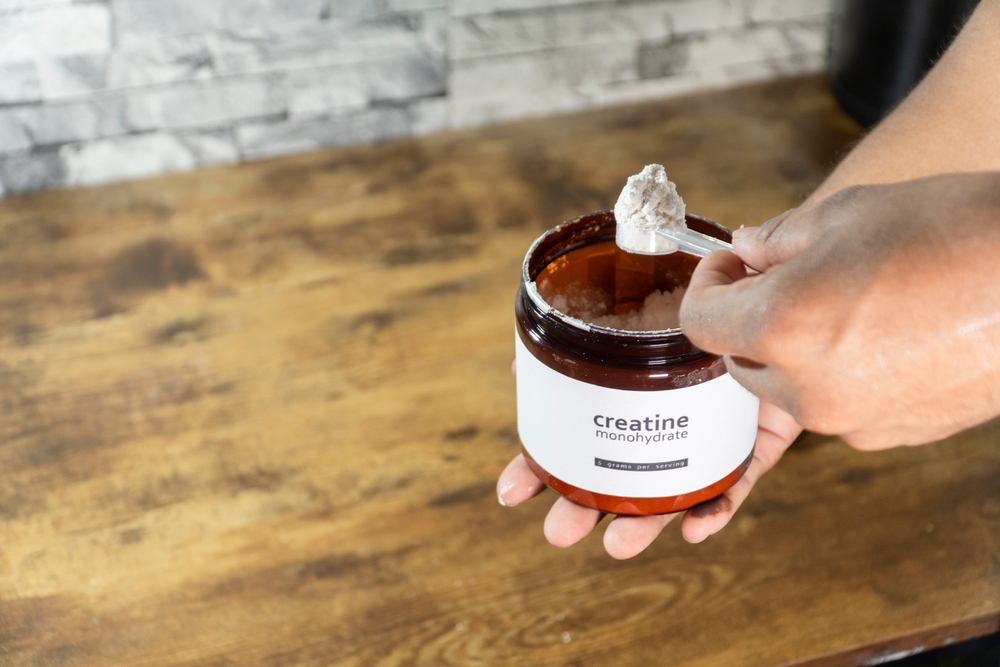
Crucially, does the viral megadosing trend have any legs? “It depends what you mean by megadosing,” Hobson answers. “A traditional loading phase of around 20g a day for five to seven days is well established and simply saturates muscle stores more quickly. It’s optional, though, as taking 3 to 5g daily achieves the same result over a few weeks. I would only use this protocol if someone had very little time to train for an event.” It’s the daily, indefinite high doses he takes issue with.
“What I wouldn’t recommend is taking very high doses indefinitely because someone online claims more is better. Higher doses are being researched for areas such as cognition, but that doesn’t mean routinely taking 10g to 30g a day offers extra benefits for healthy people.” Instead, high doses are more likely to cause stomach upset, diarrhoea and unnecessary expense. “It’s also common to gain a little weight initially because creatine draws water into muscle cells, not because you’re gaining body fat.”
Is it safe?
“Creatine has an excellent safety record in healthy people and recommended doses have not been shown to damage healthy kidneys,” Hobson says. “However, it can slightly raise blood creatinine levels, so it’s worth letting your doctor know if you’re taking creatine before having blood tests.”
Do you need to cycle it?
“There is no good evidence that creatine needs to be cycled,” Hobson says. “A routine such as three weeks on and one week off is more of a gym tradition than an evidence-based recommendation.” Creatine works by “gradually increasing and then maintaining muscle creatine stores, so taking a consistent daily dose is the simplest approach,” he says.
“Long-term studies suggest it’s well tolerated in healthy people and, as he puts it, “if you stop taking it, your muscle stores simply return gradually to their normal baseline.”
What the brain research actually shows
“Brain health is the area attracting the most attention,” Hobson says. “Some systematic reviews have reported potential improvements in aspects of memory and information processing, with effects possibly being more apparent in older people, vegetarians, or when the brain is under stress, such as during sleep deprivation.”
But the results aren’t consistent enough to support a formal health claim and both the UK Nutrition and Health Claims Committee and the European Food Safety Authority have concluded the evidence is insufficient. “There is also early research into areas such as mood, neurological conditions and recovery from brain injury, but these are research settings rather than reasons for people to self-treat with creatine,” he says. “It is important not to turn promising preliminary findings into universal health promises, which is what usually happens on social media.”