
For one week, I stopped chasing performance, aesthetics and personal bests. Instead, I trained for the man I hope to be at 70. What happened surprised me – and exposed a major flaw in the way many men approach fitness after 50
A few weeks ago, while waiting for a flight, I found myself watching a man in his seventies make his way through an airport terminal.
He wasn’t remarkable in any conventional fitness sense. He wasn’t carrying the physique of a lifelong gym-goer, nor did he have the athletic swagger of someone who still competes in masters events at the weekend.
Yet there was something undeniably impressive about the way he moved. A backpack hung casually from one shoulder, a small suitcase rolled behind him, and when he reached a flight of stairs he took them without hesitation, bypassing the escalator entirely.
There was an ease to everything he did, a quiet physical competence that made me realise he possessed something far more valuable than visible abs or an impressive bench press.
As I watched him disappear into the crowd, it struck me that this is probably what most of us really want from fitness, whether we admit it or not. We tell ourselves we’re training to lose a few pounds, improve our race times or maintain muscle as we get older.
But beneath all of that sits a much simpler ambition: to reach our seventies with enough strength, mobility and energy to keep doing the things we enjoy. To travel without worrying about our knees. To carry our own bags. To walk upstairs without thinking twice. To remain independent.
The wrong goals
The problem is that most of us don’t actually train for that outcome.
Like many men in their fifties, I’ve spent years pursuing fitness goals that were largely rooted in performance. Lift a little heavier. Run a little faster. Improve a statistic on a watch.
There’s nothing inherently wrong with those objectives, but I began to wonder whether they were preparing me for the decades ahead or simply helping me hold on to an image of who I used to be. So I decided to try a small experiment.
For one week, every workout and every physical activity had to pass a simple test: would this help me become the kind of 70-year-old I hope to be?
The answer led me in some unexpected directions.
The first surprise came when I began paying attention to balance. It’s one of those physical qualities that most of us assume we possess until we’re given a reason to question it. I certainly had.
After all, I exercise regularly, lift weights and stay active. Yet standing on one leg while brushing my teeth proved considerably less straightforward than I’d imagined. There was nothing dramatic about the experience, but there was enough wobbling to make me realise that balance is not a permanent gift. Like strength and fitness, it’s a quality that either gets maintained or slowly slips away.
That thought stayed with me the following day when I tried something even more revealing. Sitting on the floor was easy. Standing back up again without using my hands was not.

The movement demanded flexibility, coordination, strength and body awareness all at the same time. More importantly, it exposed how rarely I ask my body to perform tasks that resemble real life.
In the gym, I can squat with a barbell across my back, yet getting up from the floor required a different kind of capability altogether.
A different lens
As the week progressed, I found myself viewing exercise through a completely different lens. Instead of asking whether a movement would build muscle or burn calories, I started asking whether it would make everyday life easier in 10 or 20 years’ time.
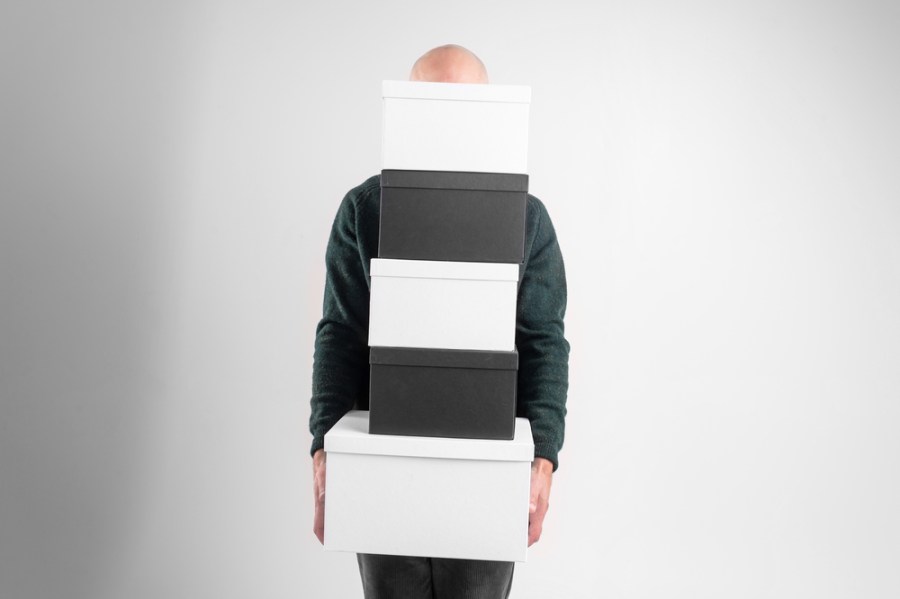
Loaded carries suddenly seemed more relevant than isolation exercises because life involves carrying shopping, luggage and boxes. Walking stopped feeling like something to squeeze in around training and started looking like one of the most valuable forms of movement available.
Stairs became opportunities rather than inconveniences. Even something as simple as getting up and down from the floor began to feel like a worthwhile skill to practise.
What surprised me most was how quickly my definition of fitness began to change. For years I’d associated fitness with performance. The faster runner, the stronger lifter, the leaner physique.
But the more I thought about that man in the airport, the more I realised that ageing rewards a different set of qualities. The people who thrive in later life are not necessarily those who were the fittest at 40.
More often, they’re the ones who retained the ability to move confidently through the world. They can carry their own luggage, play with grandchildren, walk long distances and recover from life’s inevitable knocks and stumbles.
Investing in the future
Research into healthy ageing consistently points in the same direction. Strength matters enormously, but not because it looks impressive. It matters because it preserves independence.
Balance matters because it reduces the risk of falls. Mobility matters because it allows us to keep participating in the activities that give life meaning. These qualities don’t exist in isolation; together they form the foundation of physical resilience.
By the end of the week, I hadn’t achieved anything that would impress social media. I hadn’t broken a personal best, transformed my physique or unlocked a new level of fitness. Yet I felt strangely optimistic. For perhaps the first time, I wasn’t exercising to reclaim a younger version of myself. I was exercising to invest in an older one.
That shift in perspective may have been the most valuable result of all. The body I want at 70 won’t be built when I turn 70. It’s being built right now through the choices I make every day. Through every walk, every strength session and every decision to prioritise long-term capability over short-term vanity.
The man I watched crossing that airport terminal almost certainly didn’t arrive there by accident. His ease of movement was the result of years, perhaps decades, of staying active and maintaining the physical qualities that matter most. Watching him made me realise that fitness after 50 isn’t really about staying young. It’s about staying capable.
And that’s a goal worth training for.