
Your thirties are the ideal time to build the strength you’ll rely on later in life. From barbell lifts and pull-ups to grip strength, mobility and everyday functional fitness, James Dixon reveals the goals worth working towards
At 36, I’m stronger than I’ve ever been. This is partly because I’ve been lifting weights for years and am still managing to stay on something of an upward trajectory.
It’s also because I’ve learned, in recent years, to train smarter rather than simply harder (though you’ll always need to push yourself and get the hard work in). However, I’m also well aware that I’m no longer at the beginning of my training journey, and that this trajectory will not last forever.
While it’s perfectly possible to build muscle and strength well into your forties and beyond, it’s a lot harder. Recovery gradually slows for many men, injuries become more common, hormonal health begins to work against you, and life has a habit of competing with time in the gym.
That’s why I see your thirties as the ideal time to build a foundation of strength that will keep paying dividends for decades. It’s a bit like building a physical pension: the muscle and resilience you invest in now are assets that will keep you right in later life.
This has very little to do with vanity – though aesthetics are of course always a welcome benefit, and may be the thing really inspiring you. It has certainly inspired me in the past. Strength isn’t just about lifting heavier weights or looking good on the beach, however.
Stronger people typically enjoy better mobility, healthier bones and greater independence as they age. Even something as simple sounding as grip strength has repeatedly been linked with healthy ageing.
Strength is about far more than what happens in the gym.
The benchmarks
So, what should you be aiming for to make the most of these benefits?
The first benchmark I’d recommend isn’t a number on a barbell at all. Rather, it’s your everyday capabilities. Can you carry heavy shopping bags without having to stop halfway for a rest? If you have young children, can you pick them up with ease? How are you at carrying furniture upstairs? (One of the downsides of being a lifter is that I’m always the one being asked by family to help with moving house!) To me, this kind of functional strength is where all those hours in the gym really pay off.
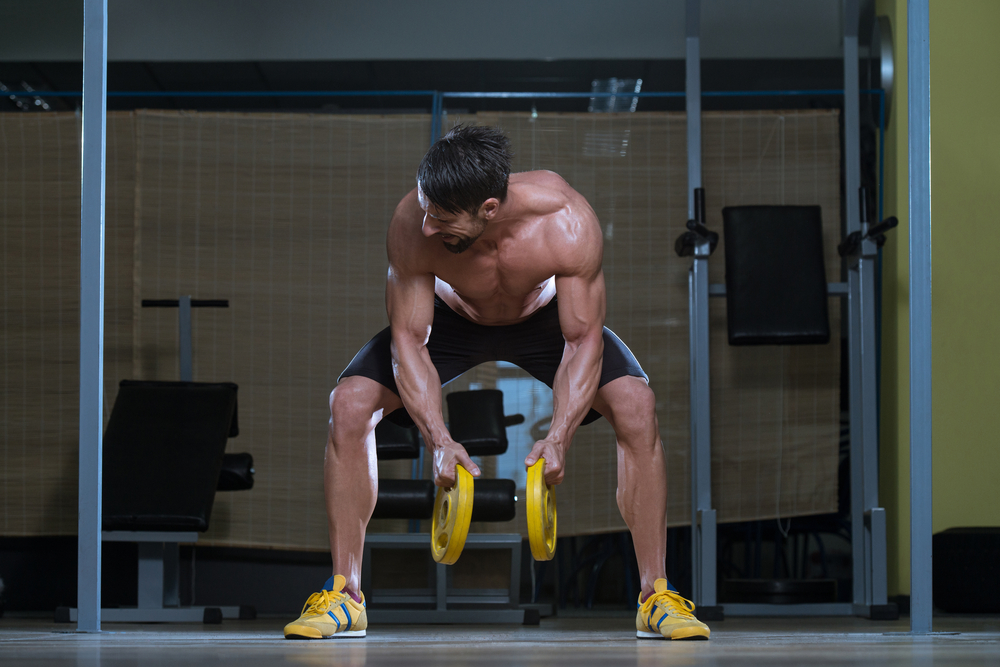
I’d recommend the farmer’s carry for this kind of thing. It’s not the best muscle builder, but it’s perfect for this kind of functional strength – there’s a reason strongmen swear by it. Pick up a couple of very heavy dumbbells or kettlebells, or a good trap bar, and walk with it. Simple as.
Try to keep your posture relaxed and neutral, and your breathing regular. It’s good for grip strength, core stability and control, shoulder resilience, and work capacity all at once, while mimicking the kind of lifting we actually do in everyday life.
The second benchmark is all about barbell lifts, though of course they are long-term goals that may take some time to reach. You will have an excellent standard of full body strength that will last you long into older age if you can:
- Squat around one and a half times (150%) your bodyweight
- Deadlift around twice (200%) your bodyweight
- Bench press around one and a quarter times (125%) your bodyweight
- Overhead press half to three-quarters (50-75%) your bodyweight
Of course, these are not strict requirements; they won’t suit all lifters. Taller athletes, older beginners, anyone returning from injury, and those who have always been simply genetically on the weaker side may progress differently, for example.
And good technique will often matter more than chasing an extra five kilos on the bar. But if you can yourself into the ballpark on these lifts, you’ll be well set up going into your forties.
Mastering your bodyweight
I will also always make the case for learning to control your own bodyweight. Mastering your own bodyweight builds a kind of strength that carries over into everyday life better than almost anything else.
Exercises like pull-ups, dips and hanging leg raises develop relative strength, coordination, grip, core stability and shoulder control simultaneously, creating balanced, athletic movement rather than simply teaching you to move external weight.
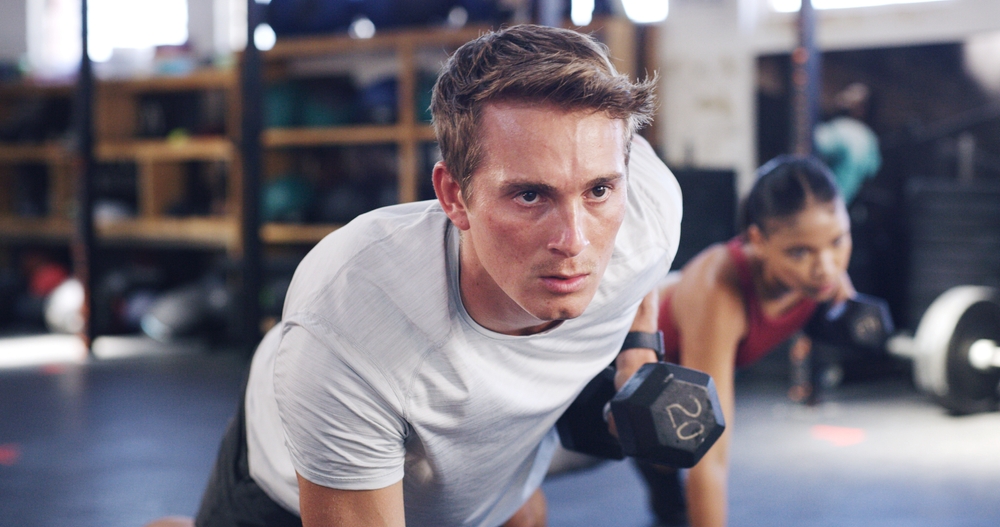
If you can perform three to five strict pull-ups through a full range of motion, at a good, slow tempo, you will have developed excellent relative upper-body strength. If you can’t do one yet, don’t worry – pull ups are actually far more advanced than their ubiquity suggests.
Assisted pull-up machines can work well. Resistance bands are perhaps better for skills training and progression to full pull ups. Both are good training tools which will allow you to train progressively until you can perform unassisted repetitions.
I’d also like to see most men capable of around performing around 20-30 controlled press-ups with good form. Being able to do so will demonstrate more than chest strength alone: push ups require muscular endurance, core stability, shoulder health and body control, while exposing weaknesses that a heavy bench press can sometimes mask. They’re a simple, accessible test of functional upper-body fitness.
Maximise mobility
Mobility is often overlooked. Strength without good mobility is only useful to a point. So I would ask yourself a few questions: Can you squat below parallel with control? Can you get down onto the floor and back up again without using your hands? Can you reach both arms comfortably overhead without arching your lower back? Can you rotate your upper body freely to look over each shoulder without your hips turning with you? Can you touch your toes without bending your knees?
Those abilities become increasingly valuable – and rare – as we age.
Try not to make these benchmarks about ego. And don’t be too strict with them – simply keep them in mind and work towards them. Falling short is fine. If you can do only 80% of them, or all of them only to 80%, at 38, you’ll be set up well for a good, healthy, mobile future.
I still enjoy chasing personal bests – I’ve been hitting a lot of volume PRs lately, which has been very satisfying – but these days I’m equally motivated by the thought of still lifting weights, carrying my shopping, hiking with my family and enjoying an active life when I’m sixty. Right now, while I’m in my thirties, I’m at the best point to invest in that future, and I intend to thoroughly make the most of it.
• James Dixon is a freelance journalist and former personal trainer with nearly twenty years’ experience in the fitness industry. He has written on health, fitness, parenting, culture and social affairs for publications including The iPaper, Spiked, The National, FitnessBrain, FitnessPush, The Westender, and The Green Parent, combining practical expertise with evidence-based reporting and accessible, engaging writing.