
Forget chasing personal bests or comparing yourself with younger gym-goers. These 10 real-world strength standards will tell you far more about how well you’re ageing – and whether your body is ready for whatever life throws at it
Strength isn’t just about how much you can bench press. As you move through your fifties and beyond, it’s increasingly about what your body allows you to do.
Can you lift your luggage into an overhead locker without thinking twice? Carry heavy shopping bags in one trip? Climb a steep hill without needing to stop? Get down onto the floor to play with your grandchildren – and, crucially, get back up again?
These are the movements that define functional fitness, and they’re also among the clearest indicators of healthy ageing.
That doesn’t mean you should abandon ambitious training goals. Far from it. But while personal bests can fluctuate from year to year, there are certain benchmarks that almost every healthy man over 50 should aspire to. Together, they measure the qualities that matter most: strength, mobility, balance, coordination, cardiovascular fitness and resilience.
Treat these standards as a health MOT rather than a competition. If you can achieve most of them comfortably, you’re building a body that’s equipped not just for today’s challenges, but for the decades ahead.
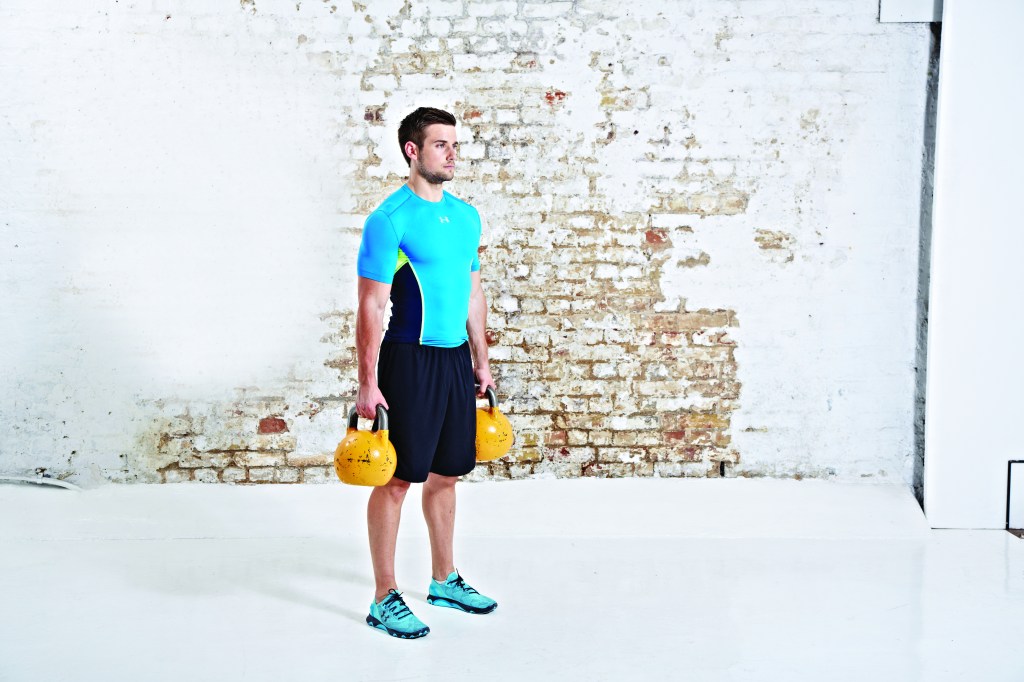
1. Carry your bodyweight (half in each hand) for 30 Seconds
What is the standard?
Carry a combined weight equal to your bodyweight – for example, a 90kg man would carry two 45kg implements – for around 30 seconds with good posture. If that’s too advanced, build towards carrying 50–75% of your bodyweight first.
Why it matters
This is one of the best measures of real-world strength. Farmer’s carries challenge your grip, shoulders, core and legs while teaching your body to stabilise under load. Grip strength, in particular, has been associated in research with healthy ageing and overall physical function.
How to achieve it
Start with dumbbells or kettlebells you can comfortably manage for 20–30 metres. Increase the load gradually while keeping your shoulders level and your core braced.
2. Perform 20 perfect push-ups
What is the standard?
Twenty consecutive push-ups with full range of motion and excellent technique.
Why it matters
Push-ups assess upper-body pushing strength, shoulder stability and core control all at once. They’re also a convenient measure because they require no equipment and can be repeated throughout your life.
How to achieve it
If 20 feels ambitious, start with incline push-ups against a bench or wall before progressing to the floor. Focus on quality over quantity.
3. Hang from a pull-up bar for 60 seconds
What is the standard?
Maintain a dead hang from a pull-up bar for one minute.
Why it matters
This simple test develops grip strength, shoulder stability and resilience in the muscles and connective tissues of the upper body. It can also improve shoulder mobility and help counteract the effects of prolonged sitting.
How to achieve it
Begin with shorter hangs of 10–20 seconds and gradually increase your time. Chalk can help, but avoid relying on lifting straps.
4. Stand up from the floor without using your hands
What is the standard?
From a seated or lying position, stand up smoothly without pushing off the floor or your knees with your hands.
Why it matters
Getting up from the floor requires a combination of strength, mobility, balance and coordination. It mirrors the kinds of movements we perform less frequently as we age but may need unexpectedly.
How to achieve it
Practise bodyweight squats, lunges and the Turkish get-up, along with hip mobility exercises.
5. Hold a plank for two minutes
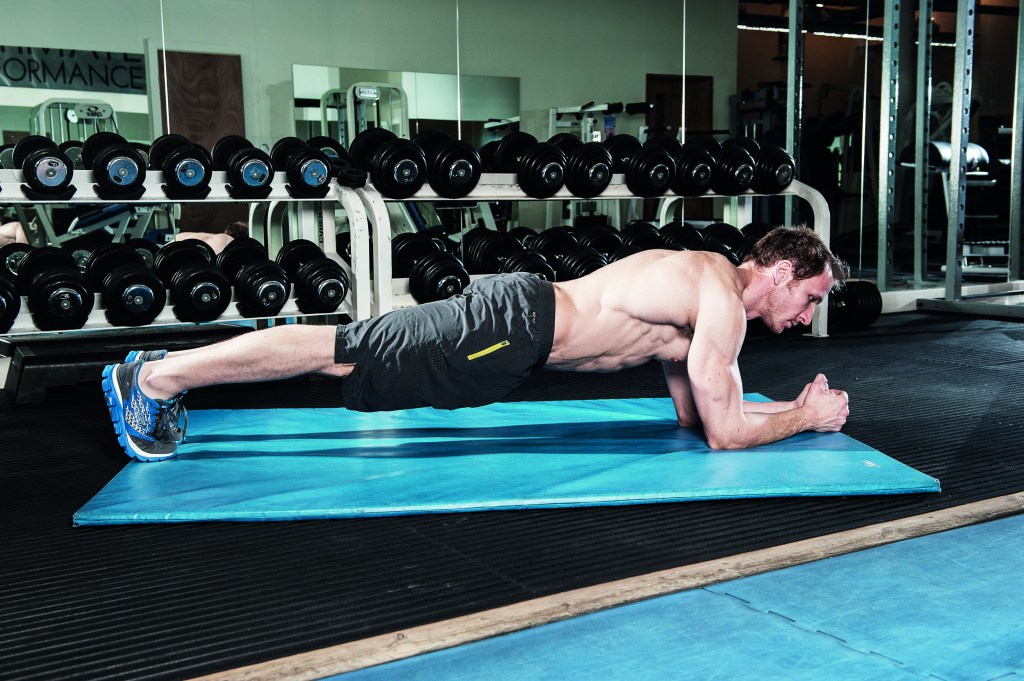
What is the standard?
Maintain a technically sound forearm plank for 120 seconds.
Why it matters
A strong core protects the spine, improves posture and makes every other movement more efficient. The emphasis should be on maintaining alignment rather than enduring discomfort.
How to achieve it
Start with 20- to 30-second holds and increase your time gradually. If your hips sag or your lower back arches, stop and reset.
6. Complete five strict pull-ups (or the equivalent)
What is the standard?
Five consecutive pull-ups with no swinging or kipping. If you can’t yet perform pull-ups, aim to pull down your bodyweight on the lat pulldown machine for five controlled repetitions.
Why it matters
Pulling strength supports posture, shoulder health and everyday lifting tasks. It’s also a useful indicator of relative strength because you’re moving your own bodyweight.
How to achieve it
Use resistance bands or an assisted pull-up machine until you’re ready to perform unassisted repetitions.
7. Squat your own bodyweight
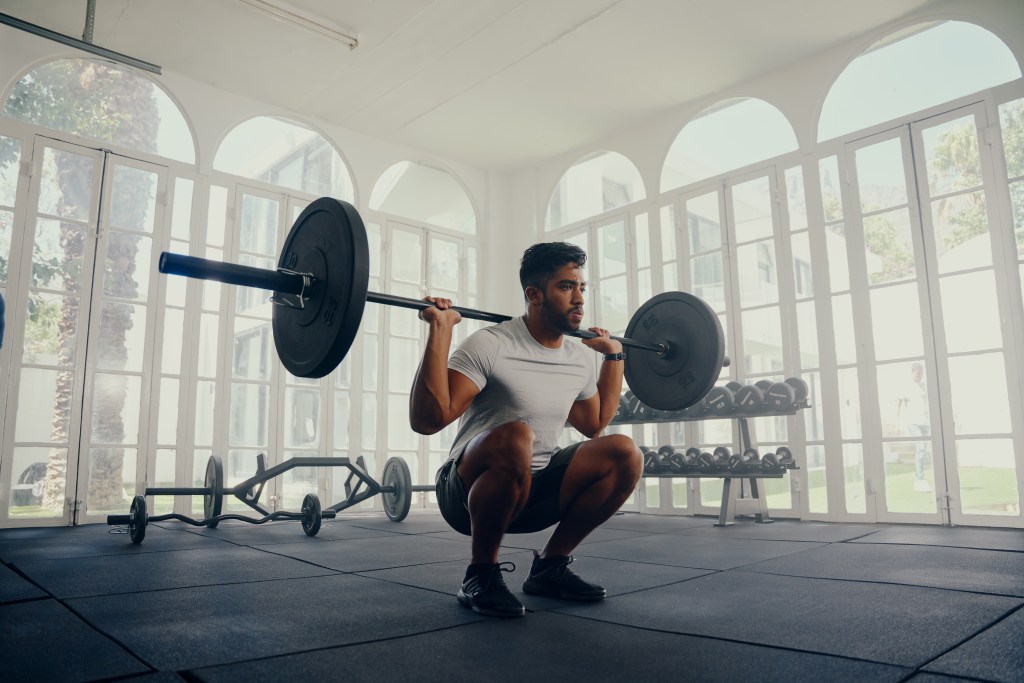
What is the standard?
Perform a controlled squat with a barbell loaded to your bodyweight for five repetitions.
Why it matters
Lower-body strength underpins almost every physical activity, from climbing stairs to hiking, running and recreational sport. The emphasis here is on good form rather than maximal lifting.
How to achieve it
Master goblet squats before progressing to front or back squats. Prioritise mobility and technique before increasing the load.
8. Balance on one leg for 30 seconds
What is the standard?
Stand on one leg for at least 30 seconds without touching the other foot down or grabbing support.
Why it matters
Balance tends to decline with age, increasing the risk of falls. Fortunately, it’s highly trainable, and even small improvements can have a significant impact on confidence and independence.
How to achieve it
Practise while brushing your teeth, waiting for the kettle to boil or during your warm-up. Progress by closing your eyes or standing on an unstable surface.
9. Climb four flights of stairs without stopping
What is the standard?
Walk briskly up four flights of stairs while maintaining a conversational pace.
Why it matters
This combines cardiovascular fitness, leg strength and muscular endurance into one simple real-world assessment. If you’re breathless after just a few flights, it’s a sign your aerobic fitness could be improved.
How to achieve it
Include regular walking, hill work or interval sessions alongside your strength training.
10. Walk 10,000 steps carrying yourself well
What is the standard?
Complete a day’s walking with good posture, minimal discomfort and enough energy left to enjoy the rest of your day.
Why it matters
Walking remains one of the most accessible forms of exercise available. Combined with strength training, it supports cardiovascular health, joint mobility, weight management and mental wellbeing.
The number itself isn’t magic; what’s important is maintaining the ability to stay active for prolonged periods without excessive fatigue.
How to achieve it
Increase your daily walking gradually and make movement part of your routine rather than something reserved for formal exercise sessions.
How many can you tick off?
These aren’t arbitrary gym targets. Together, they represent the physical qualities that help men remain active, independent and resilient throughout later life.
You may already exceed some of these standards while others expose areas that need work. That’s exactly the point. Think of them as a scorecard for healthy ageing rather than a pass-or-fail test. Revisit them every three to six months and celebrate your progress.
After all, the goal after 50 isn’t simply to stay alive – it’s to stay capable. Whether you’re carrying your shopping, exploring a mountain trail, travelling the world or chasing after grandchildren, the strongest men aren’