

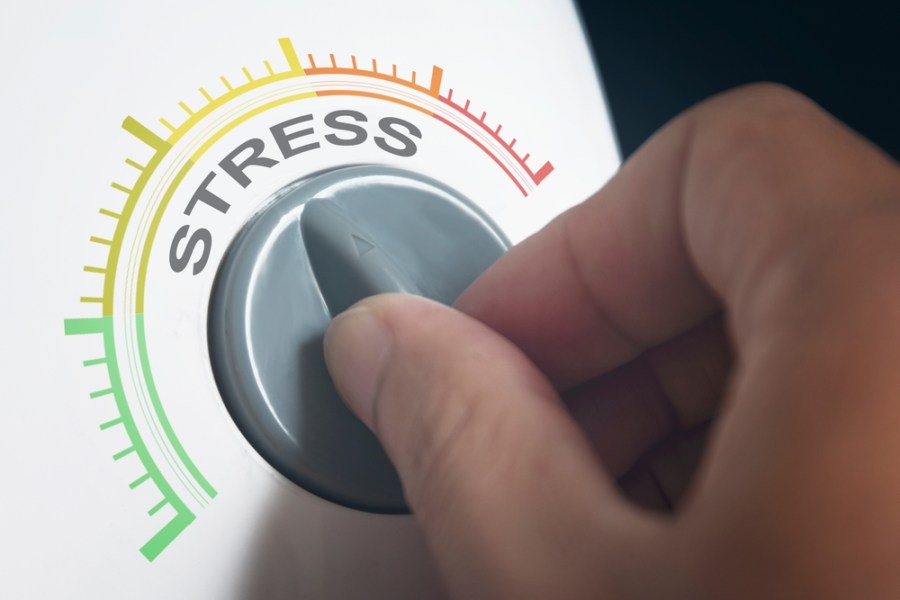
Cortisol has become the wellness world’s favourite villain, blamed for everything from belly fat to poor sleep. But Stanford neuroscientist Andrew Huberman says the real key to better health isn’t lowering cortisol – it’s helping it rise and fall at the right times through light, movement and simple daily habits
Cortisol has a branding problem. Mention it at the gym or in your office and the reaction is usually the same: it’s the stress hormone, the one ageing your face and thickening your middle, the one you’re supposed to be lowering at all costs and chipping away at your muscle.
Speaking at HX26, a health and wellbeing event in London, Stanford neuroscientist Andrew Huberman argued that framing is backwards. The goal isn’t to suppress cortisol, he explained. It’s to shape when it rises and when it falls.
“You want those four molecules spiked big in the first hours of your day,” he told the audience, referring to cortisol alongside the catecholamines dopamine, noradrenaline and adrenaline, “and you want them low at night.”
His argument was that most people chase individual protocols, cold plunges, supplements and breathwork apps, without ever asking what those tools are doing to the underlying rhythm. “You do what you can when you can,” he said. “You’re going to end up better than most anyone out there.”
Why the shape of the curve matters more than the number
Cortisol naturally peaks sharply within the first hour after waking, a pattern researchers call the cortisol awakening response. This spike isn’t a design flaw. It mobilises glucose, sharpens attention and gets the body ready to move.
A study in the Journal of Clinical Endocrinology and Metabolism found that shifting from dim to bright light shortly after waking produced an immediate rise in cortisol, while the same light exposure in the afternoon had no effect.
A separate trial published in Psychoneuroendocrinology found comparable results, with bright light after waking enhancing the awakening response compared to dim light. Timing, not intensity alone, appears to be the variable that counts.
What happens if that rhythm never comes down is where the science gets more serious. A systematic review and meta-analysis in Psychoneuroendocrinology pooling dozens of studies found that flatter diurnal cortisol slopes, meaning levels that stay elevated into the evening rather than declining, were linked to significantly higher rates of depression, cardiovascular disease and all-cause mortality.
Huberman described the same pattern in plainer terms at HX26. “What you don’t want is a big flat or sort of humped cortisol curve,” he said, warning that stress arriving on top of an already raised evening baseline is what tips people into chronic sleep problems.
Building your own bookends
The practical version of this is simple even if the biology behind it isn’t. Get natural light within the first hour of waking if you can manage it. Add movement, even a short walk, in that same window. Hold off on bright artificial light in the evening so the curve is free to fall.
“Some days you can get all the best stuff,” Huberman said, before acknowledging that a full routine isn’t always realistic. “Some days you just have access to hydration, a little bit of movement… and an artificial light.”
Breathwork is the other lever you can pull. Huberman co-authored a 2023 randomised trial in Cell Reports Medicine comparing daily five-minute sessions of cyclic sighing, built around slow extended exhales, against box breathing, cyclic hyperventilation and mindfulness meditation.
In the study, cyclic sighing produced the largest improvements in mood and the biggest drop in resting breathing rate of the four. A broader meta-analysis of breathwork trials published in Scientific Reports, unconnected to Huberman’s lab, reached a similar conclusion: controlled breathing reliably reduces self-reported stress across a wide range of techniques.
The underlying principle, according to Huberman, is straightforward. “Deliberately emphasising your exhales shifts you towards a calmer parasympathetic state,” he said. “Emphasising your inhales puts you in the other direction.”
Skip the biohacking checklist
Where Huberman pushed hardest at HX26 was on the instinct to collect ever more tools without understanding what any of them do mechanically.
His advice was to find the shared mechanism behind a practice before adopting it, whether that’s a light device, a breathing pattern or a supplement, rather than chasing each new named protocol individually. “There are many ways,” he said of the wider wellness field generally, “but the principles are few.”
That applies directly to cortisol. Chasing a lower number on a wearable isn’t the aim. The aim is a curve that rises sharply when you wake and falls away well before bed. Get outside early. Move. Save the bright screens for daytime. Use a longer exhale when you need to come down.
The hormone that supposedly wrecks your health turns out to be one of the more useful signals your body sends, provided it arrives and departs on schedule.