

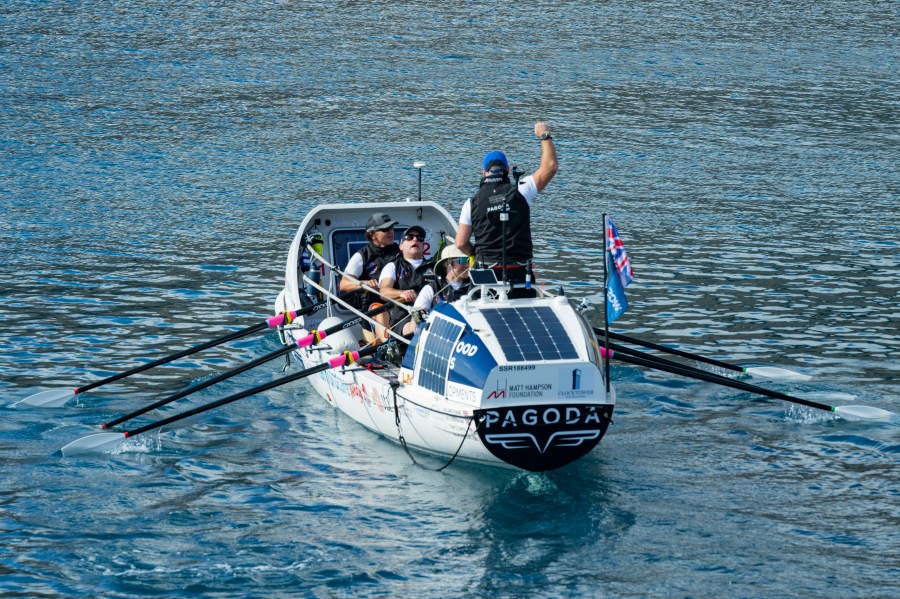
Ex-England rugby captain Ollie Phillips reveals the risks that come with rowing 3000 miles across the Atlantic in the World’s Toughest Row
This Christmas, four adventurers will swap festive comforts for 3,000 nautical miles of open ocean as they take on The World’s Toughest Row – a gruelling Atlantic crossing to raise funds for charities tackling Motor Neurone Disease (MND) and other life-changing conditions.
The race begins on 14 December in the Canary Islands and ends in Antigua in the West Indies. Crews will face everything from 20-foot waves to scorching 30°C days, freezing nights, sleep deprivation and the relentless daily need to burn through 6,000 calories. Most rowers lose between 12-20kg before they reach land.
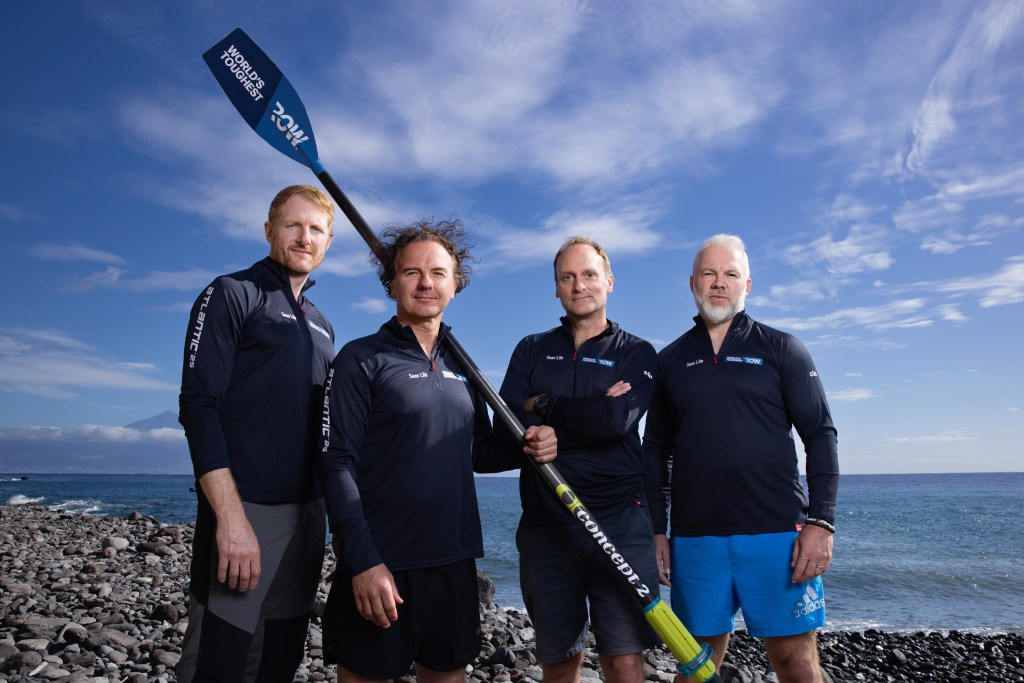
Among them is Team Seas Life, a four-man crew headed by former England Rugby Sevens captain and Guinness World Record holder Ollie Phillips, joined by seasoned adventurers Julian, Tom and Stu. As a man who has competed in elite sport, completed the Clipper Round the World Yacht Race, finished the Race Across America and raised over £3m for charity, Phillips is no stranger to suffering for a cause. But he admits that nothing – not even international rugby – compares to what’s ahead.
Men’s Fitness sat down with him just days before launch to talk through the training, the workload, the nutrition challenges and how you prepare your body for 40 days of two hours on, two hours off, without ever stepping off the boat.
Men’s Fitness: This is obviously a very different discipline to rugby. How have you trained for it physically?
Ollie Phillips: My training has evolved massively during the preparation. At the start it was all about becoming technically competent. I spent time with former GB rowers, and we worked with Duncan Roy from the Ocean Rowing Academy, who has rowed the Atlantic multiple times. The technical learning came first – how to row properly, how to be efficient – before we moved into the volume work.
Once I had that under my belt, I did what most people do: I just rowed endlessly. I tried to pile on as much volume as I could, whether on the rowing machine or on the river. But here’s the reality – that still isn’t rowing an ocean. On land, you never replicate the instability of the boat, the changing conditions, the constant motion.
MF: How do you recreate that though?
OP: After a few months of that I started breaking down a bit – tendon niggles, repetitive strain problems – and I realised two things. First, I can’t replicate ocean conditions. Second, I can’t row two hours on, two hours off in normal life. I’ve got young kids, a business to run. And even if I could simulate the schedule before we left, I’d arrive at the start line completely exhausted. So I changed my approach. Now the priority is to stay healthy, mobile and strong – not battered before we even push off.
MF: So what does training look like now?
OP: I still row, but I dialled the volume down. I maintain strength work and do a lot more mobility and flexibility. But the biggest shift is the mental preparation. I’m doing a lot of mental rehearsal – thinking about what will annoy me when I’m hungry, tired, frustrated, bored – and planning how I’ll respond in those moments. Because if you’re reasonably fit and healthy, your body will cope. It’s the mental side that will make or break you.
MF: The caloric demand is huge – 6,000 calories a day for you. How do you prepare for that?
OP: You can’t really train to eat 6000 calories a day in normal life, but I’ve bulked up intentionally. I’m usually around 96-98kg, and at the moment I’m just over 103kg. When you know you’ll lose 12-20kg in the race, you need reserves.
Most of our food is freeze-dried. Some meals are 700 calories, others 1,000. But even then, you can’t eat six or seven of them in a day. Most of us will manage three or four meals and then top up with other foods – stuff that’s high-calorie but also keeps you sane. There’s only so many dried sweet potatoes or energy gels you can stomach before you lose your mind.
We also have weight considerations. The race organisers make you carry 55 days’ worth of food on board in case you get delayed. For four of us, that’s over 21,000 calories per day. And the heavier the boat, the slower you go. So it’s a constant balancing act.
MF: Have you been able to stress-test the physical extremes – the big waves, sleep deprivation, heat, etc.?
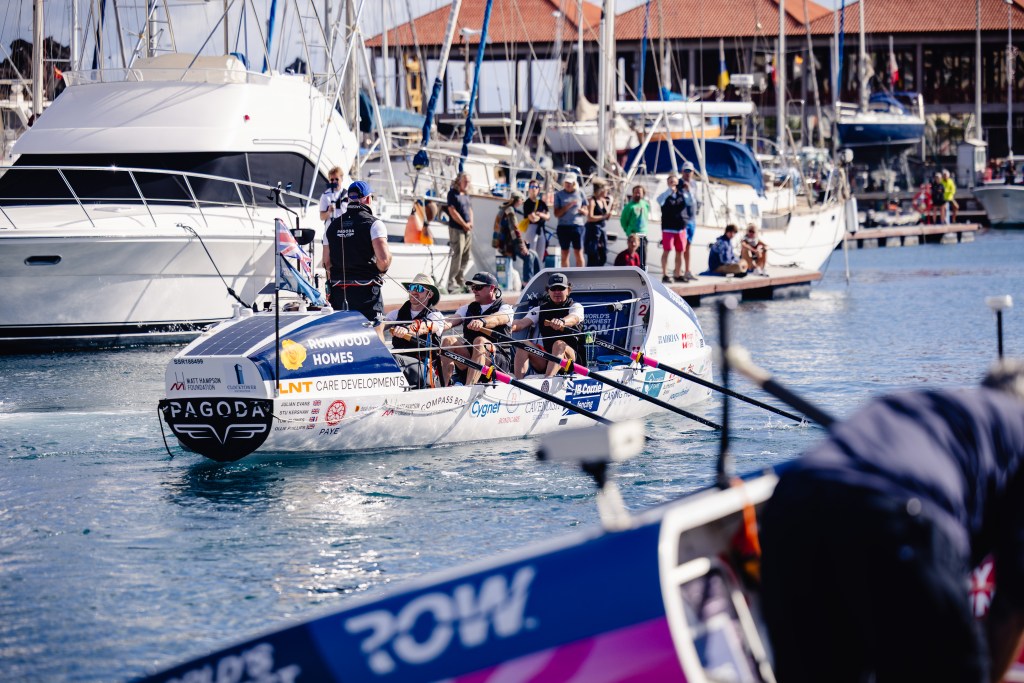
OP: Not really. Nothing truly simulates it. I’ve sailed around the world and even on a 70-foot ocean yacht you can feel incredibly vulnerable. Now shrink that down to a 22-foot rowing boat. The biggest risks are being rolled in heavy seas, which is why you must be clipped in at all times, and believe it or not – marlin attacks. Barnacles build up under the hull. Small fish feed on them, tuna feed on the fish, and then marlin attack the tuna. Last year several boats had marlin beaks go straight through the hull. Knowing that you’ll be jumping into deep ocean every few days to scrub the boat definitely keeps you awake.
MF: What about the physical toll once you’re out there?
OP: You’ll get incredibly strong through the back and arms, but you lose muscle elsewhere. When people step off the boat at the end, their legs can barely hold them. They’ve had huge physical output but no stimulus for the lower body. I’ll be interested to see what 40 days does to me. If I start at 103kg and come back in the low 80s, I’ll be the lightest I’ve been since I was a teenager.
MF: And then there’s the team dynamic. How key is that?
OP: It’s huge. That might be the hardest part. With climbing or mountain expeditions, you can slip into your own rhythm. On the ocean, you are always interacting. You row together, eat together, sleep inches apart. If one person isn’t working, the boat literally stops moving.
We’ll start on two hours on, two off, but we’ll probably experiment – maybe every couple of days giving someone a four-hour rest to lift morale. On top of that we’ll have Starlink, so there’s Wi-Fi in the middle of the Atlantic. We’re lining up different guests to drop in every day for the “12 Days of Christmas” – everyone from Alan Shearer to Hugh Bonneville. If it works, it could be a great distraction and a major mental boost.
Beyond that there are so many unknowns. Mother Nature is the boss out there. Once you leave shore, you commit. And I think that’s what’s so fascinating about it – the fact that you are completely reliant on yourselves for 40 days. That’s the challenge. That’s the adventure.”
• To find out more about the Team Seas Life journey, visit www.seaslife.co.uk