

Yoga isn’t just about flexibility. Manchester City and Norway’s goal machine uses it to improve mobility, recovery and mental focus. Experts explain why it could transform your fitness too
PICS: GETTY IMAGES
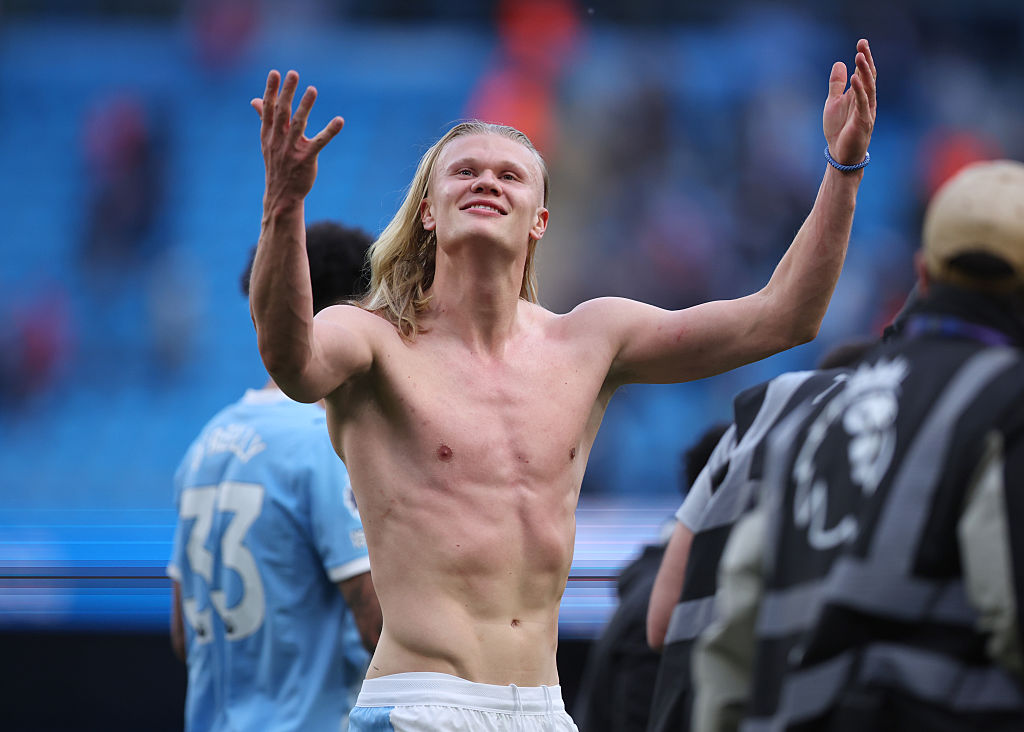
Norway might be out of the 2026 FIFA World Cup, but however you spin it, Erling Haaland has been one of the highlights of the tournament. One of football’s most uncompromising goal-scorers of all time, the 25 year old continues to add milestone after milestone in his career. He is proving a hit off the pitch too, for his good humour and refined diet. Another unsuspected tool in his locker though, is a devotion to yoga.
Yoga has been an overlooked element of Haaland’s approach to life and ultimately his success on the pitch for a while now. As far back as 2022, Haaland has celebrated goals with a meditative pose that is akin to the lotus position in yoga. Meditation has been part of his life since his earliest playing days, he says it “makes me feel calm and gives me tranquillity”. His yoga passion is now also in the fore.
What is yoga?
Yoga is a lot of things, but in terms of how elite athletes like Haaland use it (and western people generally) it is mainly a series of movements and postures, as well as a lifestyle approach that prioritises mentality and discipline. It is a wonderful tool for mentality, mobility, and flexibility across many aspects of life. Yoga also has been linked to longevity in many studies, and anecdotally by people who have practised it for decades.
Why yoga isn’t pilates
Unlike pilates, which is a modern fitness practice more focused on core strength, muscle toning, and physical rehabilitation, yoga is more firmly used for mobility and flexibility in a physical sense, as well has having ancient origins when it comes to its mental wellness elements.
While there are variants, pilates is often more intense as uses continued movements to work muscle groups, often incorporating small weights and other devices to further challenge muscle groups. Haaland does both, Harry Kane is also a pilates man, but Yoga generally relies on long holds of poses and stretches, and has a bigger emphasis on breathing.
Types of yoga
There’s almost endless forms of yoga, but the easiest broad categorisations are gentle and dynamic. Dynamic yoga (such as Power-Vinyasa or the mentally enduring Ashtanga) can be just as challenging as many forms of pilates, but again it is more about flowing through a series of poses and deep stretches, where pilates is about precise controlled movements.
Dynamic yoga is a moderate cardiovascular workout as well as a challenging battle of balance. Gentle yoga will have slower sequences of movement and a focus on deep stretches alongside breathwork, and is used for recovery and to relax the nervous system. Yin yoga, for instance, may see you hold one pose for as much as five minutes before moving into the next.
Yoga poses to do
Due to gentle and dynamic yoga styles having different general uses, the type of flow you do is up to you. When it comes to specific poses, they can be found across all styles of yoga. So whether you want to flow through a challenging dynamic yoga (which is a session in its own right but can also make for a great warm up) or to hold deep poses to help with mobility and tension, these offer you a solid full-body sequence to try.
Slowly go through them, focusing on control not pushing the stretch too far (a common misconception with yoga is that a bigger stretch is a better one) for fifteen minutes. Breathing tends to guide the stretches, but generally concentrating on inhaling when opening the front of the body and exhaling when compressing the front of the body, breathe in and out through the nose, deeply and calmly.
This is where the mental wellness aspects come in too, it’s about regulating nervous systems, removing yourself from flight and flight to rest and digest, being mindful and present, and there’s a good deal of acceptance that sometimes you will hold a pose better than other times, but you will always keep on going.
A good yoga mobility sequence for beginners
The beauty of yoga is that you can always improve, but it is also fairly easy to begin. A good beginner yoga sequence (in order) is as follows: Cat-cow, downward dog, cobra pose, bridge, pigeon pose, supine twist. This sequence stretches hamstrings, calves, lower and upper back, and the glutes, while opening hips and helping spinal mobility.