
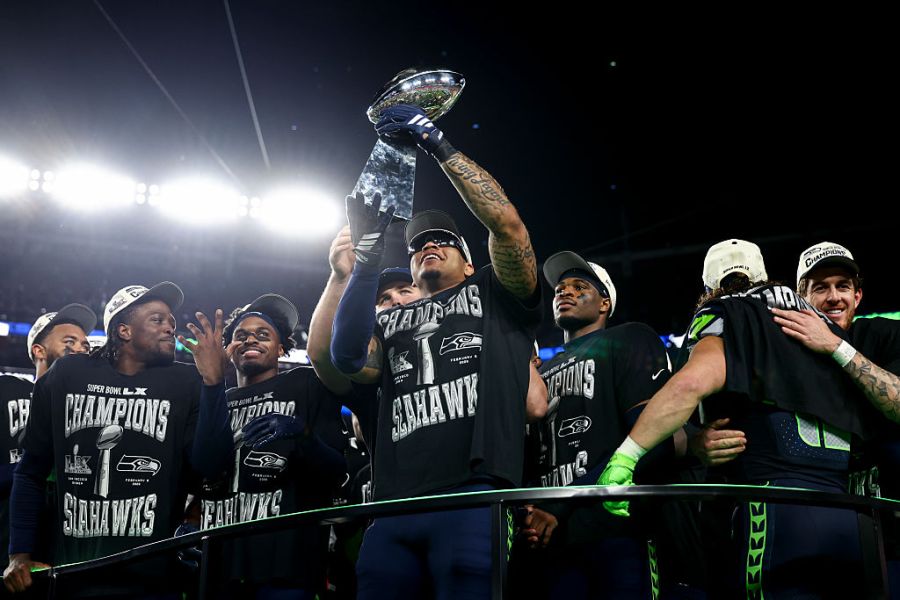
Seattle Seahawks defensive coordinator Aden Durde became the first British coach to win a Super Bowl after helping build the NFL’s top-ranked defence. He reveals the leadership lessons, resilience and winning habits that can help anyone perform at their best – in sport, work and life
PICS: Ozgur Patlar/Getty Images
Few people embody the idea of creating your own path quite like Aden Durde. Born and raised in London, the Seattle Seahawks Defensive Coordinator became the first British coach to win a Super Bowl after forging an unlikely route from playing for the London Olympians to coaching at the highest level of American football.
Under his guidance, Seattle finished the season with the NFL’s top scoring defense, securing a 29-13 victory over the New England Patriots in Super Bowl 60. Now back in the UK to support a new NFL coaching initiative designed to create more opportunities for aspiring coaches, Durde is as passionate about developing people as he is winning games. Men’s Fitness caught up with him to discuss leadership, resilience, mentoring and why authenticity remains his greatest coaching tool.,,
Men’s Fitness. You’re the first British coach to win a Super Bowl. Looking back, how extraordinary does that journey feel?
Aden Durde: It means a lot because you never really know what achieving something like that is going to feel like until it actually happens. Winning the Super Bowl was incredible, but what stays with me most is the journey and the people I got to share it with. Last season was an amazing experience because it reinforced that success is never about one individual. It’s about building something together every day. When you’re fortunate enough to achieve something at that level, you realise it’s the work, relationships and experiences along the way that matter most.
MF. Your route into the NFL was anything but conventional. How did it all begin?
AD: I fell in love with American football as a teenager watching it on Channel 4, from there I found a local team in west London before playing for the London Olympians. I spent time in NFL Europe and on NFL practice squads before returning home to coach while working another job. Eventually I earned an internship with an NFL team, and once I got inside that environment I realised I belonged. I didn’t join expecting to become an NFL coach. I simply wanted to learn, and one opportunity led to another.
MF: What leadership lessons have helped you reach the top?
AD: The biggest one is authenticity. You’ve got to be honest with people and comfortable with who you are. Players and colleagues know when someone is genuine. Alongside that, there’s a relentless commitment to improving yourself while helping other people improve too. Those things become multipliers inside any team.
As a coach, your job isn’t simply to have answers. It’s about showing people you genuinely care about helping them get better. When players believe that, they buy into the process. Winning is great, but lasting success comes from building the right habits every day.
MF. Those lessons apply well beyond elite sport, don’t they?
AD: Absolutely. Whether you’re leading a business, coaching a youth team or managing people at work, it’s still about trust. If people know you care about them and you’re helping them improve, they’ll give you everything they’ve got. That’s what leadership really is. Results matter, but they’re usually the outcome of consistently doing the right things rather than chasing quick wins. The process has to come first.
MF. You’re back in Britain supporting a new NFL coaching initiative. Why was it important for you to get involved?
AD: Because coaches changed my life. When I was growing up, there were volunteers who believed in me long before I believed in myself. They’d drive people to training, give up weekends for free, build confidence and teach life lessons that went far beyond football. That’s why this initiative excites me. It’s about creating access and developing a new generation of community leaders. Coaching isn’t just about producing NFL coaches. It’s about helping people develop skills they’ll use throughout life, wherever they end up.
MF: You often talk about mentors. How important have they been in your own career?
AD: They’ve been everything. I coached voluntarily with the London Warriors for years, and my head coach Tony Allen really taught me how to coach. He helped shape my philosophy and showed me that every job is your job. If something needs doing, you help. That attitude has stayed with me throughout my career. I’m passionate about passing that on because somebody did exactly the same for me. If we can help more young coaches develop those skills, the impact stretches far beyond the sport itself.
MF. NFL has exploded in popularity across Britain. Why do you think the sport resonates so strongly now?
AD: When I started playing, hardly anyone understood the game. Now people don’t just watch it – they understand it. Fans know exactly when to make noise and how to create a home advantage. That’s been incredible to see. The internet has played a huge role because it’s made the sport accessible. Young people can watch games, highlights and behind-the-scenes stories whenever they want. NFL UK has also done a fantastic job getting into communities, introducing flag football and making the game visible. That’s how sports grow – by reaching different people in different ways.
MF. Finally, if there’s one message you’d like Men’s Fitness readers to take away from your story, what would it be?
AD: Don’t worry if there isn’t a clear roadmap. There certainly wasn’t one for me. Focus on learning, improving and helping the people around you. If you’re authentic, consistent and willing to keep working, opportunities can come from places you never expected. I’ve been lucky enough to coach in the NFL, but the principles haven’t changed since I was coaching volunteers in London. Build good habits, invest in people and never stop trying to get better. That’s the foundation for success in sport, work and life.
Want to help shape the next generation of coaches? Coach the Future is creating paid coaching opportunities for underserved young Londoners, offering training, mentoring and a pathway into flag and tackle football. Visit NFL UK and Go! London to find out more and get involved.