

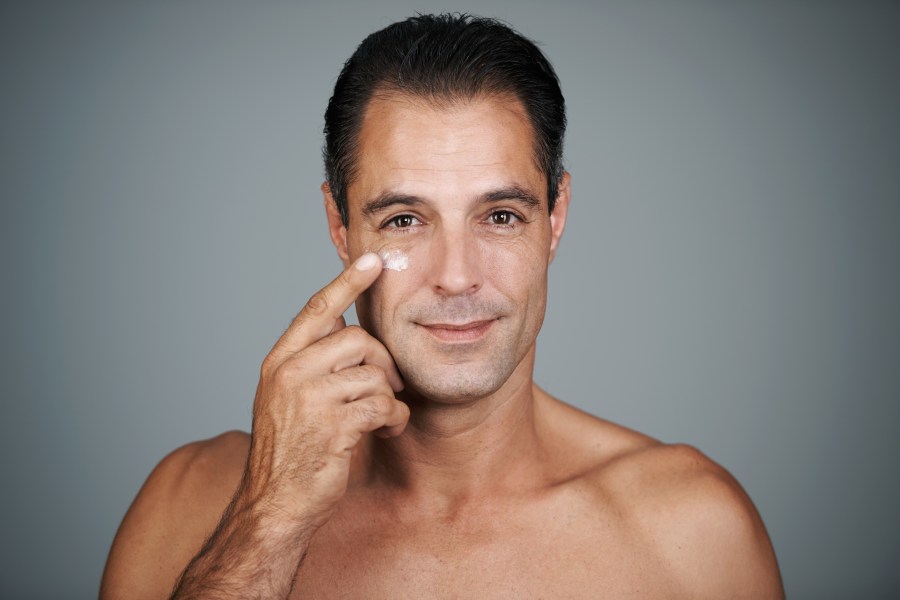
From wrinkles and age spots to skin cancer risk, here’s why SPF deserves a place in your daily routine
If you’ve listened to Baz Luhrmann’s famous 1999 song, then you’ll have already got the memo that suncream is, well, pretty damn important. And while the skincare product has been thrust on women as an essential for antiaging – for a lot of men, SPF is still the bottom of the pile – way behind say, shaving, protein or training.
And yet, according to dermatologists, wearing SPF is actually one of the most important things you can do for your skin. Not only is it essential for preventing skin cancer, but suncream is an anti-ageing hack that genuinely works (as opposed to leaving you with a dent in your bank account and a bunch of unkept promises).
“Without a doubt, a high-quality, broad-spectrum sunscreen is the single most effective anti-ageing product any man can use on a daily basis,” says Dr Anjali Mahto, consultant dermatologist and founder of Self London. “No expensive serum or moisturiser can miraculously undo the profound structural damage caused by unprotected UV exposure.”
That’s the thing about skin ageing: most of it isn’t inevitable. Genetics play a role, sure, but a huge amount of what we associate with “looking older” – wrinkles, sagging, pigmentation, the leathery look – comes from cumulative sun exposure over time. Essentially, you might forget the time you didn’t wear suncream – but your skin does not.
What does suncream even do?
“Sunscreen acts as a vital protective shield,” says Mahto. “By blocking UV rays, it actively prevents the underlying cellular DNA damage that leads to skin cancer and premature ageing.” Sun damage happens gradually, so it’s not something you’ll notice all of a sudden; instead it quietly creeps up on you – scary!
“Every time your skin is exposed to the sun without protection, UV rays penetrate the epidermis and trigger immediate oxidative stress, which begins breaking down your essential collagen and elastin stores,” explains Mahto. “Over time, this repeated micro-damage directly mutates your cellular DNA, increasing your risk of malignancy while accelerating the visible signs of ageing.”
Translation: every unprotected pub garden pint, holiday bathe or sunny dander eats away at the structural integrity of your skin. And just before you excuse yourself not wearing it because you’re inside all day, the weather is bad, or you don’t go in the sun, unfortunately UV rays don’t work quite like that.
“Regardless of the weather or the season, it is sensible to wear sunscreen daily,” says Mahto. “The skin on your face is thinner than the rest of your body and exposed year-round, making daily application non-negotiable if you want to prevent chronic sun damage.”
“UVA rays – which are primarily responsible for cellular ageing and collagen breakdown – can easily penetrate through thick cloud cover and standard glass windows,” she says. “So it would make sense to wear it every day.”
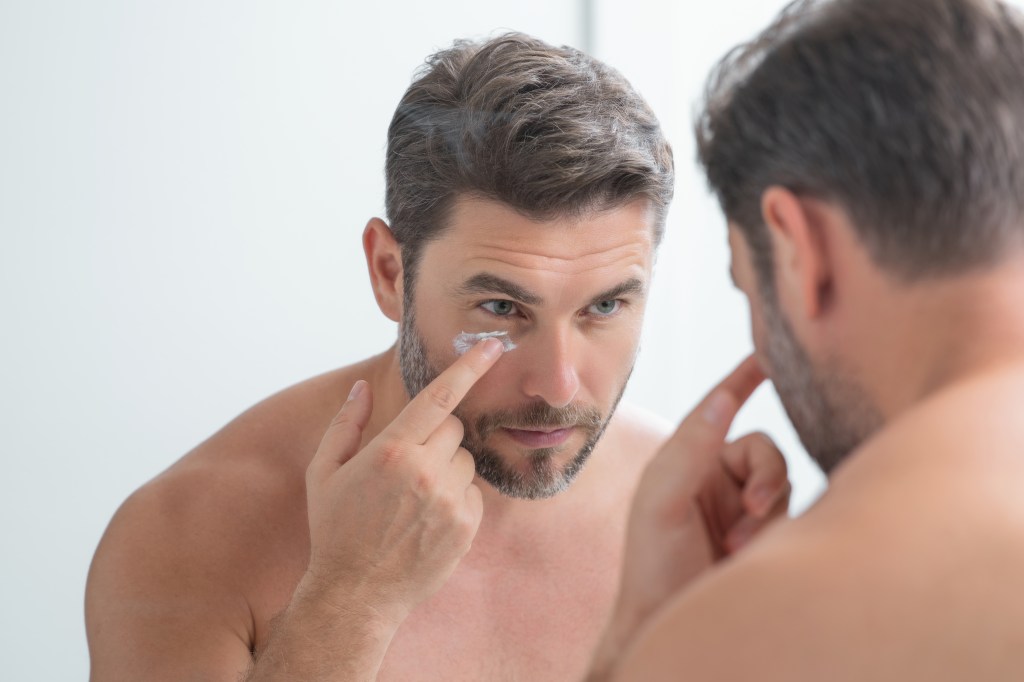
Which suncream should you use and how should you use it?
Thankfully, sunscreen has moved on considerably from the greasy creams that we associate with childhood holidays. Modern formulas are lighter, less shiny and infinitely easier to wear. But what factor do they need to be – and do they have to be a special type?
“I always advise using a minimum of factor 30 on your face to ensure adequate, robust protection against burning and ageing rays,” says Mahto. “Additionally, you must ensure the bottle explicitly states it is ‘broad-spectrum’ or features a high UVA star rating so you are fully covered.”
The aforementioned ‘broad spectrum’ is important because not all UV rays do the same thing. UVB rays are largely responsible for burning; UVA rays penetrate deeper and are more heavily linked to ageing. The advice is to get protection against both.
And what about how you should apply it? “Sunscreen should always be the absolute final step in your morning skincare routine,” says Mahto. “Applied generously after your active serums and daily moisturiser.”
Am I too late to start?
If you’re reading this thinking – ‘oh god, it’s too late for me’, then fear not, because according to Mahto, it’s always worth starting, no matter what age or skin stage you’re at. “It is absolutely never too late to start wearing sunscreen!”
“Clinical studies show that adopting the habit at any age significantly reduces your future risk of developing skin cancer,” says Mahto. “Protecting your skin now allows your body’s natural repair mechanisms to halt further structural degradation, effectively hitting the brakes on the ageing process.”
Should you use anything else with suncream?
If you want to go one step further, Mahto recommends adding an antioxidant serum into the mix.“A well-formulated antioxidant serum – such as one containing 10-20% vitamin C – applied in the morning provides a fantastic secondary layer of defence,” she says.
“It works beautifully and synergistically with your sunscreen to neutralise any free radicals from UV light and urban pollution that manage to penetrate the skin barrier.” That’s just if you want to up the anti, though – suncream is still the most fundamental option!
So, despite what the skincare industry would like you to believe, it isn’t really about magic creams reversing damage. It’s about trying to prevent it in the first place – and you can start now!