
From single-leg deadlifts to suitcase carries, these functional movements can boost stability, strengthen your body and improve everyday performance
PICS: Getty Images
If life is all about balance, then why don’t we train like it is? Perhaps it’s less glamorous than growing muscle mass, less obviously beneficial than the zone two cardio is when it comes to seeing personal bests on Strava.
However, studies such as one published in the academic journal Sports Medicine have shown that balance training has a positive impact on power, strength, and recovery too. And when it comes to longevity, being able to stand on one leg for more than ten seconds is said to have a correlation with longer life expectancy.
What is balance training?
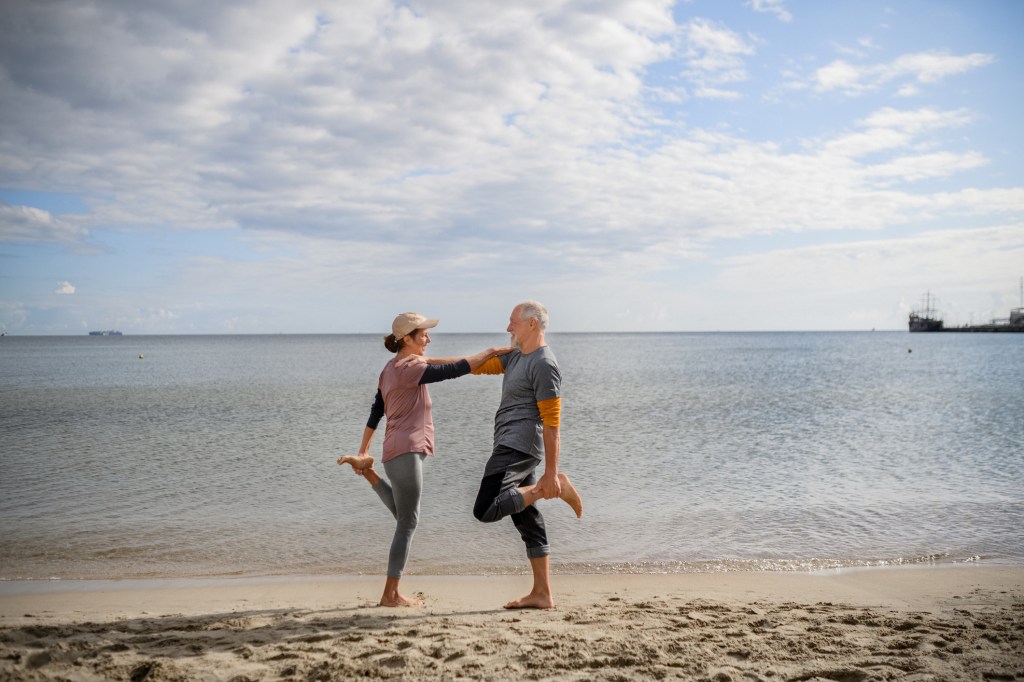
Technically, anything that makes you challenge stability. While sure, a lot of physiotherapy rehab will be about trying to rebuild balance after an injury (we’ve all stood on a mini-trampoline and tried to catch a tennis ball after badly rolling an ankle), balance is also trained by unilateral strength, callisthenics, core strength, and coordination exercises.
This means balance is something you can fit pretty comfortably into your current workouts. Whether that’s by switching up a few moves to bring a balance element in, or switching to unilateral movements. Here’s a few ideas to get you inspired.
Single-leg deadlifts
Deadlifts, especially Romanian deadlifts, primarily target the posterior chain and are great for building lower body power, and for helping the body’s natural movements to be more supportive, less strenuous on the lower back.
When performed as single-leg varieties they also give stabilising muscles such as the glutes, core and ankle muscles a bit more of a challenge. Hinge at the hip, stick your behind out, and get your back flat. You know the drill.
Lateral lunges
Side-to-side movements involve balance too, so this exercise which targets the frontal plane of motion has an additional functional benefit for balance. Aim for a deep, but controlled, stretch with a powerful and controlled push back into standing position.
Again, as lateral lunges train each leg independently, you’re able to ensure even strength between both legs, which is ideal for balance and preventing any part of the body (or one of your knees, perhaps) overcompensating.
Single-leg squats
Pistol squats are a true test for functional strength and balance, but they’re fairly advanced. Single-leg squats (with a chair behind you) are a good way to work up to those, as well as to generally test your balance well.
It’s great for the glutes, quads, hamstrings, and core. Focus on a slow controlled movement, it’ll make it harder, safer and more effective. You can progressively lower the support object in height until you’re ready to pistol squat (or don’t, this works fine!)
Squat jumps
For something a little more fun, a little more explosive, try squat jumps. A sure-fire way to get a killer burn through the quads and an elevated heart rate, all while also incidentally working on your balance. The explosive power is also handy for functionality, it is a way of reacting before you fall.
Try five reps for three sets, use it as a warm-up for some other exercise, if that works for you. You can also do this without as much stress on the body by just doing regular squats but focusing on an explosive push-up to standing (you may extend through to your tiptoes).
Upper body training for good balance
While our lower body is doing most of the work when it comes to navigating gravity, we can train our upper body in ways which help to support balance and correct muscular loading and kinetic chains too.
Suitcase carries
These are a great example. Walking, as you’d imagine, requires balance – loading one side of the body while walking obviously tests that. Incredibly useful in everyday life (shopping, gardening, quite literally carrying a suitcase from the car park to the airport).
To do these with good form, focus on keeping your posture tall and “proud”, as they say, as well as engaging the core. You want to avoid a slouch or pulling to one side. Walk a little distance, 20m is great. Swap hands. Go again. Simple.