
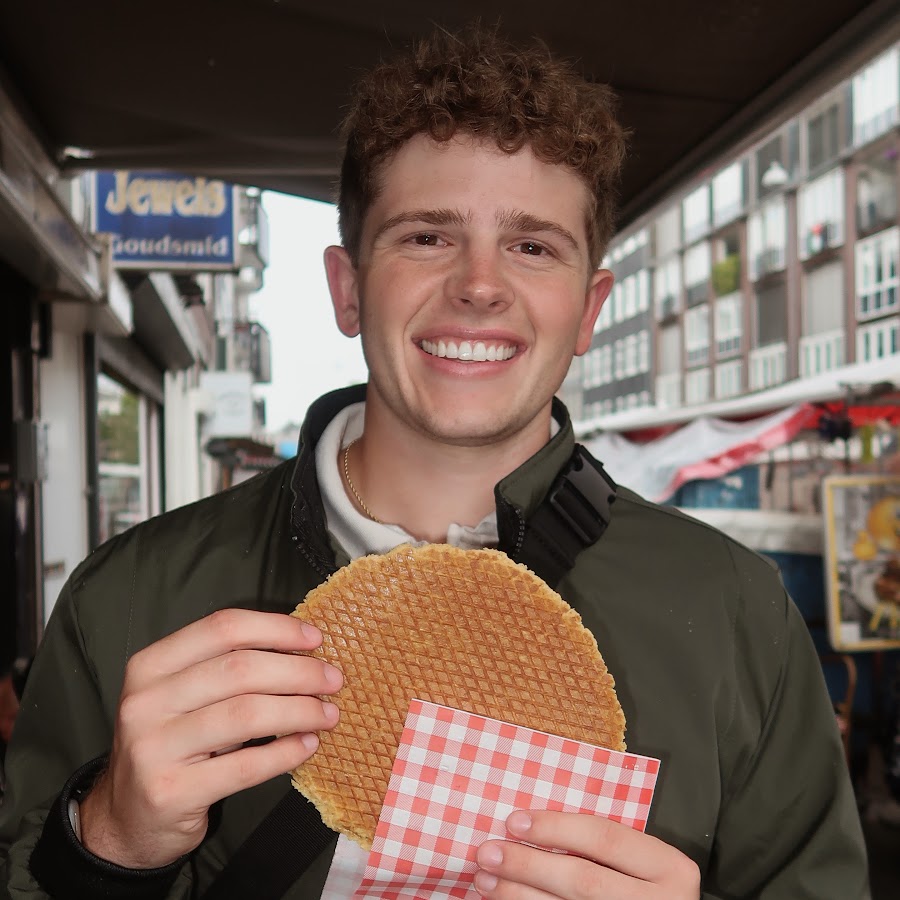
Tommy Winkler, aka The Food Guy, on managing extreme challenges and optimum fitness
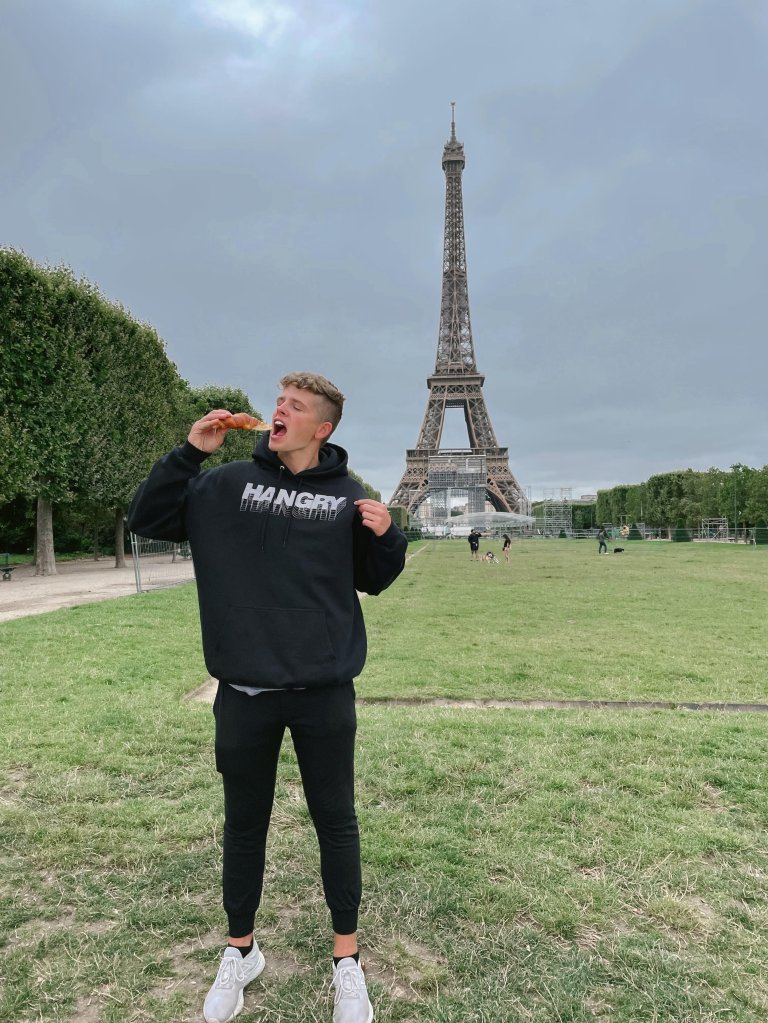
Tommy Winkler is best known for sitting in front of absurd quantities of food—mountainous burgers, towering breakfasts, entire pizzas that look like they belong at a family party rather than in front of one man. Online, he’s The Food Guy, a viral spectacle in a world that loves extremes.
But what millions of viewers don’t see is the discipline behind the chaos. When the cameras stop rolling, Winkler isn’t collapsed on a sofa—he’s lacing up running shoes, tracking macros, and planning training blocks with the precision of a competitive athlete.
His challenges aren’t just stunts. They’re part performance art, part nutritional experiment, and part Trojan horse. “If I can pull people in with something crazy, I can talk to them about how food actually works,” he says. It’s spectacle with a syllabus.
That’s why his content feels different from the traditional eating-challenge circuit. Winkler talks insulin sensitivity, glycogen stores, protein targets, and metabolic flexibility with the same ease he demolishes a 10,000-calorie breakfast.
In 2026, he’s taking the experiment further. Alongside bigger, bolder food challenges, he’s launching a slate of endurance running projects designed to show that extreme eating and extreme fitness don’t have to be opposites.
The paradox is the point. Winkler wants to prove that nutrition is a tool, not a moral battleground—and that discipline, not restriction, is the real superpower.
Men’s Fitness: You’ve built a huge following around people watching you eat. How does it feel to be famous for that?
Tommy Winkler: It’s honestly the craziest life. I feel incredibly lucky, but like anything, it comes with ups and downs. Right now, I’m living the dream, but at the same time I’m very aware that this is my career – and careers need to be sustainable. I can take advantage of a young body for now, and the discipline I put in every single day, but when you’re doing this under a microscope, with millions of people watching, it adds pressure. Everyone has an opinion, and the keyboard warriors don’t hold back. That’s something you have to learn to manage.
MF: Have you thought about how to make this career more sustainable long-term?
TW: Absolutely. That’s where the fitness side really comes in. Fitness has always been a huge part of my life – I’ve always loved pushing my body, especially mentally. That’s why I’ve been leaning more into that side of my content, breaking out of just the food niche. I don’t get to share the behind-the-scenes lifestyle as much as I’d like, so conversations like this are actually my favourite. When people meet me in person, they always ask about the training, the structure, what it’s really like day-to-day. That part often surprises people.
MF: Your followers essentially decide what you eat. How much control do you really have?
TW: In terms of food consumption, my followers control a lot of it. They suggest what I eat when I travel, what restaurants I go to, what challenges I take on. But I’ve learned how to be creative with it. It doesn’t always have to be unhealthy. I do food hacks, homemade food days, challenges where fitness is involved – like doing push-ups to earn my budget for food. The goal is to show that this lifestyle can be fun and balanced, not just reckless eating.
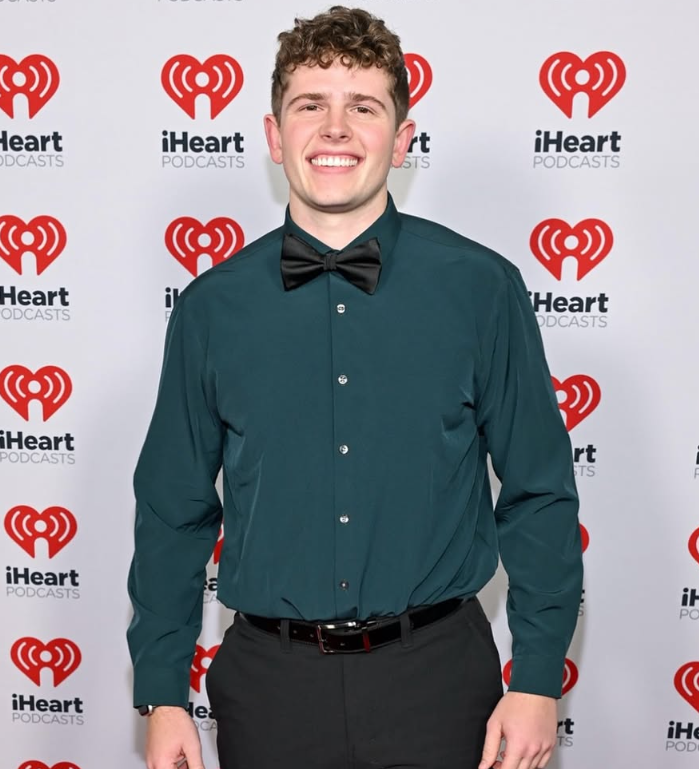
MF: Outside of challenges, what does “good food” actually mean to you?
TW: To me, good food is really simple: it’s food I enjoy. If I finish a meal and think, I’d eat that again, that’s good food. That doesn’t mean unhealthy food is “bad” or healthy food is “good.” I know nutritionists would talk about macros and micronutrients – and those things matter – but for my audience, I want to keep it realistic. Enjoyment matters. Sustainability matters.
MF: Do you track calories or macros?
TW: I’ve been down that road pretty hard. I used to track everything – calories, macros, all of it. And while it’s important to understand calories in versus calories out, tracking can turn unhealthy fast if you’re not careful. I became obsessive, constantly thinking about numbers instead of listening to my body.
I played college golf at the University of Wisconsin-Parkside, and nutrition was a big part of that. I even considered becoming a nutritionist at one point. So I understand the science. Now, I don’t track obsessively, but I know what’s in food. I prioritise protein every day, and I pay attention to how my body reacts. That awareness is more valuable to me than logging every gram.
MF: Your challenges keep getting more extreme. Do people deliberately try to push you too far?
TW: Oh, absolutely. Some people want to see everything – the weirdest combinations, bugs, extreme volumes. And I do skip some things. But I’m also wired to challenge myself. That’s why this started in the first place.
A lot of it is about curiosity. What happens if I eat McDonald’s all day? How does that affect my training? Can I still perform? It’s mental as much as physical. Try hitting a workout after a steak bagel and cheese – it’s a challenge.
MF: How do you judge the impact on your health?
TW: A lot of it is based on feel. I understand the basics – macros, calories, protein targets – but I also keep an eye on internal health. I’ve had blood work done. My cholesterol is good. I do have high blood pressure, which I’m aware of, and I know that’s something I need to monitor more closely as I get older.
I’m 24 now, and yeah – you feel invincible at that age. But I know that won’t last forever. That’s part of why fitness matters so much to me.
MF: Running has become a big part of your life. Was it always there?
TW: Sports were always there. Growing up I played soccer, downhill ski racing, and golf. Running came later. I have an older brother, and he’s extremely competitive – that definitely shaped me. He’s actually the reason I got into marathon running. He’d already done three when we ran Honolulu together last December.
Running hooked me because it’s honest. There’s no shortcut. You put in the miles or you don’t.
MF: What’s the plan for 2026?
TW: I’m planning three marathons: Los Angeles in March, then hopefully Chicago and New York later in the year. The real goal isn’t the number of races – it’s performance. I want to break four hours. Once I hit that, I’ll set the next goal.
Longer term, I want to build endurance challenges that sit alongside the food content. That balance is really important to me.
MF: Do you adjust your food challenges around marathon training?
TW: Definitely. I have the freedom to choose which suggestions I follow. Before Honolulu, I toned down the difficulty. I wasn’t trying to make myself sluggish. I leaned into food hacks and homemade meals – things that fuel performance.
That’s the balance. I still give in to temptation sometimes – life happens. I have a fiancée. If she wants late-night ice cream, I’m not saying no. If I didn’t go with her, that wouldn’t be balance – that would be a problem.
MF: You mentioned your fiancée. You’re getting married this year, right?
TW: Yeah, middle of this year. It’s a busy time – marathons, content, training, wedding planning. But that’s life. Having a partner keeps you grounded. You can’t treat everything like a challenge video. Some things matter more than performance metrics.
MF: Roughly how many food challenges have you done?
TW: I’d estimate over 1,000. I’ve posted almost daily for five and a half years. People don’t always realise that what they see in a short scroll might represent weeks of content. I’m not eating 10,000 calories every day.
MF: What’s the most extreme challenge you’ve done?
TW: When I hit 10 million followers on TikTok, I ate 10,000 calories and burned 10,000 in under 10 hours. That was brutal. Drinks didn’t count. It was mostly fast food—Taco Bell, Sonic, candy.
After that, I couldn’t sit down. My heart rate was elevated, glucose was spiking, and I had to keep moving just to feel okay. Sleeping was rough. And then the next day – you’re back at it again. That’s the part people don’t see.
MF: What do you want people to understand about your lifestyle?
TW: That the discipline happens off camera. That’s where it really counts. The challenges are the highlight reel. The structure, the training, the restraint—that’s what makes it possible.
MF: What are you most excited about this year?
TW: Outside of getting married, I’m really excited about a transformation video I’ve been working on. Over the last six months I’ve run about 600 miles. The video shows the food, the training, the behind-the-scenes reality of this lifestyle. That’s the direction I want to keep moving in – showing how it all fits together.