

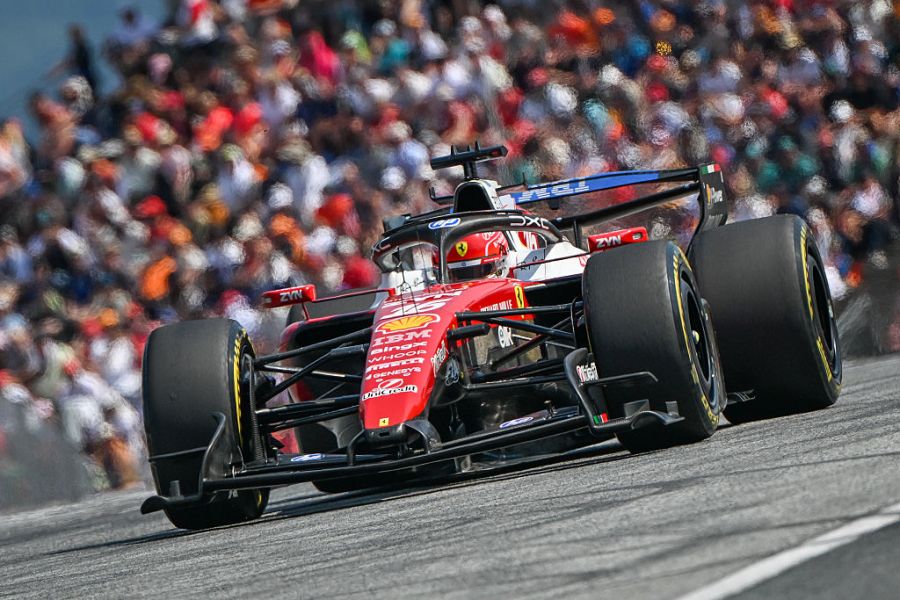
As the British Grand Prix approaches, Ferrari star Charles Leclerc is reminding us that elite performance starts long before race day. His sleep-first approach is backed by research linking better rest to improved recovery, sharper focus and better overall health
PICS: Getty Images
You wouldn’t think sleep and driving 220mph go hand-in-hand, but according to Formula 1 driver Charles Leclerc, they absolutely do. In an interview with Eight Sleep the Ferrari racer, who has invested in the sleep-focused company, has mentioned how sleep became an integral part of his approach to fitness and wellbeing from a young age.
The power of sleep
Leclerc started thinking about the mental side of his athleticism at 12-years-old, when he went to a performance centre in Italy, which taught him about the psychological and sleep-related sides of performance.
Various tests through the week he spent there showed him that when he was tired, there were huge drops in focus, which only confirmed his thinking. “Giving the brain moments of rest,” even on a race weekend, “is incredibly important,” he says in reflection.
In 2024 Sports Health journal published an article saying that “good sleep is tremendously impactful on overall physical and mental health, as well as athletic performance” and detail that poor sleep quality can adversely impact everything from reaction times and hormonal balances to muscle repair and energy stores.
Leclerc says that he can often sleep for “ten, eleven” hours at a time, and that he does so guilt-free. Optimization and productivity culture may disagree, but the science is clear – a meta-analysis (a study of multiple studies) published in Geroscience says that sleeping for less than seven hours a night can increase mortality risks by 14-34%.
How to create good sleep hygiene
While Leclerc is a highly-paid F1 driver, the foundations of his sleep routine are about finding good sleep hygiene despite the ever-changing environments he is in. This is very simple (and are also the building blocks Eight Sleep’s products focus on) to achieve; it just requires planning.
According to the NHS, good sleep hygiene consists of, ideally, a consistent sleeping and waking time, winding down without screens for at least half an hour before bed, and having a quiet, dark, cool sleeping environment. These can be achieved with affordable masks, earplugs, and managing room temperature.

This is why Leclerc became involved with Eight Sleep. In the interview, he says that because he travels “all the time – different time zones, sleeping in different places. The few nights I’m at home are precious. I need those nights to bring me back to 100%.” Using technology to help create his ideal sleep conditions, such as the cooling system in Eight Sleep’s Pod, which lowers body temperature, can be a huge advantage in ensuring a restful night.
Lifestyle and diet impact sleep too
We’re aware that caffeine and alcohol near bedtime is generally a bad idea, and for some, even exercising late at night is enough of a cortisol boost to stop them getting a good rest. But there are also ways to help sleep – of course, the reverse of these issues (keep caffeine to the morning, stop drinking a few hours before sleep if you’re having alcohol, exercise in the morning) works well; but there are ways we can promote sleep too.
Certain herbal teas such as Chamomile, Valerian Root, Lavender, and Lemon Balm are all known to have natural compounds which work to calm our bodies in various ways that make it easier for us to access a sleepier state.
Breathwork and sleep
At that performance camp as a young man, Leclerc also learned about breathwork, and specifically as an aid to quieting the mind for sleep. Breathwork is ideal for sleep, especially when we have little control over our environment, as it gives our nervous system a consistent cue to signal winding down for the night (even if we’re jet lagged).
Switching off outside of sleep is also important
Leclerc is also a strong advocate for creating space for hobbies and new experiences – this might seem contrary to the obsessive drive we often see mentioned in elite sport, but it has been shown that hobbies can boost our professional confidence too. Rest is key, physically and mentally.
For Leclerc, this includes playing the piano, padel, trying new activities such as pilates, reading, and listening to music. Specifically on playing the piano, he says “I think it’s a way to disconnect the brain and think about other things”.
Charles Leclerc is an athlete who quite literally goes from 0-100, and we could all benefit from doing the same.