

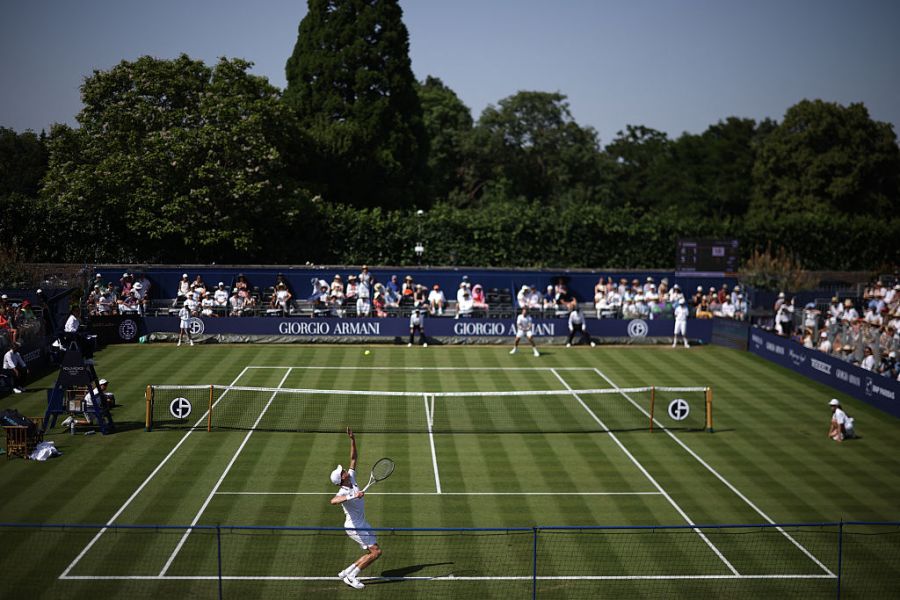
Elite tennis players rely on dynamic mobility to generate power, change direction quickly and stay injury-free. These are the key moves worth stealing for your own training
Mobility is still the primary source of unlocked potential when it comes to most of our fitness goals. We comprehensively train strength, cardio, increasingly our recovery too; but mobility tends to just seem more complicated, technical, and invisible (see, unrewarding) compared with even the most marginal of gains in other areas.
Yet mobility training focuses on the foundations of all movements, whether we want to finess our deadlifts or run with greater efficiency, mobility training is going to help. It’s also integral to our range of motion and ability to control our movements – these are where tennis comes in.
Fast, powerful, agile, and full of grace; tennis players are mobility masters and those attributes are the dividends paid out by solid mobility regimes. Injury prevention is another benefit, as well as, of course improving our tennis game itself – we can literally push further and generate more power.
Dynamic stretches are your best friend
The general consensus is to stretch dynamically for warm-ups, and to use static stretches to cool down. They help you to rehearse movements that are more similar to those you’re going to be doing in exercise, which helps everything from mind-muscle connections to form; but also raise your core temperature, increase blood flow to your muscles, and lubricate your joints in ways a static stretch cannot.
For tennis specifically, a lot of attention is placed on the thoracic spine, hip flexors, adductors, hamstrings, lower back, and shoulder rotation. They’re all areas which get heavily used in tennis, as well as being muscles we mere mortals tend to overlook in our typical routines.
Jumping jacks
Jumping jacks are a good all-round starting point, encouraging shoulder movement, a little explosiveness to get the body temperature rising, as well as putting a little bit of movement into the calves, quads, glutes, and hips. Do twenty of each regular, seal, and crossover jacks to get a good variety of upper body activation, at a nice controlled and steady pace.
Lunges
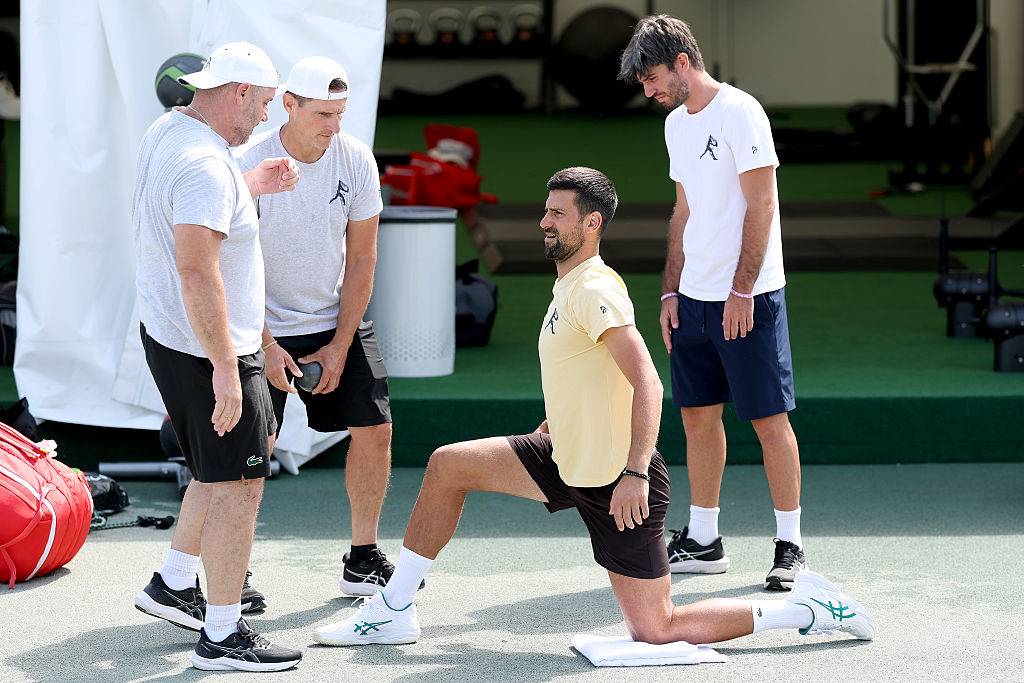
Lunges are another key element of dynamic stretching for tennis, opening up the adductors allowing for a deeper hip range on the loaded leg – a super common requirement in tennis for returning drop shots or coming in from the baseline at pace.
Lateral and side lunges are the mainstays here, both target lower-body strength in forward-movement and correcting muscle imbalances. Lateral lunges target glutes, hamstrings, quads, and inner thighs; while side lunges are especially useful for unilateral movements and hip mobility.
Few dynamic stretches prevent injury like lunges. In both cases, aim for steady but continuous movement and a good deep range of motion, switching from side to side, for a minute at a time. Two sets is great.
Thoracic spine mobility
Thoracic spine mobility is seriously overlooked across most disciplines and fitness routines, but in tennis specifically, neglecting mobility in these areas is setting yourself up for discomfort if not injury.
Serves and groundstrokes put a lot of stress on the thoracic spine (the longest area of the spine, placed between the ribs) and a lack of mobility often leads to our lower back and shoulders overcompensating, resulting in injury.
Kneeling thoracic rotations are a key exercise for increased mobility here, they also happen to help open the hips, shoulders, and lower back, which is always a bonus; straight-led thoracic rotation is also worth doing especially for those who find it difficult to rest on their knees. Hold the position for up to ten seconds before resetting and repeating up to ten times on each side.
Knee hugs
A more glute, hip, and hamstring activation that also helps with imbalances; while it might feel nice and tender it will serve you well for explosive movements across the court, from rapidly changing direction to connecting on aggressive volleys. The core also activates which helps ready it for twists, a solid core can work wonders when it comes to increasing stroke speeds.
Additional tips for tennis mobility
As well as these dynamic stretches, wrist flexors, hip twists, and one-leg jumps are also incredibly useful for focusing on the specific strain points of your body on court.
Foam rolling and trigger point work can also be used to encourage bloodflow to muscles to help them warm up more effectively. Tennis balls are useful for rolling out smaller areas, so there’s little excuse there. Game set!