

Want to know the secret to fitness success? Train smarter, not harder: these smart tweaks will actually deliver actual results
You probably don’t need to train harder in 2026 in a bid to get faster, fitter or leaner. Busy schedules, life admin and long days in the office can make it impossible to squeeze in more training, no matter how motivated you are.
And let’s not forget your social media feed hijacking your focus and flooding your brain with fads, unrealistic workouts and insane challenges.
Instead, make 2026 the year you train smarter. We asked two PTs to share their mini (but mighty) changes which could have the biggest impact on your training regime. From hitting the Pilates mat to actually making the most of your heart rate data.
- Recovery IS a training phase
Stop treating recovery as an afterthought.
“I tell clients to think of recovery as their ‘hidden training block’. It’s when muscles adapt and your nervous system resets. Poor recovery equals limited growth,” says Toby Spooner, PT and founder of fitness competition, Metrix.
Sleep, stress management and good food are just as important as the work you put in at the gym. That means taking rest days seriously, fueling yourself with whole foods (not just protein shakes) and giving your body time to repair before you hit it hard again.
“No pre-workout will ever beat eight hours of good sleep,” warns Spooner. Rest days don’t have to mean sitting slumped on the sofa all day. Walk, swim, stretch…just don’t burn yourself out.
- Do workout-specific warm ups
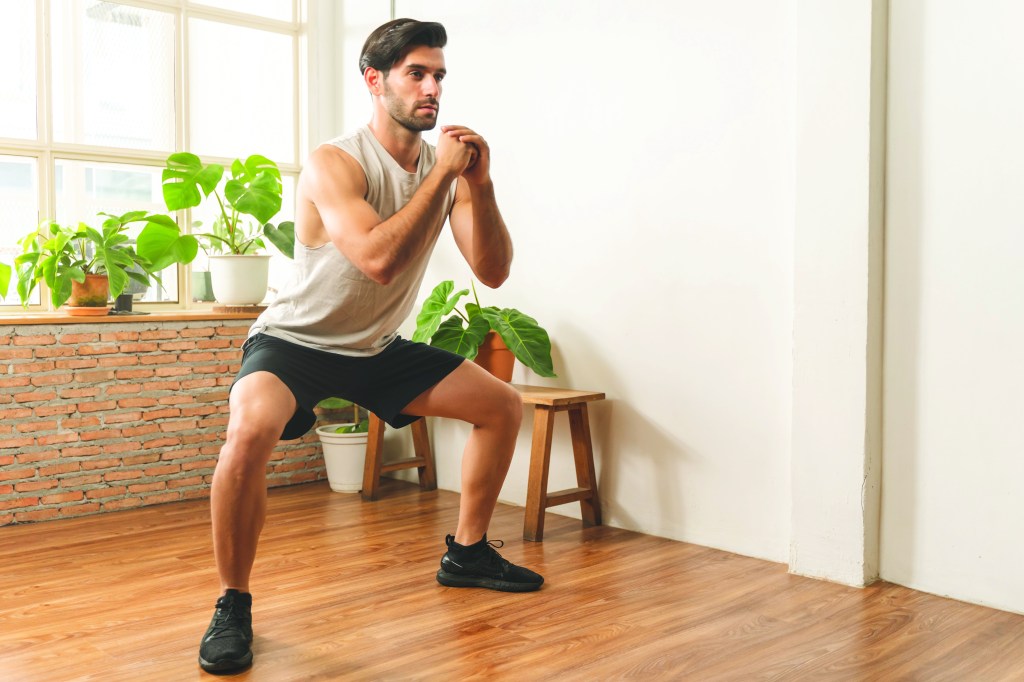
A couple of cat-cows and some floor reaches aren’t going to cut it if you’re hoping to hit a squat PB.
Instead, Will Duru, PT and founder of training app 12Reps, suggests moves that will actually prep your muscles for squats, specifically.
“Think hip circles, leg swings and bodyweight squats. These prepare your muscles for what’s to come. Wake your glutes up too with glute bridges and banded squat walks. If you’re kicking off with deadlifts, warm up your spine with cat-cows and some foam rolling across your back. For chest presses try band pull-aparts, press ups and wall slides.”
The first five to 10 minutes set the tone for your workout. So use them wisely.
- Strength first, cardio second
So, you want to get strong and fit? The order of events matters. “If you’re mixing a weight session with a cardio workout, always hit the weights first. That’s how you build lean muscle and make actual progress,” says Duru.
Hitting the treadmill before you go to the weights room fatigues your body and you’ll likely just stall the strength gains you’re after.
A 12-week study in the Journal of Exercise Science & Fitness, split 45 men into three groups: one did weights before cardio, another did cardio before weights and the third did no exercise. The exercise groups trained three times a week for an hour.
Although the group that kicked off with cardio did see some results, the group that did resistance training first lost more fat and boosted their muscular endurance and explosive strength.
- Train in different planes
Most people stick to forward-and-back or up-and-down movements in the gym. Think bicep curls, chin ups and lunges.
“These work in the sagittal plane,” says Duru. “This plane divides the body into left and right for forward-and-backward moves. But, your body was designed to move in multiple directions.” To build real full-body strength as well as better balance and coordination, you have to train in all three different planes of motion: sagittal, frontal and transverse.”
“Frontal plane divides the body into front and back halves for side-to-side movements such as side lunges and side raises, while the transverse plane cuts the body into top and bottom halves for rotational movements such as woodchops and Russian twists,” says Duru.

- Ignore most people on social media
Social media is packed with fitness influencers claiming they’ve found THE exercise to transform your body.
“If you read any ridiculous claims that ‘one move can do xxx’, ignore it,” warns Duru.
“Squats, deadlifts, presses and rows have been around forever for a reason. Mastering compound movements with good form will build more muscle and strength than any trendy exercise. Unfollow anyone who makes dodgy claims and stick to your own, trusted plan.”
- Stop falling for processed protein foods
If Joe Wicks’ recent protein bar campaign made you think twice about what’s in your snacks, then you’ll know about the potential dangers of overdoing the ultra-processed foods.
“Protein bars, powders and other processed protein snacks might have their place, especially when you’re short on time, but relying on them continually isn’t the best for your health,” warns Duru.
“Whole foods give you the fibre, vitamins and slow-release energy that processed products simply can’t match. The more ingredients you don’t recognise on the label, the less likely your body is to know what to do with them which might mean you feel sluggish or more prone to energy crashes, which isn’t going to do your training any favours.”
Try swapping one processed snack a day for a real-food option. Greek yoghurt and berries, boiled eggs or a handful of nuts work well and are quick to prepare ahead of time.
- Don’t be scared of periodisation
Going through the motions everyday with the same moves and the same intensity, might fulfil your love of routine, but as Spooner says, ‘nothing changes if nothing changes’.
Enter, periodisation.
“Periodisation is a method of structuring your training into specific phases to maximise your progress and prevent plateaus,” explains Spooner.
Your body adapts to the stress you put it under, so mixing up your training intensity or volume over weeks or months, means your muscles are continually challenged.
“Each phase of periodations focuses on a different goal, for example, building a base, increasing strength, improving power or tapering for performance,” adds Spooner.
“Personally I use periodisation depending on what I am training for. Right now, I’m doing a 12-week training plan for METRIX in February and I’m in the foundation building phase. This block is four-weeks long and then I’ll move into a four-week block that’s more focused on volume and intensity,” says Spooner.
- Train for tension and time
Hitting a deadlift PB is great but lifting heavy in every session might not always work in your favour. Instead, maximise gains by maximising time under tension (TUT).
“Control the speed of each repetition, especially during the eccentric phase, which is the lowering or lengthening part of the movement,” says Spooner.
In a bench press, you might lower the bar slowly for three seconds and then push it back up quickly in one second. This would be a 3:1 tempo ratio.
“This slower eccentric phase increases the total time your muscles spend under load, helping to improve strength and muscle growth. The goal isn’t just to move slowly, but to move with intention, maintaining tension throughout the full range of motion.”
- Utilise heart rate data
Always maxing out your heart rate when you’re running or cycling? Stop. Working flat out five times a week isn’t smart and it could hinder your progress.
“Focus on working in different zones in alignment with your goals. If you’re marathon training for example, steady state runs in zone 2 are far more effective than redlining every run in zone 5,” says Spooner.
Your max heart rate (220 minus your age) is your starting point. Zone 5 is 90 to 100% of this heart rate, zone 4 is 80 to 90% and zone 2 is 70 to 80%. This is a conversational pace: you’ll be breathing heavier but you could still have a chat while you do it.
FYI, your gender, fitness level and genetics will impact your true max heart rate.
“Zone 2 training is particularly effective because it develops your aerobic base; your body’s ability to use fat as fuel over long periods. These slower, steady runs improve endurance and overall cardiovascular efficiency, which is basically your ‘engine’,” adds Spooner.
Over time, you’ll be able to train longer without getting tired as quickly.
“Zone 4 and tone 5 are anaerobic zones, used for high-intensity efforts like intervals or sprints,” adds Spooner.
“These are important to improve performance and speed, but they place more stress on the body. A well-balanced plan includes both. Long-distance runners benefit from spending more time in zone 2 and less frequent sessions in zone 4 and 5 to avoid burnout or overtraining.”
In short, going at it too hard often just leads to pain and zero gain.
- NEAT before cardio
If you drive to the gym, to lift a few weights and do a 30 minute treadmill run, before driving back home and spending the rest of your day on your butt, your NEAT (Non-Exercise Activity Thermogenesis) will be pretty poor.
But Duru says that NEAT will burn more calories than any treadmill ever will.
“Unless you’re running every day, for long periods, you won’t burn as many calories as you think. Non-exercise activities such as fidgeting, cleaning, walking and even tapping your foot when you work, will keep you burning calories all day. It’s the real secret to fat loss.”
Plus, sitting for long periods can lead to pretty dire health consequences: increased risk of heart disease and diabetes, poor circulation and serious back and neck pain.
- Ditch bro splits
Your body doesn’t care what day it is: chest, arm, back or legs. Instead of focusing on specific body parts, Spooner suggests training by movement patterns.
“Push, pull, hinge, squat, lunge, rotate and carry improves performance and aesthetics at the same time, and helps you move better in day-to-day life, not just at the gym.”
To grow a muscle, you need repetitive, consistent stimulus; not just one hit every seven days.
“If you only train four times a week, you’re better off doing two upper body sessions and two lower body sessions, rather than one body part per week,” adds Spooner.
Focus on push, pull and carry moves in your upper body workouts (think bench press, dumbbell rows and farmer’s carry) and squat, hinge and rotate in your lower and core (think goblet squats, walking lunges and woodchops).
12. Pilates is for men too!
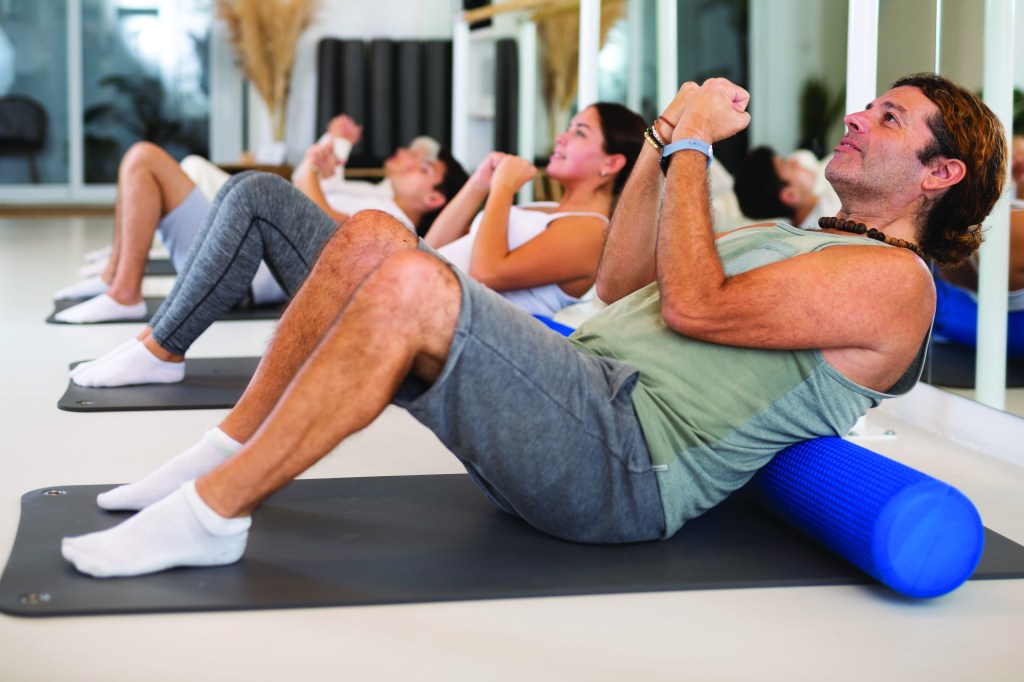
You won’t just find ladies and Lycra at a Pilates class. More and more men are getting in on the action too.
“Pilates targets the muscles that tend to be neglected in typical strength training, such as your deep core muscles and the small stabilisers around the spine, hips and shoulders,” says Spooner.
“Training these muscles can help you gain more power and stability in major lifts such as deadlifts. Because it’s low-impact nature, it means you can stack sessions alongside strength training without burning out.”