
Comedian Russell Kane on fitness, biohacking, playing Romeo and building a life that still feels like living
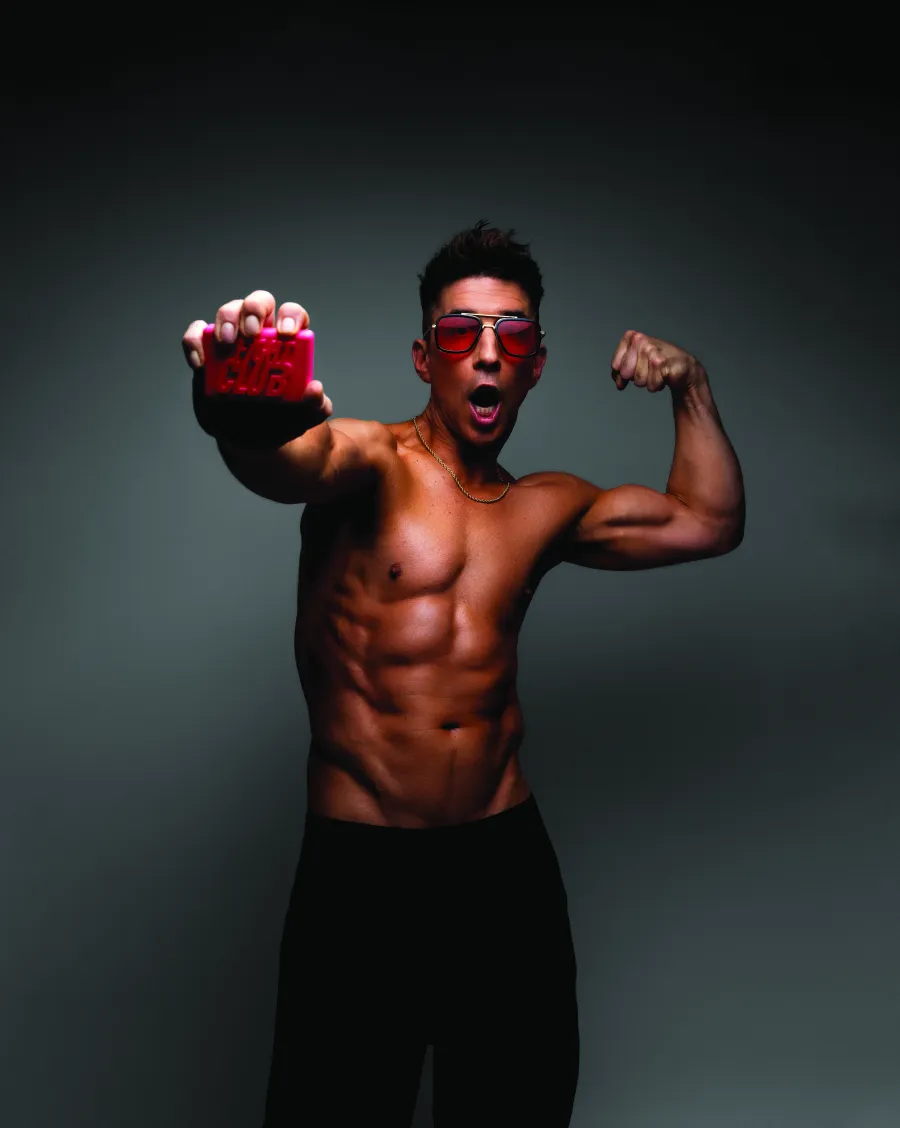
“This is your life, and it’s ending one minute at a time.” So says Tyler Durden, the anti-hero in David Fincher’s now-iconic film, Fight Club. Highlighting the fleeting nature of existence and urges and a desire to break free from societal conformity, it acts as a wake-up call to stop wasting time on mundane, consumerist routines and instead live in the present moment.
It’s a quote that could sum up the last 15 years of Russell Kane ‘s life. His personal wake-up call was on stage when, at the same time he was winning Best Comedy Show award in 2010 at the Edinburgh Comedy awards, there was the dawning realisation of the physicality of his performances and the fact that success was hitting in his mid-thirties. It was obvious that the clarion call to ‘get fitter’ was simply not going to be enough.
It was a voyage of discovery, taking in science and studies and more science and turning his body into an experimental temple for cutting-edge supplementation that could stem the ravages of time (at least in theory).
He has even – along with wife Lindsey – turned it into an anti-ageing business (JOLT) – but more of that later. It’s even taken him to playing an older (but younger than his actual age) version of Romeo in a forthcoming production by the Not To Tame Theatre company.
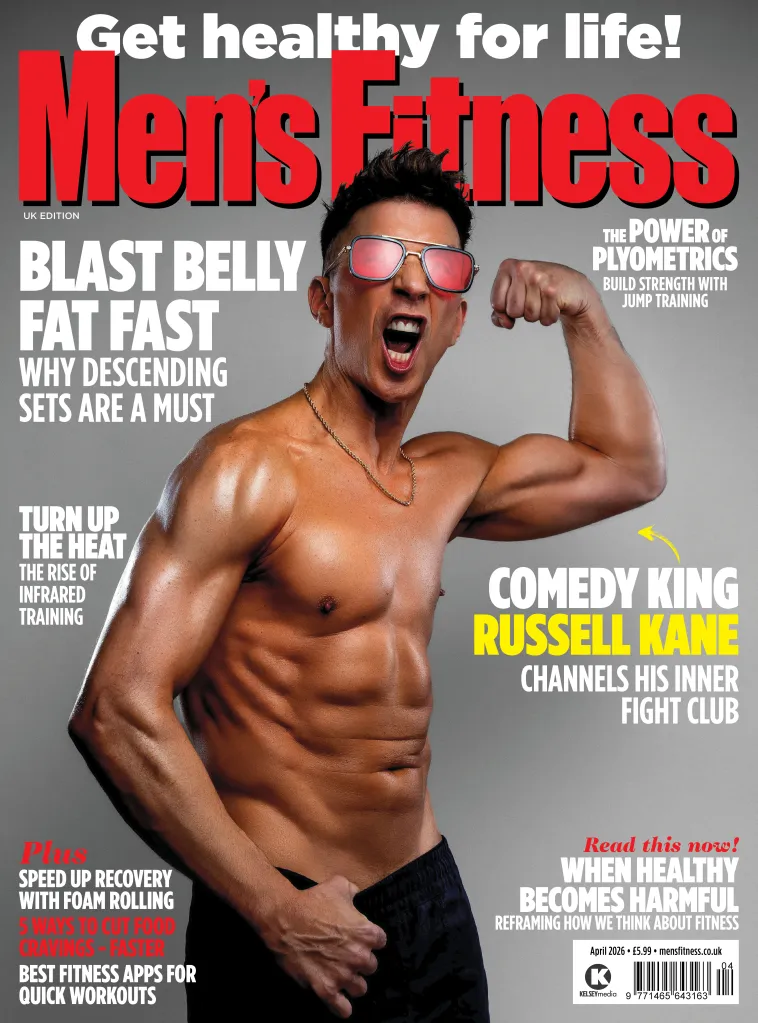
Kane laughs when he’s asked if he’s a biohacker. “Yes – serious, nerdy, obsessed biohacker,” he says, deadpan, before immediately undercutting himself. “But no, I wouldn’t call myself a professional biohacker. It was just stuff I was doing to stay younger for longer, to smash my stand-up and for people to go, ‘Really? I thought you were about 35,’ for as long as possible.”
That tension – between taking the science seriously and refusing to take himself too seriously – runs through everything Kane does. At 50-plus, the comedian, writer and broadcaster undoubtedly looks leaner, sharper and more energetic than he did a decade ago. But the point, he insists, was never about aesthetics.
“This wasn’t about abs,” he says. “It was about keeping my body, my brain and my energy in my thirties – because that’s where my work lives.”
Burning 800 calories on stage
Kane didn’t grow up dreaming of the gym. Quite the opposite. “I never did any exercise my entire life,” he says. “Nothing. My dad was a bodybuilder and he was obsessed with it, which weirdly just put me off. I think he made me allergic to exercise.”
Naturally thin, Kane coasted through early adulthood without worrying about weight or fitness. He hovered around 11½ to 12 stone, carried what he now recognises as “the thin man pouch belly”, and didn’t give it much thought. “I didn’t realise how dangerous that was,” he says. “But I was thin, so I assumed I was fine.”
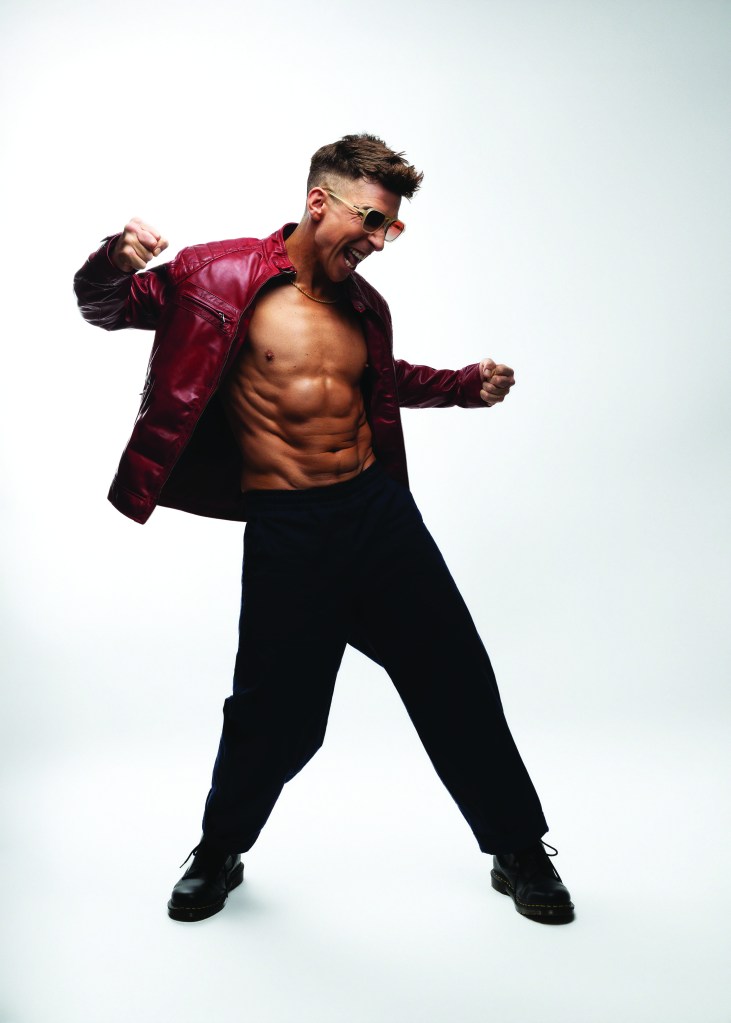
Then stand-up success arrived – explosively, but late. “I got successful at least ten years later than I needed to for the type of act I do,” he says. “My stand-up is extremely physical. High energy. When I finally put a Polar chest strap on during a tour show, I realised I was burning about 800 calories a night.”
The problem was obvious. “I’d just won this big award and I thought, I’ve finally been given the golden goose — but I don’t have the strength to rip the egg from its vagina.” It’s a grotesque image, but it captures the moment Kane realised that simply “getting fitter” wasn’t enough.
Slowing ageing while still living
Kane’s industry, he says, is brutal about ageing. “Comedy is full of prejudice against getting older,” he says. “So, I needed to slow down biological ageing, not just look a bit better – and I needed to do it without giving up my social life.”
That caveat matters. Kane has no interest in monk-mode longevity. “I do think serious biohackers forget something really important,” he says. “Social connection carries way more weight than people taking blood plasma levels want to admit.” For Kane, that means family, friends – and yes, dancing until sunrise. “Social connection involves Ibiza at least four or five times a year for me,” he says. “Raves. Parties. Living life. Vertical connection -family – and lateral connection – wider social groups.”
The surprise, he says, is how simple the foundations turned out to be. “It’s mind-numbingly simple,” he says. “Diet and exercise lift about 60 to 70 per cent of what you need to do. Sleep is huge. Stress is huge. Social connection is massive.” Kane’s mantra is simple: don’t eat shit, move a bit.
Rest is for wimps
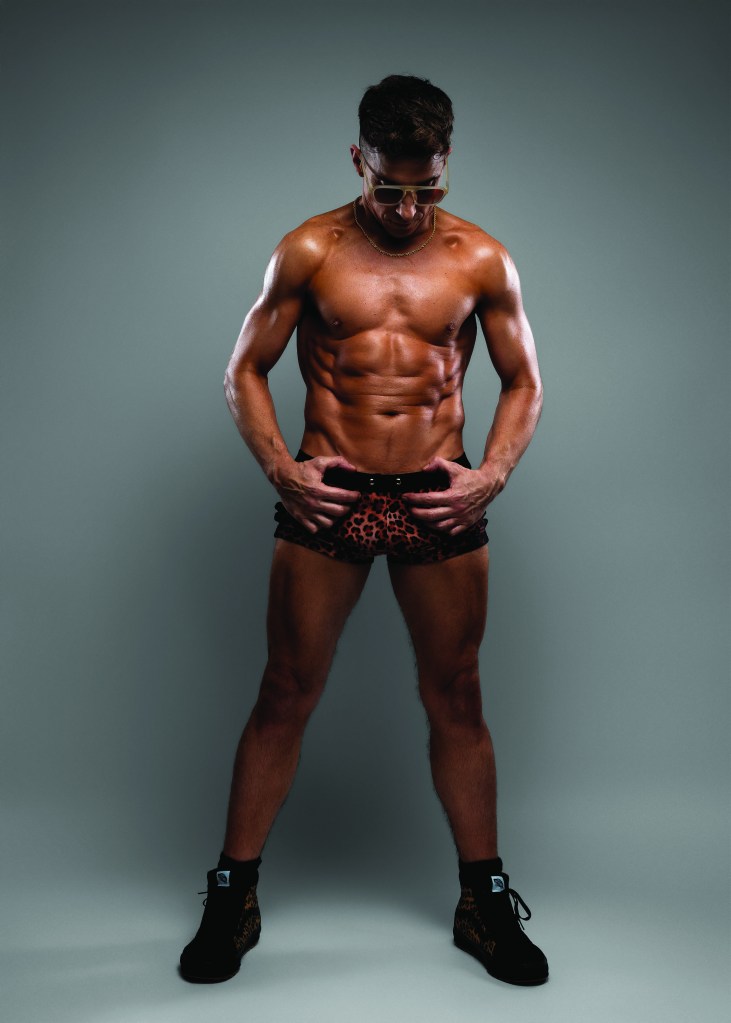
Kane trains daily. Not because he’s chasing size – but because he can’t stand stopping. “My dream day is 60 minutes of weights and 30 minutes of cardio,” he says. “Seven days a week if I can.” Rest days don’t appeal. “There’s no slam-dunk evidence that a rest day magically makes you bigger or fitter,” he says. “For someone my age, it mainly prevents injury – and I don’t really get injured.”
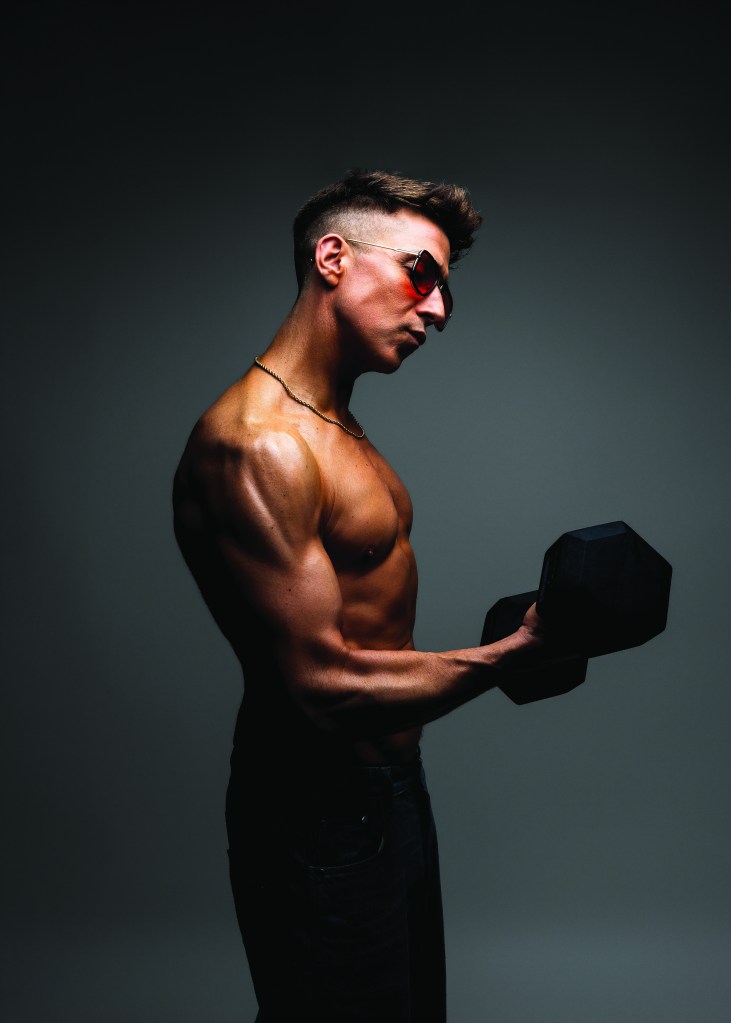
What he is chasing is strength retention. “As you get older, strength is insurance,” he says. “Against falls, frailty, breaking your hip. If you break your hip at 65, you’ve got about a 30 per cent chance of being dead within two years. You need to bounce, not break.” Despite the volume, Kane isn’t trying to get big. “I’m never going to be massive,” he says. “I’m 5ft 10″, about 74–75 kilos. Fight Club Brad Pitt is the target. I’m just stronger, not bigger.”
Kane trains alone. Always. “I hate exercising around other human beings,” he says. “I need to be completely on my own. I want the TV loud, something interesting or cheesy on, and no one watching me.”
Traditional personal training didn’t work. “I don’t want chatting,” he says. “I just want you to watch me, give me a grid, and leave.” AI changed everything. “I’m much better with robots than humans,” he says. “I downloaded this app, Doctor Muscle. It’s clunky as hell – and it’s the best thing I’ve ever done.”
The app tracks reps, load and perceived effort, adjusting sessions automatically. “It’ll say, ‘Get ready for 10 reps. How did that feel?’ You answer honestly, and it logs it. Next workout, it nudges the weight up by 1 or 2 per cent. Over and over.”
The result? “I progress on about 80 per cent of exercises every single week,” he says. “That shouldn’t be happening at my age.”
Despite his love of data, Kane ditched all-day tracking. “I tried wearables and it was a nightmare,” he says. “I was waking up excited to see how I slept — which made my sleep worse.”
He laughs. “It’s like quantum physics. The observer changes the thing being observed. My body was changing because I was wearing the thing.” So, he binned it — literally. “I hit my Whoop with a hammer and threw it away.” Now he tracks just two things: morning bodyweight and heart rate during exercise. “That’s it,” he says. “Anything more makes me worse.”
Kane is not militant about sleep – but he does respect it. On a perfect night, he likes lights out by midnight. “I try to be asleep by midnight and awake by eight,” he says. “If I can do that, I’m golden.”
Reality, particularly during tours or when family life intervenes, nudges things slightly later. “Normally I get in about half twelve and try to be asleep by half one,” he says. “Then I’m up about half nine.”
That window still gives him what he’s aiming for: seven and a half to eight hours, consistently. Evenings, Kane insists, are not about optimisation — they’re about downshifting.
“If I’m home, I want family time,” he says. “School run, dinner with my daughter, that sort of normality.” Once the house quietens, the routine is deliberately unglamorous. “I like structure,” he says. “Film on, bit of dinner, wind down.”
There’s no obsessive blue-light paranoia, but he’s conscious of stimulation. “I don’t want chaos late at night,” he says. “I’ve already had that on stage.” Where Kane is uncompromising is the sleep environment. “Our bedroom is basically a cave,” he says. “Two layers of blackout.” First come the blinds. Then the curtains.
“It’s genuinely hard to tell whether it’s night or day,” he says. “My daughter’s room is the same. That’s why kids don’t wake up at five — despite what people tell you.”
Temperature matters even more. “If I could sleep at 13 or 14 degrees Celsius, I would,” he says. “But that’s a bit much, so we compromise at 16.” His office, he points out, is currently colder. “This room [he’s taking the call from his office] is about 14.5 degrees,” he says. “I love it.”
The philosophy is simple: humans evolved sleeping in cool, dark environments, not centrally heated bedrooms glowing with LEDs. “I’m not reinventing the wheel,” he says. “I’m just removing modern nonsense.” And that makes perfect sense.
Where for art thou, Romeo?
And, so, to that role as Romeo. “Acting is something I’ve wanted to do since I started stand-up. But every time I’ve finished a tour, something else would come along and I also felt that maybe I didn’t have the right to pursue something that wasn’t totally geared towards the single objective of doing great stand-up tours. But I got to end of this tour and thought ‘I really need to do this’.”
Thankfully for Russell this vision coincided with him watching a performance of Twelfth Night being put on at Shakespeare North with Les Dennis as Malvolio. The production was by Not To Tame Theatre and Kane received a DM from Jimmy Fairhurst, Not To Tame’s artistic director, who said he would make a great Shakesperian actor. “That’s my aspiration,” says Kane “and to do that by proving myself with the muscle of verse plays was just an excellent opportunity.”
In his conversation with Fairhurst, Russell voiced his desire to play an older Romeo as a comment on masculinity, men who are stuck and toxic men who date toxic women from toxic families (Ed’s note: it must have been one hell of a coffee meeting). He convinced Fairhurst to pitch Romeo as a 41-year-old manchild – and so the project was born.
Details were being finalised as we went to press but Kane says “expect to see a lost womaniser get kicked in the nuts by a lightning bolt’.
“It started because I accidentally told the truth”
The idea for JOLT didn’t begin as a business strategy. It began, like many things in Russell Kane’s life, by accident – and with a mild sense of disbelief.
“I went on Steven Bartlett for what I thought was a standard interview,” says Russell Kane. “Then he asked how old I was.” Bartlett hadn’t looked it up. “So, I showed him my driving licence,” Kane says. “And he went, ‘How the fuck are you doing that?’”
Kane explained the obvious bits first. Hair loss, he shrugged, wasn’t magic. “Minoxidil,” he told him. “Any fucker can do that.” Then he made what would turn out to be the critical mistake.
“I casually said, ‘And I take NMN, resveratrol, fisetin…’,” Kane says. “Just chatting.” The clip went out. Kane thought nothing more of it – until his phone lit up. “My DMs went absolutely mental,” he says. “Not with ‘Where are you on tour?’ Not with ‘Where can I buy your book?’”
He pauses. “It was mostly women, actually. Just asking: ‘What is it again? Which brand? Where do you get it?’” That was the moment his wife, Lindsey Kane, clocked what he hadn’t. “She went, ‘That’s a business idea,’” Kane says. “Because people don’t want a boring, nerdy list of seven things. They want once a day.”
Lindsey’s insight wasn’t about trends – it was about behaviour. “She said, ‘You’ve just bored everyone shitless listing that stuff,’” Kane says. “And she was right. Even biohackers get bored.”
The question became brutally simple: “What are the seven ingredients with the best human evidence?” There was no brand brainstorming. No influencer positioning. Just research.
Kane leaned on his long-time friend Daniel Stone, whose background couldn’t have been further from wellness hype. “Dan grew up in a scientific household,” Kane says. “His dad worked in cancer research. He trained for the NHS. He taught me how to read scientific papers properly.”
Together, they stripped it back. “NMN. Trans-resveratrol — the trans matters. Fisetin. Lipoic acid. Curcumin — not turmeric, curcumin. Zinc and vitamin C. Piperine to activate it.”
That was it. “No fairy dust,” Kane says. “No under-dosing. No ‘proprietary blend’ bullshit.”
Kane takes no money from JOLT. In an industry drowning in affiliate links, Kane is oddly militant about one thing: distance.
“I don’t earn any money from biohacking,” he says. “I’ve never been paid a penny by JOLT.” His role is creative, not commercial.
“I was in branding and advertising before stand-up,” he says. “So I just went: Use this typeface. Call it this. This is the tone. This is how the brand talks.”
Then he stepped away. “I don’t want meetings. I don’t want money. I don’t want to be involved day-to-day,” he says. “Lindsey runs it. Dan runs it. They’re killing it.”