

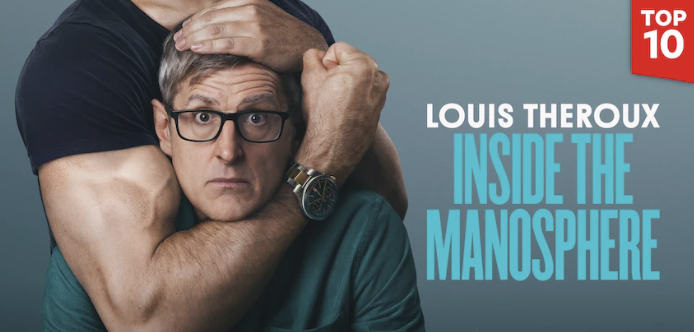
As Louis Theroux’s new Netflix documentary explores the rise of the ‘Manosphere’, we examine why toxic masculinity has become such a powerful force online — and why young men deserve better role models
IMAGE COURTESY OF NETFLIX
There’s something strangely surreal about watching Andrew Tate dancing in Dubai while the internet burns around him.
The video did the rounds online earlier this year: Tate, smiling, loose-limbed, carefree, moving to the music while controversy, criminal investigations and global debate about his influence raged beyond the dance moves.
The clip felt oddly historical – like the ancient story of Nero fiddling while Rome burned. A leader so absorbed in his own spectacle that he seemed blind to the chaos unfolding around him.
Whether fair or not, the parallel captures something essential about the modern ‘manosphere’: a world where outrage, controversy and swagger are part of the performance — and where self-awareness often appears to be the first casualty.
That’s the backdrop to Louis Theroux: Inside the Manosphere, the new documentary from Louis Theroux now streaming on Netflix. Theroux’s film dives into the digital ecosystem that has propelled figures like Tate — and many lesser-known but equally influential personalities — into the role of role models for millions of young men.
What he finds is not just a strange corner of the internet. It’s a cultural force.
What toxic masculinity actually means
“Toxic masculinity” is one of those phrases that gets thrown around so often that it risks losing its meaning.
At its core, it doesn’t mean masculinity itself is bad. Far from it. Strength, resilience, responsibility, discipline — those are qualities many would consider positive traits in men.
Toxic masculinity refers to the rigid and exaggerated version of those traits that discourages empathy, emotional openness and respect for others. It frames dominance as virtue, vulnerability as weakness and women as either trophies or enemies.
In the world Theroux explores in Inside the Manosphere, masculinity becomes something closer to a competitive performance. Many of the influencers he interviews frame life as a hierarchy where men must accumulate wealth, power and sexual conquests in order to prove their worth.
The language is often brutally simple: men must “win”, women must “submit”, and any challenge to that worldview is dismissed as weakness or manipulation.
It’s not subtle. But that may be exactly why it works.
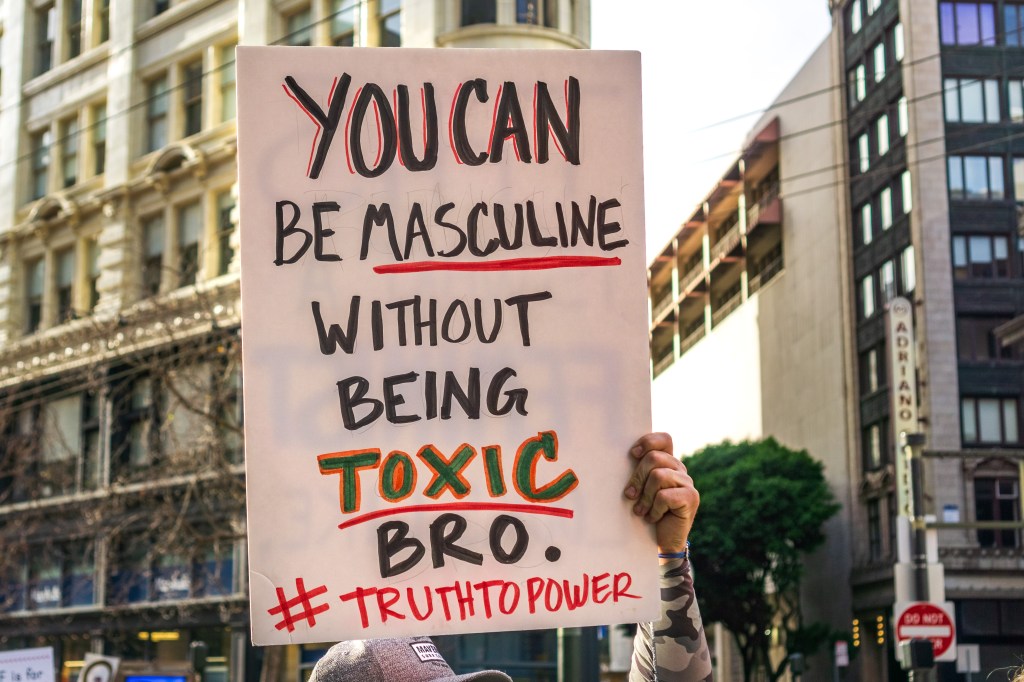
The business of being outrageous
One of the most revealing aspects of Louis Theroux’s ‘Manosphere’ documentary is how openly some of its subjects acknowledge the incentives behind their behaviour.
At one point, Theroux describes the economics of the manosphere bluntly: “It’s highly profitable to be a dick on the internet.”
Outrage drives engagement. Engagement drives followers. Followers drive revenue — whether through courses, subscription communities, affiliate schemes or self-help programmes promising to turn ordinary men into “alpha males”.
In this environment, controversy isn’t a side effect. It’s the business model.
The documentary shows how influencers deliberately say extreme things knowing their fans will clip the moment and push it across social media platforms — a tactic known as “clip farming”.
The more outrageous the statement, the more likely it is to spread. And the more it spreads, the bigger the brand becomes.
Why young men are listening
If the manosphere were just a handful of loud personalities shouting into the void, it wouldn’t matter much. The reality is more complicated.
Research suggests that nearly two-thirds of young men now encounter masculinity influencers online, whether through YouTube, TikTok or podcasts.
For many, the initial appeal isn’t misogyny or conspiracy theories. It’s something far more relatable: the promise of self-improvement.
Fitness advice. Discipline. Financial independence. Confidence with women.
These are topics that have long been staples of men’s magazines — including this one. The difference is that in the manosphere they’re often bundled with a worldview that blames feminism, modern culture or “the system” for men’s struggles.
Theroux himself points out how deeply these ideas are beginning to seep into everyday life.
“They are making inroads into the culture,” he says in relation to manosphere content. “Their influence is being felt in schools, in the workplace, and all across the internet.”
For young men navigating a confusing world of shifting expectations around masculinity, that certainty can be seductive.
Even if it’s deeply flawed.
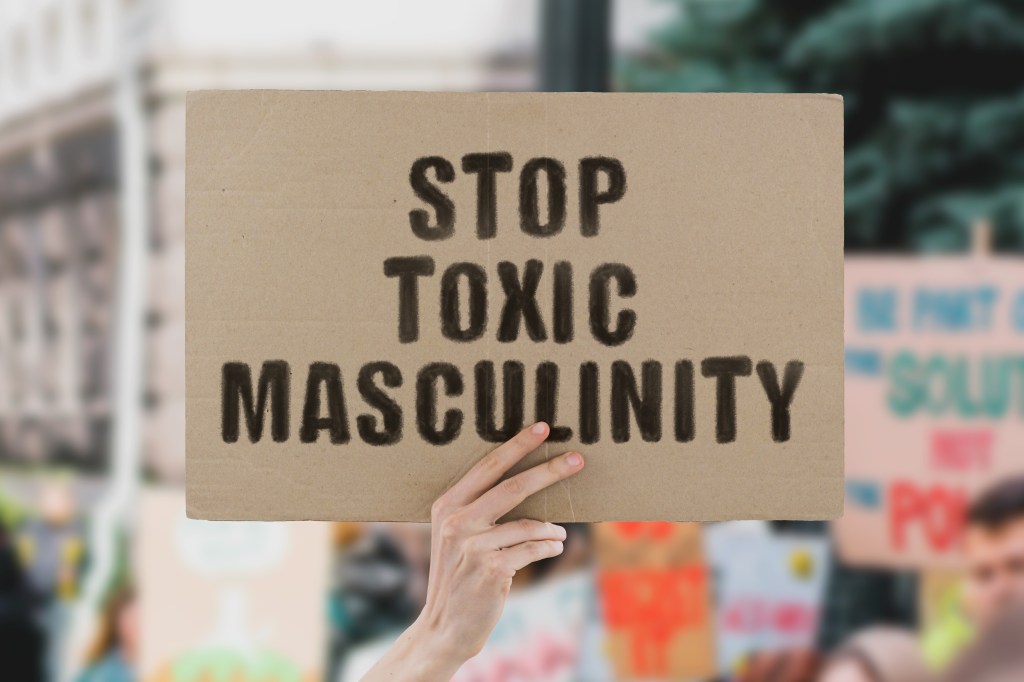
The problem with these role models
Watching Theroux interview figures from the manosphere is often uncomfortable — not because they’re particularly sophisticated, but because of how casually they frame deeply regressive ideas.
In many cases, women are portrayed as intellectually inferior or inherently manipulative. Monogamy is described as a constraint for men but a duty for women. Gender equality is blamed for social decline.
It’s a worldview that belongs more to the 1950s than the 2020s. But the most troubling part may be the emotional emptiness behind it.
For all the talk of strength and success, many of the influencers Theroux meets seem trapped in a narrow definition of masculinity that allows little room for empathy, friendship or vulnerability. Everything becomes transactional: money, status, sex, dominance.
It’s a bleak vision of what it means to be a man. And yet it’s packaged as empowerment.
A better model of masculinity
The irony is that many of the values the manosphere claims to champion — discipline, physical fitness, self-belief — are not inherently toxic at all.
They’re the foundation of healthy masculinity when balanced with empathy, accountability and respect.
That’s something Theroux’s documentary quietly hints at by contrast. His calm, curious presence — asking questions rather than shouting slogans — demonstrates a very different kind of male confidence.
One that doesn’t require domination or outrage to prove itself.
And it’s worth remembering that for every influencer peddling resentment online, there are countless men modelling a more positive version of masculinity: coaches, fathers, teachers, athletes, mentors.
Men who lift others up rather than tearing them down. Men who recognise that strength isn’t about silencing emotion, but managing it. Men who understand that respect — for yourself and for others — is the real mark of maturity.
Choosing better heroes
The internet has made role models easier to find than ever before. Unfortunately, it has also made the loudest ones the easiest to hear.
What Louis Theroux: Inside the Manosphere ultimately shows is not just the rise of toxic masculinity, but the machinery that amplifies it — algorithms, outrage and the relentless pursuit of attention.
Which brings us back to that viral video of Andrew Tate dancing in Dubai. Maybe the Nero comparison isn’t entirely fair. But the image still resonates: a man performing confidence while the consequences of his influence swirl around him.
The difference is that Rome doesn’t have to burn.
Young men today have more choices about who they listen to than any generation before them. And if the manosphere offers a narrow, angry vision of masculinity, there are better alternatives everywhere — from sport and fitness to community and mentorship.
In other words, the future of masculinity isn’t decided by the loudest voice online. It’s shaped by the examples we choose to follow.