
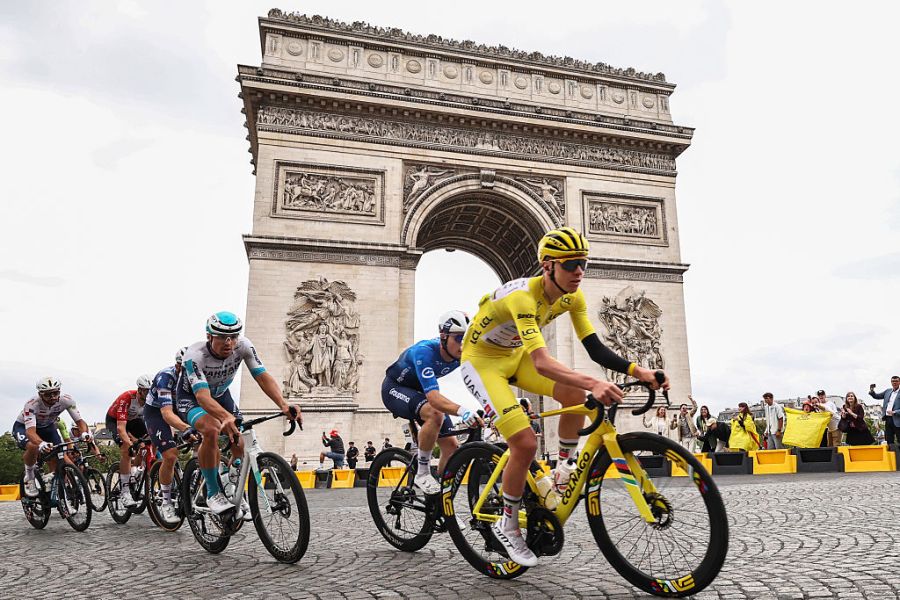
Long rides aren’t just about grit. With the Tour de France starting this weekend, here’s how to build endurance, improve fitness and fuel properly for hours in the saddle
PICS: Getty Images
Professional cyclists represent roughly 0.00001% of the population, and occasionally one comes along that is able to outshine 99.9% of the professional circuit. Presently, his name is Tadej Pogacar.
In late 2024 Pogacar said to Cycling Weekly that he likes to do five hour zone 2 rides when he can, especially on flatter routes like those in the coastal regions of Spain, Calpe is a go-to for his team. For Pogacar, Zone 2 is 320 – 330 watts of power, with a heart rate in the 140-155 bpm range.
These numbers, frankly, are as good as impossible for almost anyone who has ever lived, so let’s forget about those. But the idea of a five hour ride in zone 2 generally? Doable, maybe even a fun day out, and a great challenge to aim for.
Whether you set five hours in zone two as a goal and continue to try and improve your wattage and BPM, or are simply looking to find ways to extend your endurance so you can enjoy cycling for longer, this is a guide to help you on your way.
Cycling training for endurance
Most cycling training does happen on the bike, as you may imagine. Not only because practice makes perfect, but because it is low impact, and therefore, there’s much less harm to frequent rides than there is with other exercise activities. It helps to be exposed to a variety of different climates, situations and terrains too, meaning you can think less about logistics and focus more on enjoying.
Shorter, more intense sessions
This might sound like the opposite to long moderate cycling, and it is, but that doesn’t mean it won’t help. Tempo rides, sometimes called sweet spot rides, are also good for building endurance as they push the aerobic system enough to cause it to strengthen (not dissimilarly to how muscles grow).
Building these into your training is convenient when you’re time-stretched, but it does also actively help your muscles and heart to deal with higher stresses, which help when it comes to endurance too.

Sweet spot rides are generally 76 to 90 per cent of your threshold power, or 75 to 85 per cent of threshold heart rate, held for 30 minutes ideally, though two rounds of 20 can work too. Doing these twice a week with a longer ride at the weekend is a routine most people find useful. Eventually, you can add these sessions into a longer ride also – a three-hour ride with two 20-minute blasts in the sweet spot range, for example. This allows our body to get used to high-intensity rides.
Progressively longer rides
Deciding to just cycle for as long as possible, with that ultimately becoming a five hour ride, is not optimal. But, building endurance does require riding long rides. If your typical ride is, for example, an hour long at a zone two pace, you will want to up this to two and a half hours as opposed to adding half an hour on.
It’s only in these conditions that we are able to really push our cardiovascular systems and muscles in ways which they can learn (and gain) from. Even if it means dropping into lower threshold zones to complete the ride, this is better than stopping early. When it comes to training for an event, the cycling consensus is similar: do the distance in training first.
The optimal intensity is 57 to 75 per cent of functional threshold power, or 68 to 75 per cent of threshold heart rate. If you don’t have a power meter, don’t worry, even Pogacar tends to prefer to track hert rates over power meters, though using both in combination can only provide more information while training. Aiming for three hours is a great start, aiming to build gradually to five hours in half-hour incrememts from there. One a week is plenty, and something to look forward to each weekend.
Fuelling properly
Training is obviously key, but five hour rides will require fuel, and nailing the fuelling you need can give great results when it comes to having an enjoyable, and generally comfortable, ride.
Annoyingly, when it comes to this, we are very much all individuals. There are some general pointers that will help, but it is so often a case of trial and error, realising which tips work and which don’t, using this to refine the approach until you have a sense of what works best (this can always be experimented with in training periods of course).
We store fuel in a few ways, our muscles hold carbs for quick-release energy, our liver also holds some for over-night energy requirements, and the rest we hold in fat. Utilising all three is important, and we need to keep levels up in each of these for long distance rides.
This means focusing on hydration, carbs and fats during the ride. 30-60 grams of carbohydrate per hour of exercise is considered ideal, as it is comfortably within the range that we can actually mettabolise, creating no surplus (which will just slow us down).
Dates, coconut oil, and an electrolyte (drink or gummy) are great options during the ride, while eating 90 minutes before riding is advised generally.
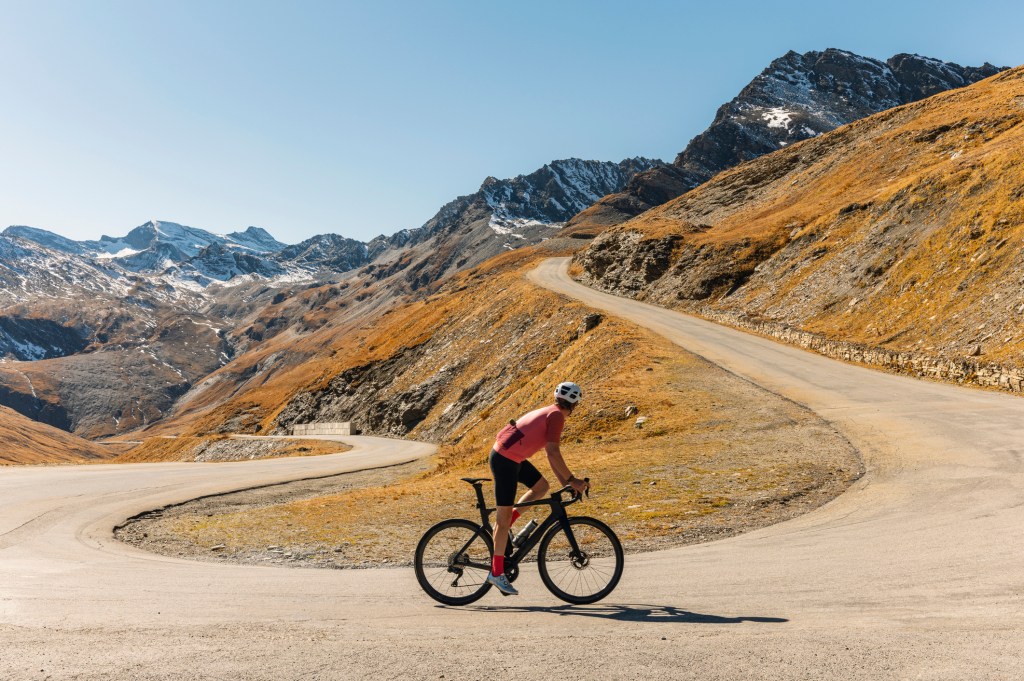
Gym training for endurance cycling
Muscle conditioning is useful for avoiding cramps, as well as building power. But it’s important to train smart. As most cycling training is done on the bike, the real advice is to focus on other types of strength training off the bike.
Cycling generally only allows for concentric movements, so working on eccentric movements is also useful for rounding out the muscle’s ability to strengthen, as well as strengthening tendons and ligaments which is useful for injury prevention.
Focusing on low-rep high-weight movements is advised as it works what cycling (naturally, incredibly high repetition but with less resistence) cannot. This muscle gain also helps to reduce fatigue on the bike, even in endurance contexts. Generally, it’s worth focusing on squats, deadlifts, and posterior chain movements.
Where possible, doing unilateral movements has the added benefit of improving balance. Twist-based movements are also good to incorporate, as it mimics the movements needed to cycle and transfer energy from each leg.
Also, make sure your bike is calibrated properly and that you’ve done what you can to have a comfortable seating position; a sore backside for five hours is a miserable time, and to an extent, preventable. With that, enjoy!