

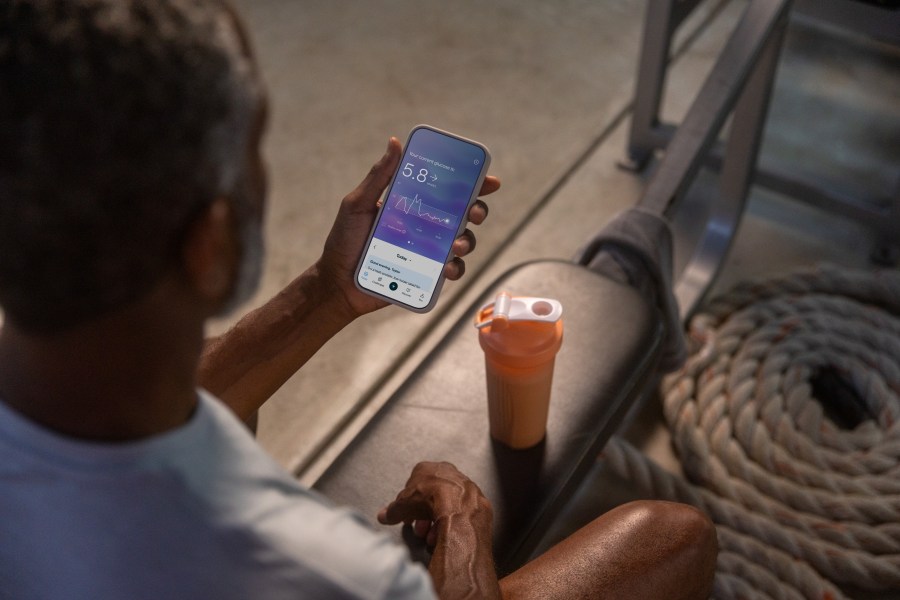
From energy and fat loss to better sleep and sharper training, real-time blood sugar data could be the missing metric in your performance toolkit
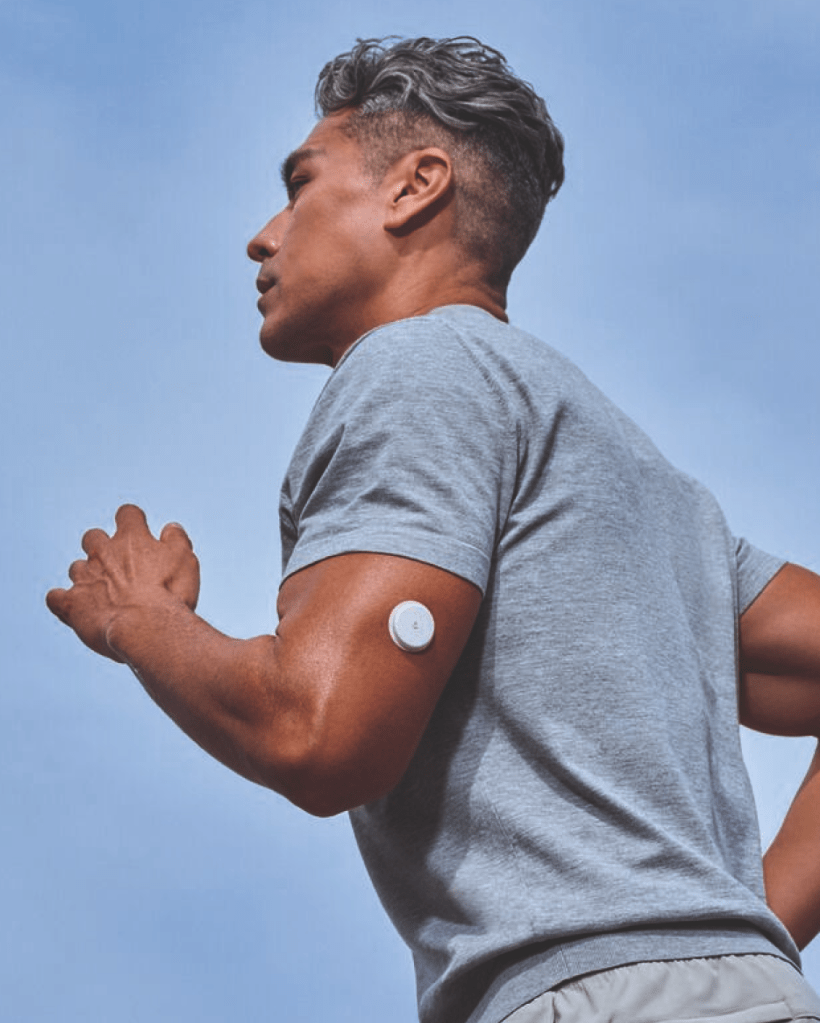
Two weeks ago, I attached a small sensor (a Continuous Glucose Monitor or CGM) to the back of my arm from Abbott Laboratories. I don’t have Type 1 diabetes. I don’t have Type 2. I train regularly, watch what I eat and my average glucose data reading (according to my Lingo device) sits at a respectable 5.8 mmol/L.
On paper, I’m metabolically “fine.” But the real story isn’t in the average. It’s in the spikes.
The 3pm slump after what looked like a sensible breakfast and lunch. The restless night following a late dinner and pre-sleep hot chocolate. The “healthy” snack that sent my glucose soaring higher than the dessert I thought I should have avoided.
For men who pride themselves on performance – in the gym, at work, at home – continuous glucose monitoring is quietly becoming the next frontier.
And, according to Pamela Nisevich-Bede, Global Nutritionist at Lingo, that shift is long overdue. “Most people assume they’re metabolically healthy,” she tells me. “But when you’ve never had access to real-time data, minute by minute, you don’t actually know what’s happening behind the scenes.”
The myth of being “bulletproof”
Men are particularly good at assuming we’re fine. We train. We cope. We push through fatigue. We wear busyness like a badge of honour. But glucose instability doesn’t announce itself dramatically. It shows up as brain fog. Irritability. Cravings. Poor sleep. Gradual fat gain around the midsection.
“There’s a significant population with some degree of glucose dysfunction who have no idea,” says Nisevich-Bede. “But even beyond that, it’s about optimisation.”
Optimisation is the key word here. This isn’t disease management – it’s performance management. “I like to use your example of the flapjack and then needing a nap,” she says. “Would you know that fatigue was driven by a glucose spike and crash if you couldn’t see it?”
Without data, you assume you’re just tired. With data, you see the mountain peak on your graph – followed by the sharp drop. Her aim isn’t to eliminate pleasure. It’s to flatten the rollercoaster.
“We’re not trying to remove all movement,” she says. “We’re aiming for rolling hills, not Mount Everest.”

The dinner trap
The biggest surprise for most men isn’t what happens after breakfast. It’s what happens after dinner.
“Timing is huge,” she explains. “Eating too close to bedtime, meals hiding carbohydrates, alcohol – that can create delayed glucose spikes overnight.”
You wake up feeling groggy and blame stress, screens or bad luck. “It’s the glucose,” she says. Alcohol, in particular, complicates things. It can initially blunt glucose levels, then cause delayed instability hours later – precisely when your body should be in repair mode.
The solution isn’t monk-like restriction. It’s small strategic shifts: eat earlier when possible, prioritise protein and fibre, and if you’re having dessert, have it after a balanced meal rather than on an empty stomach.
“I call it ‘have your cake and eat it too – but at the end of the meal,’” she says.
What is a Lingo count?
The system I’ve been using translates glucose variability into a daily “Lingo count” – essentially a budget. The higher and longer your glucose spikes, the more points you accumulate. Stay within your target and, over time, you improve metabolic health.
“It’s designed to simplify what’s happening,” she explains. “It highlights when glucose rises quickly and stays elevated. That’s when we want to pay attention.”
The psychology is powerful. It’s not about punishment — it’s feedback. I tested that theory one evening. After a disciplined day, I was sitting comfortably under my target. Before bed, I had a hot chocolate and three fig rolls. By morning, I’d burned through nearly half my next day’s allowance.
“It’s self-discovery,” she says. “Next time, would you choose something different?” That question – not restriction – is the point.
The 10-minute advantage
If there’s one habit she believes every man should adopt immediately, it’s this: move after meals. “Ten to twenty minutes of movement after eating is incredibly powerful,” she says. “Muscle is an amazing glucose sink.”
When you walk after a meal, circulating glucose is redirected into muscle tissue for fuel instead of lingering in your bloodstream. You don’t need to “earn” your carbs with brutal workouts. You need consistency.
“If I told you that you had to run marathons, that’s intimidating,” she says. “But a 10-minute walk? That’s doable.” For men chasing longevity, that’s significant. Skeletal muscle isn’t just aesthetic — it’s metabolic armour.
Stress: the invisible multiplier
Modern life complicates glucose control. “If you already have glucose in the tank and you add stress, levels tend to go higher and stay higher longer,” she explains.
She tells me about an ER physician who began using a CGM. Between night shifts, rushed meals and high-pressure decisions, his glucose profile was far more volatile than he expected.
By increasing protein intake, reducing quick carb-heavy snacks and being more intentional with timing, he improved his gym performance and reduced body fat — without feeling constantly hungry. That’s another key insight: large glucose swings often drive hunger.
Spike. Crash. Crave. Repeat. Flatten the curve and appetite often stabilises.
There’s also something primal about seeing your own numbers. “There’s a feedback loop,” she says. “You wear the CGM, you see the data, you act on it, and you see results.”
Studies show individuals who can view their glucose data improve health markers more quickly than those who can’t – even when both groups receive identical dietary advice.
It’s the difference between theory and consequence. But it’s not for everyone. Some personalities thrive on data. Others need breaks. “It has to work for you,” she says. “If it’s overwhelming, step back. But for many people, it’s empowering.”
Not preventative – proactive
When I ask whether CGMs and blood sugar data will become mainstream tools for men’s preventative health, she reframes the question. “I prefer the word proactive,” she says.
Checking your glucose doesn’t mean something is wrong. It means you’re curious. “I think everyone should check in with their glucose at some point,” she says. “Maybe you’re in a great place. Or maybe you’ll have an ‘aha’ moment.”
For men who measure everything – macros, steps, sleep scores, VO₂ max – glucose may be the missing metric tying it all together.
Because beneath the averages and the scores, what matters isn’t the graph. It’s whether you wake up clear-headed. Train hard without crashing. Sleep deeply. And feel steady rather than volatile.
Two weeks in, that’s the difference I notice most. Not perfection. Just fewer mountains.