
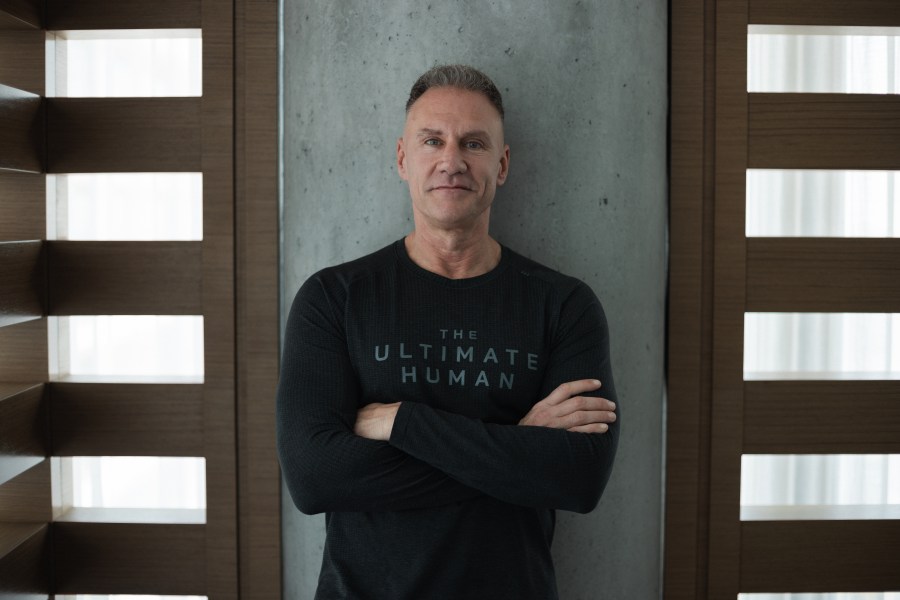
Former mortality expert-turned longevity guru and biohacker Gary Brecka reveals how understanding genetic data can help you take control of how you age
“Genetics loads the gun,” he says, pausing just long enough for the weight of it to register. “Lifestyle pulls the trigger.” By the time Gary Brecka says it out loud, it lands less like a soundbite – and more like a diagnosis.
It’s the line that has come to define Brecka’s world view – and the pivot that pulled him from a career spent predicting death into one devoted to extending life. Not lifespan alone, but something far harder to quantify: vitality; energy; independence. The ability to move, think, and function well decades longer than most people expect to.
Brecka – whose The Ultimate Human brand empowers people to peak wellness – didn’t come to this through wellness trends or Instagram optimisation. His background is in mortality science – an industry concerned not with how long you might live, but how long you statistically will. For years, his job was to examine vast datasets and medical records to estimate life expectancy with chilling accuracy. And then, somewhere along the way, something stopped adding up.
“It was the realisation that the vast majority of people are not failing to live longer, healthier, happier lives because of disease, pathology, or family history,” he says. “It was because of what we call modifiable risk factors.” In other words, the stuff people can actually change.
The moment everything shifted
In mortality science, Brecka explains, the data goes far beyond blood tests and diagnoses. It looks at how people live. Where they live. How mobile they are. Whether they need help with basic daily tasks. And time after time, the same patterns emerged.
“We didn’t just look at medical records,” he says. “We looked at demographic data. How do you live? How mobile are you? What activities of daily living do you need support with? And all of it pointed to lifestyle.” There was no hidden trick. No miracle intervention. Just fundamentals – sleep, diet, movement – stacked consistently over time.
“I was sitting on voluminous amounts of data that humanity just needed to know,” he says. “It didn’t belong to me. It could flow through me to reach the masses.” Eventually, the question became unavoidable. “How much longer am I going to spend predicting death,” Brecka remembers, “when I could spend the balance of my lifetime helping people live healthier, happier, more fulfilling lives?”
The decision, he says, was abrupt. One night, he went home and told his then girlfriend – now his wife of 11 years – that he was quitting his job to start a longevity clinic.
“She said, ‘Can I just state the obvious? You’re not a doctor,’” he laughs. “And I said, ‘I know. We’ll find one – and we’ll convince them this is the future of medicine.’”
Beyond the buzzword
It’s impossible to talk about longevity without running headfirst into the word biohacking – a term that conjures images of ice baths, red light therapy, and people swallowing supplements by the handful (without knowing why or what they’re supplementing). Brecka doesn’t reject the word outright, but he’s quick to reframe it.
“I think biohacking is really the movement of humanity becoming citizen scientists,” he says. “It’s people taking dominion and control of their healthcare choices.” For decades, he argues, we’ve outsourced responsibility for health to the medical system. If your doctor said you were fine, you were fine. If you weren’t diagnosed with disease, you were considered healthy.
“But the absence of disease is not the presence of health,” Brecka says. Real health, he argues, is proactive. It’s people saying: I’m going to do everything I can to stay out of the system. That doesn’t start with saunas or red light therapy. It starts with foundations.
“Dietary choices. Lifestyle. Sleep. Mobility. Whole foods. Sunlight. Breathwork,” he says. “Making mobility non-negotiable. Getting highly processed foods out of the diet. Targeting sleep as your human superpower.” Only once those are locked in do the higher-tech interventions make sense. “If the foundation isn’t there,” Brecka says, “none of the rest of it works.”
The centenarian paradox
One of Brecka’s favourite reference points is the centenarian – the rare individual who lives past 100 with function intact. And what’s striking isn’t what they do, but what they don’t do. “They don’t know what biohacking is,” he says. “They don’t track macros. They probably don’t know the difference between saturated fat and carbohydrates.”
Yet they share common threads: whole food diets, regular sleep, routines, and mobility built naturally into daily life. “They didn’t optimise their lifestyle,” Brecka says. “They lived it.”
Which makes modern health mistakes all the more glaring. If Brecka had to name the biggest biological error men make today, it wouldn’t be lack of effort. It would be misplaced effort. Men, he says, stack supplements without knowing what they’re deficient in, chasing optimisation without data. The result is noise – too many variables, no clear direction.
“The worst thing you can do is get online and ask what a ‘good supplement’ is,” Brecka says. “You can make an argument for all of them. But the question isn’t what’s good. It’s what you need.” When the body lacks raw materials – vitamins, minerals, amino acids – it expresses dysfunction.
“Brain fog, poor sleep, water retention, lack of focus – these aren’t normal,” he says. “We’ve normalised them. But they’re signals of deficiency.”
Three is the magic number
If Brecka had to strip health down to just three data points, the list would be short—and revealing. First: hormones. Not just levels, but ratios. “Especially for women,” he says. “The ratio is often more important than the number.”
Second: blood sugar. “Glucose, insulin, and haemoglobin A1C,” Brecka says. “If I had to pick one early domino that leads to disease, it would be blood sugar and insulin.” Third: nutrient deficiencies. “These are raw materials,” he says. “It doesn’t matter how good the contractor is if the materials never arrive at the job site.”
Vitamin D3 is a standout example. It’s the only vitamin humans produce themselves, requiring nothing more than sunlight and cholesterol. “That should tell you how important it is,” Brecka says. “And yet most people are deficient.”
Genes aren’t destiny
It’s here that Brecka returns to his defining line. “Genetics loads the gun,” he says. “Lifestyle pulls the trigger.” We rarely inherit disease itself. What we inherit is propensity – a tendency toward certain outcomes that may or may not express, depending on environment and behaviour. “Epigenetics – diet, sleep, stress, supplementation – often has more impact than genetics,” he says.
Centenarians didn’t know their methylation pathways, but they lived in ways that supported them. Modern tools can help – but only once the basics are secure. “Sleep. Whole food diet. Mobility,” Brecka says. “Those are free. And you can change your trajectory tomorrow.”
Asked what someone should take if they hadn’t done genetic testing but wanted to improve epigenetics, Brecka keeps it simple. “Assume your body can’t convert nutrients into usable forms,” he says. That means a methylated multivitamin. A mineral salt. And all nine essential amino acids.
He also mentions hydrogen – an emerging area of interest due to its role as a selective antioxidant. “You don’t want to suppress oxidation entirely,” Brecka explains. “Oxidation and inflammation are necessary for healing. Hydrogen neutralises the harmful radicals while preserving the necessary processes.”
The real meaning of biological age
Chronological age is obvious. Biological age is more elusive – and far more relevant. “We’ve always known it exists,” Brecka says. “Some people look and act younger or older than they are.”
Now, he explains, we can measure it through markers like glycan age—an indicator of inflammation, repair capacity, and how effectively the body clears senescent cells (so-called ‘zombie cells’ – damaged cells that have stopped dividing but do not die when they should, remaining metabolically active).
“Youthful bodies replace damaged cells efficiently,” he says. “Aging bodies accumulate lazy employees.” Diet, lifestyle, and targeted supplementation can slow – or even reverse -that process.
If a man wants to remain sharp, strong, and sexually active into his seventies, Brecka’s prescription is blunt. “Sleep. Strength train. Eliminate processed foods. Monitor blood sugar. Balance hormones. Correct deficiencies.”
Muscle, he says, is metabolic currency. “It stabilises blood sugar, produces hormones, supports skeletal health, and preserves independence.” Sarcopenia – age-related muscle loss -is inevitable unless actively resisted. “Resistance training three times a week is essential,” Brecka says.
Red flags that aren’t diagnoses
Genetic markers like MTHFR or COMT sound ominous, but Brecka urges perspective.
“These don’t mean disease,” he says. “They mean impaired processing.” Left unsupported, they can degrade quality of life – sleep disruption, digestive issues, mood changes. Supported properly, their impact can be muted. “Genes don’t change,” Brecka says. “Outcomes do.”
Asked for the best free biohack, Brecka doesn’t hesitate. “Sleep. Whole food diet. Non-negotiable exercise,” he says. “That gets you 85% of the way.” With money? Spend it on data.
“Genetic methylation testing,” he says. “You do it once, and it gives you a roadmap.” After that, his favourite investments are the ones that don’t require time: water filtration, air filtration, a clean mattress free from VOCs and fire retardants.
“Once they’re installed,” Brecka says, “they work without effort. And adherence is everything.”