

A stiff neck, aching shoulders and lower back pain don’t have to be the price of working at a desk. Leading osteopath James Davies shares the five simple stretches that can help counter the effects of sitting all day
We’re all guilty of slouching! Even if we’re consciously trying to improve posture, it all goes out the window when we’re sucked into a stressful email – and before we know it, it’s the end of the day and your lower back, shoulders and neck are aching.
“Desk work is not the real problem – inactivity is,” says James Davies, Sunday Times bestselling author, leading osteopath and performance coach. He has over 20 years’ experience working with elite athletes, actors, and high performers.
“Your body is designed to move throughout the day,” explains Davies. “Walk, stretch and change positions. Instead, most people sit for hours, go home, sit again, and then wonder why their back feels stiff, tight, or painful.”
The osteopath specialises in helping people recover faster, move better and improve performance through science-led techniques. “We often think pain comes from something we’ve done: a bad lift, a twist, an injury,” he says. “But in reality, a lot of modern back pain comes from what we haven’t done – we haven’t moved enough.”
Why is sitting all day so bad for our bodies?

“As I explain in Back in 10 [Davies’ latest book], your back doesn’t seize up overnight. It becomes stiff from days of small, repeated habits that limit movement,” says Davies, who explains that over time our bodies become accustomed to being still and sitting – instead of moving. “That is when problems start,” he says.
“When you sit for long periods, your hips tighten, your glutes switch off, blood flow reduces and your spine compresses. Your lower back ends up doing more work than it should because other areas are not doing theirs.”
“Posture is not about standing perfectly straight – there is no perfect posture,” he says. “The real issue is staying in one position for too long. Your back does not want stillness, it wants variety. When you sit all day, one area becomes tight, another becomes weak, and the body starts to compensate. That is when pain builds.”
Is it possible to transform posture after years of slouching?
“Yes, but not through one big effort,” says Davies. So how then (without quitting our jobs!)? “Through consistency,” says the expert. “One of the biggest lessons I have learned working with Olympic athletes, actors and high performers is that they all have systems.”
“They do not rely on motivation, they rely on routine. That is exactly how the Back in 10 method was created, a simple, structured system built from real-world results.
“Start small,” suggests Davies. “You do not need an hour and you do not need a gym. There are 144 ten minute blocks in a day and I am only asking you to use one of them. That 10 minutes could be movement, stretching, walking or simply resetting your posture. That is where real change starts.”
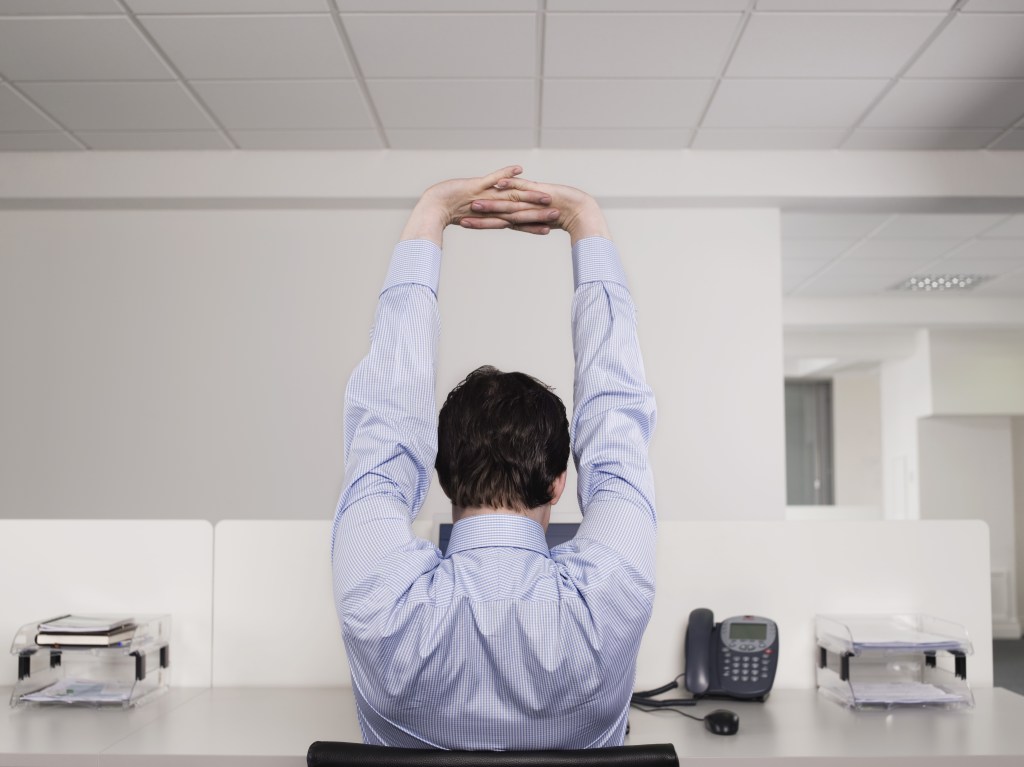
Here’s Davies’ five stretches you can do to help if you work at a desk:
- Chest opener
Stand tall, clasp your hands behind your back and gently lift your arms. This helps reverse rounded shoulders and open the chest. - Neck mobility
Slowly tilt your head side to side and rotate left and right. Keep it controlled. This helps reduce tension built up from screen time. - Thoracic extension
Place your hands behind your head and gently lift your chest upwards. This restores movement in the upper back, which becomes stiff when sitting. - Hip flexor stretch
Step into a lunge and gently push your hips forward. Sitting shortens the front of the hips, which then pulls on the lower back. - Hamstring stretch
Place one leg forward and hinge at your hips with a straight back. Tight hamstrings can affect pelvic position and increase strain on the lower back.
How do you know when to see a professional?
If you’ve tried the above stretches daily and nothing is shifting, you might need to get a check up. “If pain is not improving, is getting worse, or is affecting your daily life, get it checked,” says Davies. “If you feel tingling, numbness or pain travelling down the arms or legs, that is a clear sign to seek help sooner.”
“Your body is always adapting. If you sit all day, it adapts to sitting. If you move daily, it adapts to movement. You do not need hours. You need consistency. Find one ten minute block in your day and use it properly. That is where real change starts.”
James Davies’s second book Back in Ten is available now.