
At 41, Cristiano Ronaldo is redefining what’s possible after 40. We examine the training, recovery and nutrition habits behind one of sport’s most enduring physiques – and reveal how Men’s Fitness readers can apply the same principles to their own lives
PICS: Getty Images
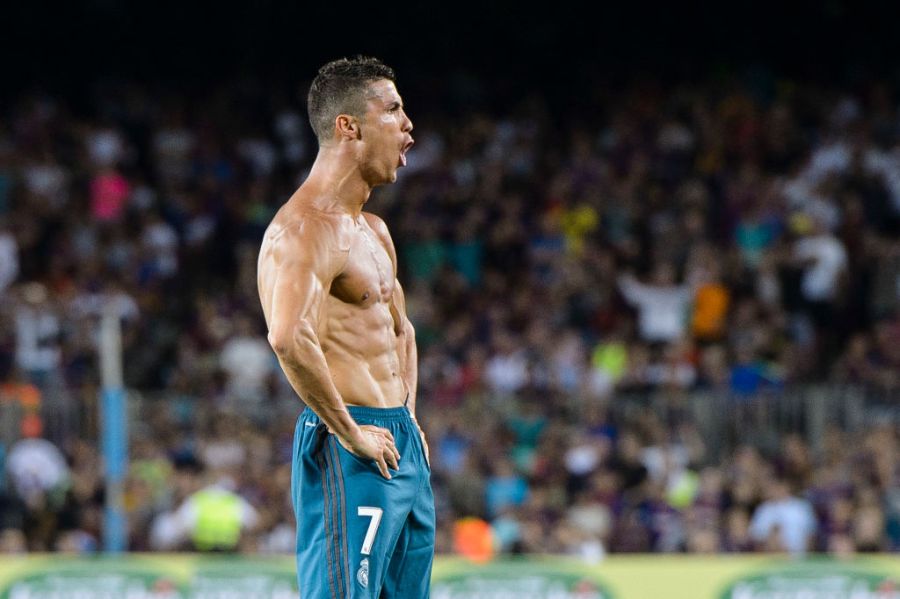
Late in 2025, Cristiano Ronaldo posted what, on the surface, seemed like a fairly ordinary image. Fresh from a sauna session, standing shirtless, the Portuguese superstar looked relaxed and healthy. But what grabbed attention wasn’t the setting. It was the physique.
Defined abs. Visible muscle separation. Powerful legs. The sort of condition many men struggle to achieve in their twenties, let alone maintain in their forties.
Within days, the image had attracted more than 12 million likes and generated headlines around the world. The reaction wasn’t really about vanity. It was about longevity.
For nearly two decades, Ronaldo has been held up as one of the fittest athletes on the planet. Yet what makes his current condition so fascinating isn’t that he remains fit. It’s that he appears to be getting older without many of the physical compromises most people simply accept as inevitable.
And then came the statistic that made everyone sit up.
The biological age that shocked the fitness world
Earlier in 2025, data released through Ronaldo’s partnership with WHOOP suggested that key markers of his physical condition reflected a biological age approximately 12 years younger than his chronological age.
For most men, reaching 40 often coincides with conversations about declining testosterone, slower recovery, reduced athleticism and increasing body fat. Ronaldo appears to be operating under a different set of rules.
Of course, genetics play a role. So do elite-level resources. But to dismiss his longevity as merely the product of good fortune would ignore something more important: his habits.
Because for years, teammates, coaches and sports scientists have described the same thing. Nobody outworks him.
Building a career on discipline
Long before he became football’s ultimate physical specimen, Ronaldo was a skinny teenager trying to survive in elite football.
Former teammates have often recalled his obsessive commitment to improvement. While others relaxed after training, Ronaldo frequently stayed behind for extra work. Not because he was told to. Because he wanted to.
Over time, that mentality became his greatest competitive advantage. The popular perception is that Ronaldo’s physique was built in the gym. The reality is more nuanced.
His body is the result of thousands of small decisions repeated consistently for more than twenty years. Extra recovery sessions. Additional mobility work. Careful nutritional choices. Protecting sleep as seriously as training.
It’s not one secret. It’s the accumulation of hundreds of good habits.
How Ronaldo trains in his forties
The Ronaldo of 2026 trains differently from the Ronaldo of 2006.
When he was younger, recovery came easily. Now, like every athlete over 40, preserving performance is just as important as building it.
Training reportedly revolves around several key pillars:
Strength Maintenance
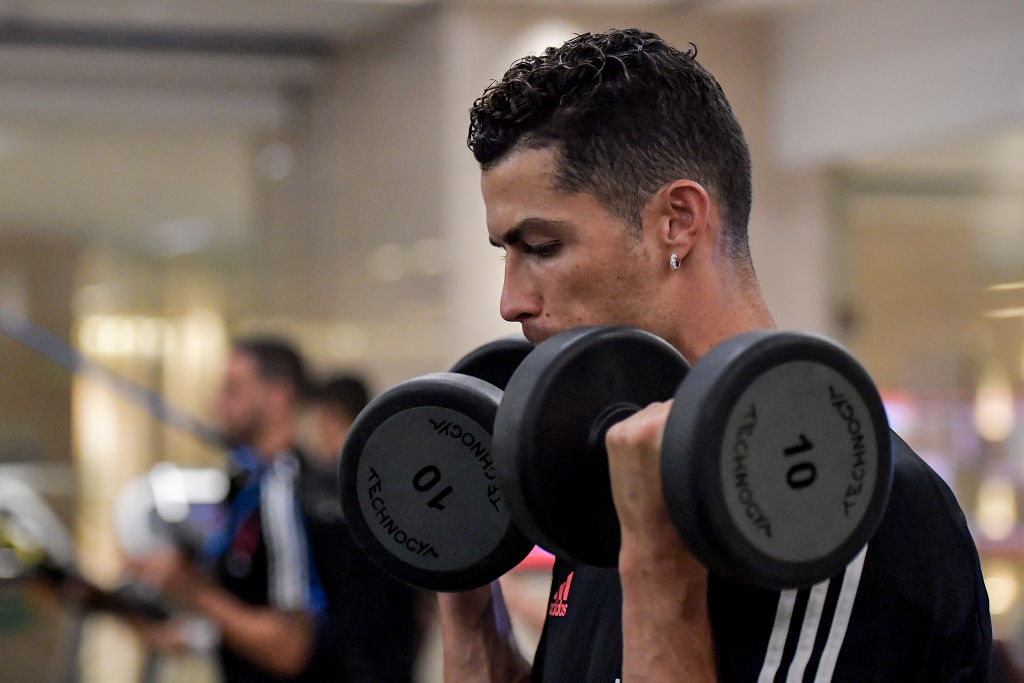
Rather than chasing personal bests in the gym, Ronaldo’s strength work is designed to preserve muscle mass and power.
Sessions often focus on:
- Squats
- Lunges
- Deadlift variations
- Pulling exercises
- Core work
The aim is simple: stay strong enough to support explosive movement on the pitch.
Speed and Power
Even in his forties, acceleration remains one of Ronaldo’s defining attributes.
That means regular exposure to:
- Sprint drills
- Plyometric training
- Jump exercises
- Agility work
Research consistently shows that explosive training is one of the most effective ways to preserve athletic performance as we age.
Recovery: the real superpower
Ask most men what separates Ronaldo from the average gym-goer and they’ll probably say genetics. Many sports scientists would point elsewhere: recovery. Ronaldo has long treated recovery as a performance tool rather than an afterthought.
His routine reportedly includes:
- Structured sleep habits
- Massage therapy
- Recovery-focused training days
- Sauna use
- Cold-water immersion
- Mobility sessions
That approach aligns closely with modern sports science. Training creates stress. Recovery is where adaptation happens. It’s a lesson many recreational exercisers still overlook.
As Dr. Mike Israetel, sports scientist and co-founder of RP Strength, frequently notes in his educational work, progress isn’t determined solely by how hard you train but by how effectively you recover from that training.
Ronaldo appears to have understood that principle long before it became fashionable.
The nutrition strategy
Despite endless rumours over the years, Ronaldo’s nutrition philosophy is remarkably straightforward. He has often spoken about prioritising:
- Lean proteins
- Vegetables
- Fruit
- Whole-food carbohydrates
- Consistent meal timing
Rather than relying on extreme diets, the emphasis appears to be on quality and consistency. The lesson for readers is important. The physique most people admire isn’t built through a six-week crash plan. It’s built through years of sensible eating habits.
The Men’s Fitness Ronaldo Workout
Want to train with some of the same principles that have helped Ronaldo remain elite after 40?
Try this performance-focused session.
A1. Goblet Squat
4 sets x 10 reps
A2. Pull-Ups
4 sets x max reps
Rest 60 seconds.
B1. Walking Lunges
3 sets x 12 reps per leg
B2. Dumbbell Push Press
3 sets x 10 reps
Rest 60 seconds.
C1. Box Jumps
3 sets x 8 reps
C2. Plank
3 sets x 60 seconds
Rest 60 seconds.
Conditioning Finisher
Complete 5 rounds:
- 20-second sprint
- 40-second walk
- 10 burpees
Focus on quality, not exhaustion.
The goal is athleticism.
The real lesson from Ronaldo
The temptation is to look at Ronaldo’s physique and assume it’s unattainable. In one sense, that’s true. Very few people will ever possess his genetic gifts or professional support network.
But that’s also missing the point. The most valuable part of Ronaldo’s success isn’t his six-pack. It’s his approach. At 41, he has become living proof that ageing and decline are not the same thing.
You may not be able to train exactly like Cristiano Ronaldo. You may never achieve his body fat percentage or athletic performance.
But you can copy the behaviours that have kept him performing at an elite level for more than two decades: train consistently, prioritise recovery, eat well most of the time and never stop moving.
That’s a blueprint that works whether you’re chasing a Ballon d’Or or simply trying to stay fit, strong and healthy after 40.
And in a world obsessed with quick fixes, that might be the most impressive achievement of all.