
With cameras that track your form and a magnetic motor that adjusts weight and reps in real time, CoachCube might be the most advanced AI personal trainer yet – but can it really replace a human coach?
We’ve all Googled fitness questions – from “Am I drinking enough water?” to “What’s the best exercise for abs?” Now, artificial intelligence is stepping in with answers.
Tools like ChatGPT can build workouts in seconds, while apps such as Fitbod, Fabletics and Zing create progressive training plans based on your goals, equipment and performance.
But it doesn’t stop there – there’s a new bot in town – and it comes in the form of CoachCube, the world’s first AI-powered personal training cube. AI is no longer just in your pocket or on your phone. Men’s Fitness found it in a South London gym.
Can this AI personal trainer deliver an effective, face-to-face workout? And more importantly, can it replace the insight, accountability and human touch of a real coach? We were about to find out.
Right now, the AI fitness industry is worth around $9.8 billion, and it’s forecast to surge to almost £250 billion in 2032. Fitness is also one of the top ten ways people in the UK are turning to ChatGPT – whether it’s for a personalised meal plan, a bespoke workout routine, or even a motivational pep talk before the gym.
The rise of AI Training
The appeal is obvious: AI is accessible, personalised and affordable. Most of all, it’s convenient. Need a 20-minute HIIT blast at 6am? You’ve been neglecting your core? AI-powered apps deliver instantly, no diary-syncing or rescheduling required, but what if you actually like a PT in a gym environment? What if you actually want to go somewhere and be trained by someone? That’s where CoachCube comes in.
CoachCube delivers personalised strength training inside a private smart room or pod, also known as cubes and combines real-time AI coaching.
The concept, founded by Will Dean, MBE, co-founder of Tough Mudder, combines coaching, digitally controlled resistance, and advanced tracking using real-time biometrics, biomechanics, and behaviour signals, which analyse your movement and prompt necessary corrections and adaptations in each session.
CoachCube, your new AI PT
“It learns your personality, asks how you’re feeling, picks up on your speech – whether you seem irritable, tired, or happy,” Dean says. “In an age where AI can drive cars, it makes little sense for personal trainers to be paid to watch people do push-ups. Personal training works, but it’s a luxury, which is why we’re introducing a world-first approach to personalised strength training. It’s a personal trainer at a third of the price.”
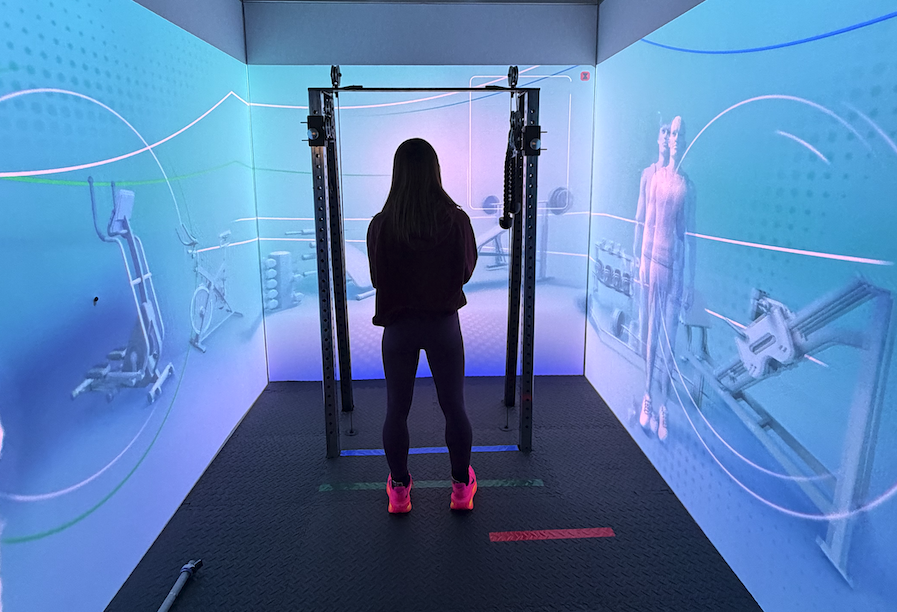
CoachCube is exactly what it sounds like – a cube… but with a coach. The futuristic-looking pod is essentially three projection screens surrounding a large squat rack and cable machine, which is placed at the front of the cube. I step in and place myself in position – facing my avatar and standing just behind the rack, which is achored to the floor.
The Cube
There are more than 150 exercises programmed into the cube, and resistance is generated digitally via a magnetic motor capable of producing up to 200kg – no changing plates, no looking for the missing dumbbell on the rack, it’s all taken care of digitally, so there’s no interruptions or excuses to break focus.
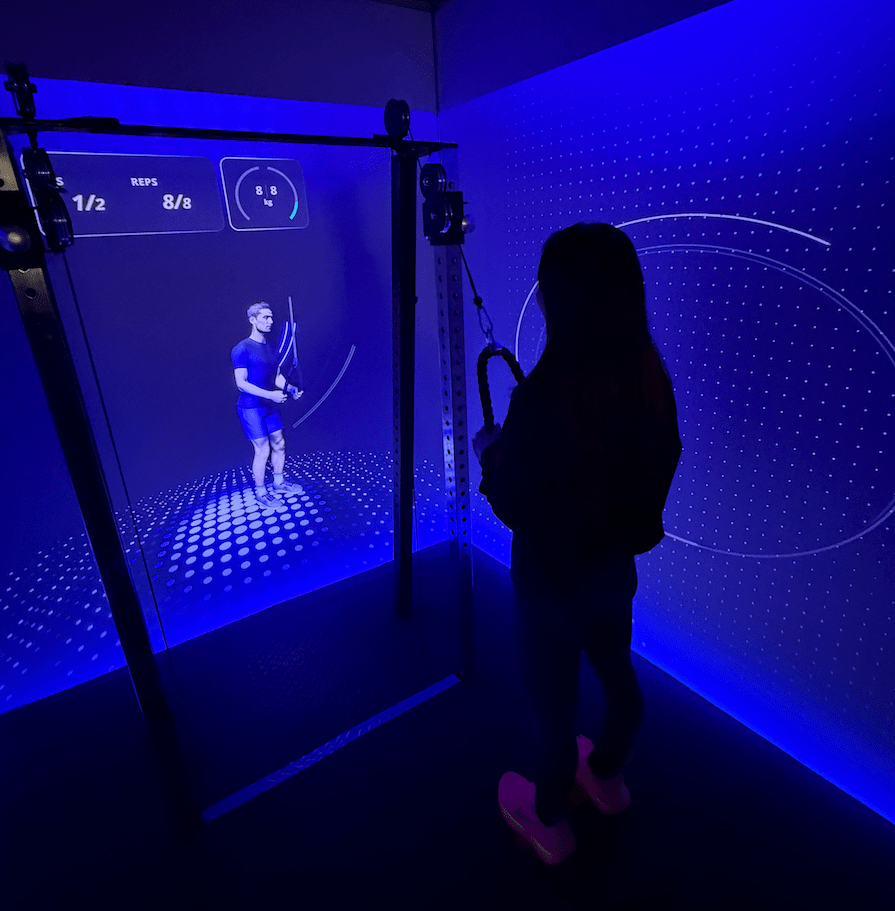
If I were a regular client, I’d pre-book my session, then meet my avatar, who would demonstrate each exercise before guiding me through my workout. The weight automatically adjusts as you move through each set, while an accompanying screen tracks and analyses your form, prompting corrections where needed.
Your form is picked up by an accompanying screen, which tracks and analyses your movement, prompting necessary corrections.
There’s no cheating your reps here – every movement is tracked, corrected and scored – and after each exercise, I’m given a form score – and I quickly become obsessed with trying to beat it. I can’t remember ever being so focused on having perfect technique – which isn’t a bad thing.
Workouts are based on your fitness and readiness scores – factoring in sleep, previous training, and even your mood. All of your stats sync seamlessly with smartwatches and apps like Strava, Apple Health, and Fitbit – and workouts progress using progressive overload, the key to strength and muscle gains.
Over time, CoachCube gets to know you, just like a human trainer. Got tight hamstrings? It’ll pick up on that. Form slipping? You’ll be promted to correct it – and if it’s really bad, “it will stop instantly,”Dean says. “It won’t allow you to do anything truly dangerous.” It’s a surprisingly personalised, incredibly precise way to train.
My Session
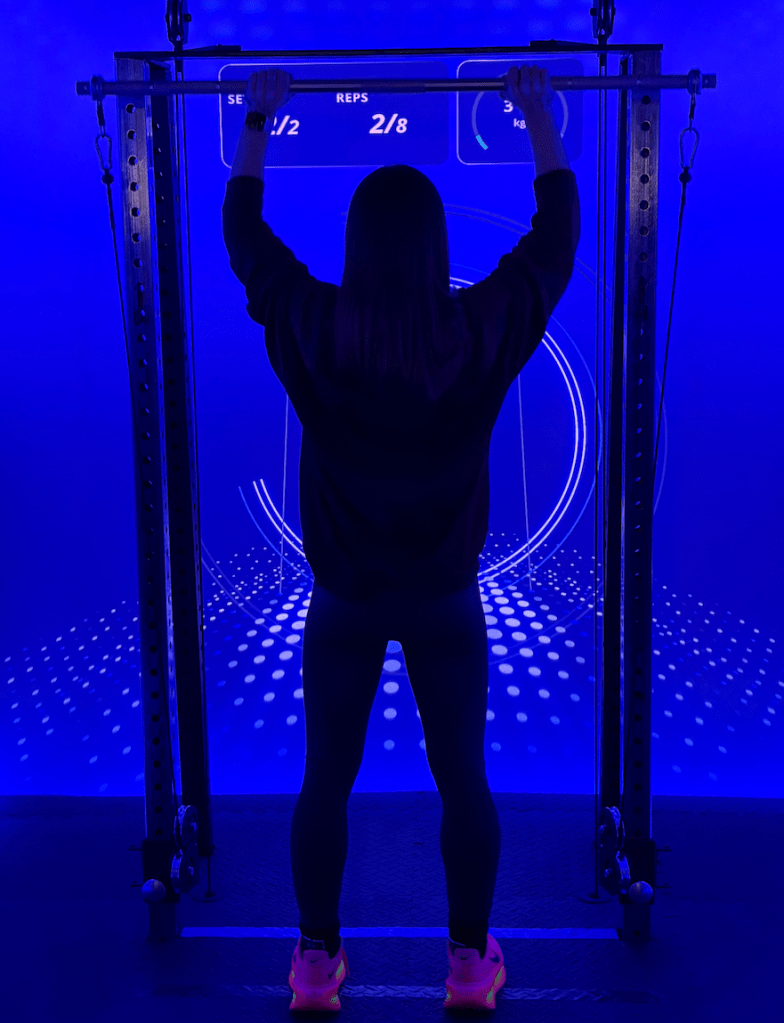
During my session, I’m assigned five exercises: tricep pulldowns with the rope, bicep curls with the cables and then shoulder presses, split squats and squats with the bar.
The opening reps feel light, but it doesn’t last long. A warning flashes up that the resistance is about to increase – and then it hits. The load adjusts quickly, dialled into my ability and my strength of the day. It also adapts in real time – if you’re tight, tired, or your form falters, the session adjusts on the spot.
From there, it’s simple: keep repping until my avatar tells me to stop and rest. During each break, I’m given a form score before going again. My tricep pull-downs get a 95 per cent amazing form – my split squats only 70 per cent – my head is too far forward, and my arms are flaring out.
At first, I feel slightly restricted using the rack – I’m more at home in the dumbbell area – but I quickly adapt and start pushing harder as the session builds. I also feel a bit lost during my rest period. I daren’t get my phone out and get distracted – and I don’t have any weights to change around either.
By the end, I get a full summary: total volume, heart rate, calories burned and session duration. More numbers to chase in my next session – which, according to my AI trainer, will be legs and lower body focused.
Would I use it for my training?
I would. The form feedback alone is eye-opening. It’s the kind of detail that could genuinely help with rehab and ironing out imbalances – because, let’s be honest, no one willingly strips things back to basics unless they have to.
Slowing things down and executing each rep properly also highlighted muscles I sometimes miss when I’m rushing through a workout solo. And it forced me to tackle exercises I know I should be doing – like split squats – even if I’d usually avoid them.
Would I rely on CoachCube alone? No. I’d still keep my regular PT session each week. There’s something you can’t replicate about real human interaction – and, in my case, the belly laughs that make a Monday morning session far more enjoyable. I also like playing around in the gym with new movements and sometimes like to just potter and do my own thing. It’s all about balance – and experimenting. The gym is my playground; it doesn’t always have to be so serious.
That said, “CoachCube isn’t trying to replace personal trainers entirely – it’s designed to complement them,” says Dean. AI handles the structured, repetitive stuff, gives you instant feedback, and adapts every rep. But there’s nothing that replaces the human connection, the rapport, and the motivation a real trainer brings.
CoachCube will also be aimed and ideal for those staying in hotels, and relient on co-working spaces – perfect for those who want a quick, focused session without overthinking it.
“For busy professionals, having something booked in is often half the battle,” says Dean. “Not everyone wants small talk or someone watching every rep. Sometimes, you just want to get in, train properly, get the stats – and get out,” adds Dean.
That’s where CoachCube comes into its own. It delivers clear instruction, instant feedback and the kind of performance data that keeps you accountable – no distractions, no guesswork.
• For more information and to book a free taster session in Clapham Junction, please visit coachcube.ai