
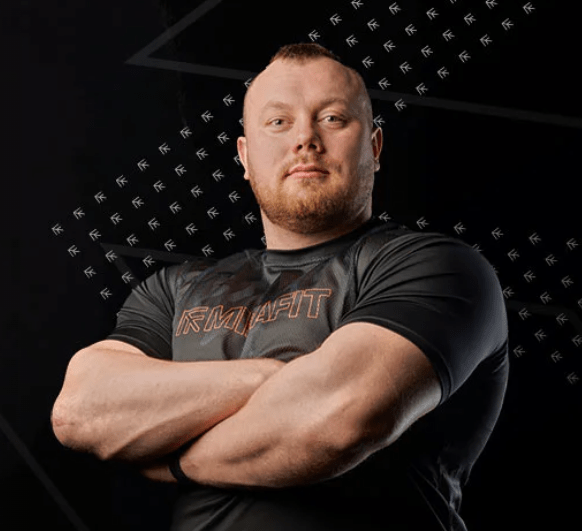
As he prepares for The Strongman Classic at the Royal Albert Hall, Adam Bishop shares the simple philosophy behind his success – from prioritising compound lifts and perfect technique to eating 7,000 calories a day and making recovery a priority
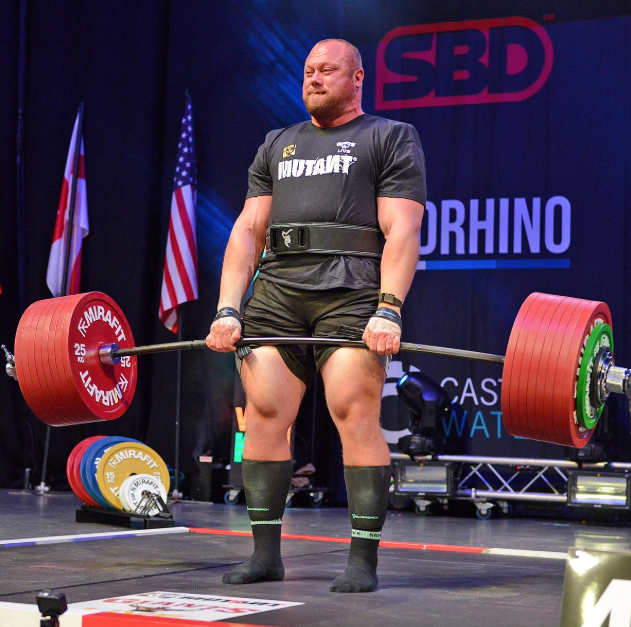
Britain’s Strongest Man Adam Bishop heads to the Royal Albert Hall for The Strongman Classic this weekend with a diet of seven meals a day, a garage gym full of barbells and a refreshingly simple philosophy: master the basics. He explains why consistency beats gimmicks, how he fuels incredible strength and why fishing is the perfect recovery.
Men’s Fitness: You’re heading into The Strongman Classic at the Royal Albert Hall. What makes this event so special?
Adam Bishop: It’s always one I look forward to. The Royal Albert Hall is an incredible venue and the atmosphere is unbelievable because it’s so intimate. There are only around four-and-a-half thousand people in there, but the noise they generate is fantastic. From a competitor’s point of view it has a few logistical challenges because it’s a much smaller venue than modern arenas, so warming up can be trickier, but once you’re out there it’s one of the best places you’ll ever compete.
MF: Most people assume elite strongmen train in enormous specialist gyms. Instead, you do most of your work at home. Why?
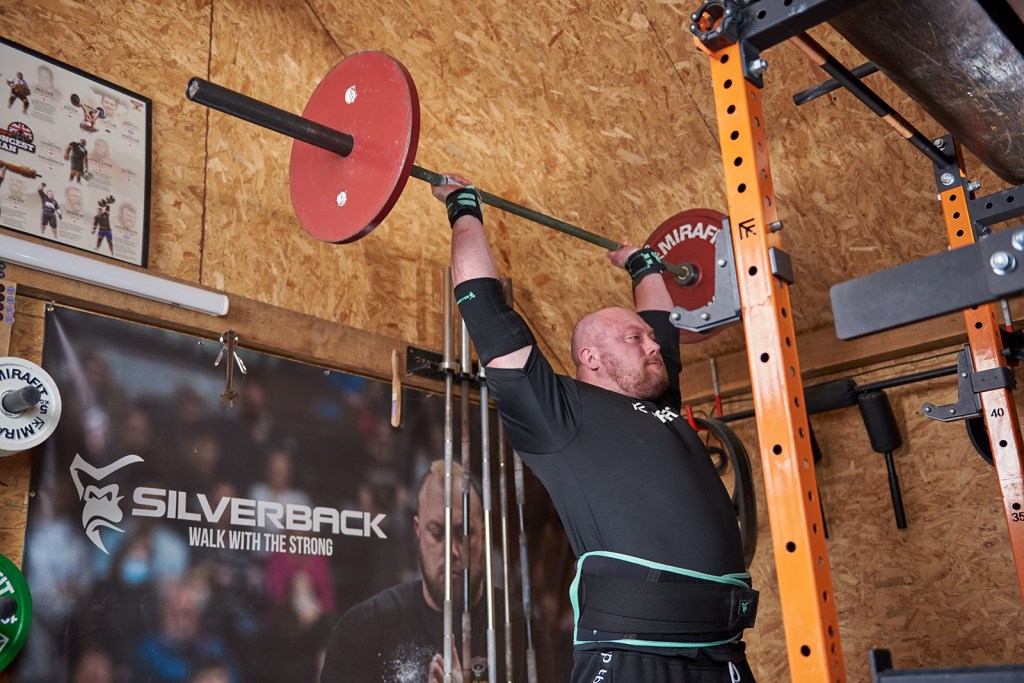
AB: Consistency has always been the biggest thing for me. I’ve built my home gym over a long period, so it’s got everything I need, but it’s happened gradually over the years. The biggest advantage is focus. There’s no waiting for equipment, no distractions and no compromises. I can walk in, train exactly how I want and get the work done. I’ve always enjoyed training at home, I’ve got a great set-up with free weights and an M3 Power Rack. Even when I was working as a strength and conditioning coach at Harlequins and helped design their gym, I still preferred lifting in my own space. It’s where I do my best work.
MF: Does having a home gym also help you switch off once training is finished?
AB: Definitely. I’ve actually got a sign above the gym door that says, “There is nothing else.” When I walk through that door, nothing outside matters. Whether I’m training for one hour or two, I’m completely focused on that session. Then I leave, shut the door and move on with the rest of life. That’s really important because when you’re training professionally you need something outside the sport too. For me that’s fishing. It’s completely different to lifting and gives me a chance to relax and mentally recharge.
MF: How does your training week look in the build-up to The Strongman Classic?
AB: I’m training five days a week. Monday is my pressing day with things like circus barbell, circus dumbbell and bodybuilding assistance work. Tuesday is my event day, where I’ll practise the Atlas Stones, Conan’s Wheel and Webster Stones so I’m replicating what I’ll face in competition. Wednesday is lower-body strength, mainly using machines to build muscle while giving my joints a bit of a break. Thursday is a complete rest day. Friday is another pressing session because overhead strength is one of my weaker events, so I spend extra time improving it. Saturday is deadlift day.
What’s slightly unusual is that although The Strongman Classic is my next competition, my overall programme is actually aimed at the World Deadlift Championships later this year, so everything fits into a longer-term plan. Fortunately, strongman events overlap enough that I can prepare for both at the same time.
MF: One statistic that really catches the eye is your calorie intake. Around 7,000 calories every day sounds incredible. How do you actually eat that much?
AB: People think it’s about eating loads of junk food, but it really isn’t. I’m trying to increase my bodyweight gradually, so at the moment I’m eating roughly 7,000 calories a day across seven meals. I eat almost exactly the same foods every day because I like routine. It makes everything repeatable and easy to manage. A typical meal might be around 250g of chicken thigh, 120g of rice, vegetables and then something like a Müller Rice afterwards to increase the carbohydrates. Most of my food comes from proper whole-food sources. Once you’re eating every two hours it stops being about simply cramming in calories. It becomes about digestibility. Foods like rice, cream of rice and lean minced meat digest quickly, so you’re ready to eat again without feeling uncomfortable.
MF: Despite being one of the biggest men in Britain, you’ve often been lighter than many of your rivals. Has that shaped how you approach strength?
AB: It has, although I’m around 150kg now so I’m one of the heavier competitors these days. When I was competing against guys like Brian Shaw, Hafthor Bjornsson and Eddie Hall there was a huge weight difference. Rather than simply trying to become bigger, I focused on the events that suited me. I wanted to stay athletic, fast and technically efficient. People often assume bigger muscles automatically mean more strength, but strength is far more complicated than that. Technique, coordination and neural adaptations all play massive roles. I’ve always spent a lot of time becoming technically excellent at lifts because that’s often where I can beat bigger athletes.
MF: You also worked as a strength and conditioning coach with Harlequins. Did that experience change your view of training?
AB: Absolutely. People see rugby players lifting huge weights and assume they’re trying to become powerlifters, but that’s never the goal. Everything they do in the gym is designed to make them better rugby players. They still need to sprint, change direction, tackle, jump and play for 80 minutes. In season we might only have around three hours a week with the players in the gym, and even then some of that is mobility and recovery work rather than lifting heavy. That’s why training has to be focused. The gym supports performance – it isn’t the performance itself.
MF: Fitness is full of trends and complicated exercises. Your philosophy seems much simpler.
AB: I’m a huge believer in the basics. Barbells have been around for decades because they work. Squats, deadlifts, bench press, military press – they’ve built the strongest athletes in the world for generations. Every day social media throws up another complicated exercise that’s designed to grab attention rather than produce results. My time is valuable, so I stick with what we know works. Then I focus on doing those movements consistently and with exceptional technique. That’s where long-term progress comes from – not chasing the latest fad on Instagram or TikTok.
Adam Bishop is an ambassador for Mirafit, the UK’s leading provider of home strength training equipment. He’ll be competing at The Strongman Classic, the jewel in the crown of strength sports, at the Roy