
Your body changes after 50, but decline isn’t inevitable. These 10 evidence-backed exercises will help you build strength, protect your joints, improve balance and stay capable for decades to come
There’s a common misconception that getting older means lowering your expectations in the gym. It doesn’t. It simply means changing your priorities.
In your twenties and thirties, it’s easy to chase bigger biceps, faster 10Ks or heavier bench presses because your body is remarkably forgiving. By the time you reach your fifties, however, the equation changes.
Muscle mass naturally begins to decline, explosive power fades more quickly than strength, recovery takes longer and joints become less tolerant of poor movement. Ignore those changes and everyday tasks – from carrying heavy shopping to climbing stairs or lifting a suitcase into an overhead locker – can begin to feel harder than they should.
The encouraging news is that you don’t need an ever-growing list of complicated exercises to counteract those effects.
In fact, quite the opposite. Research consistently shows that a relatively small number of functional movement patterns can preserve muscle, maintain bone density, improve cardiovascular fitness and reduce the risk of falls well into later life.
The secret is choosing exercises that deliver multiple benefits at once. Rather than isolating a single muscle, they train your body to move better, become more resilient and stay strong for the activities that matter outside the gym.
Whether you’re returning to exercise after years away or simply looking to future-proof your fitness, these are the 10 exercises every man over 50 should build into his routine.
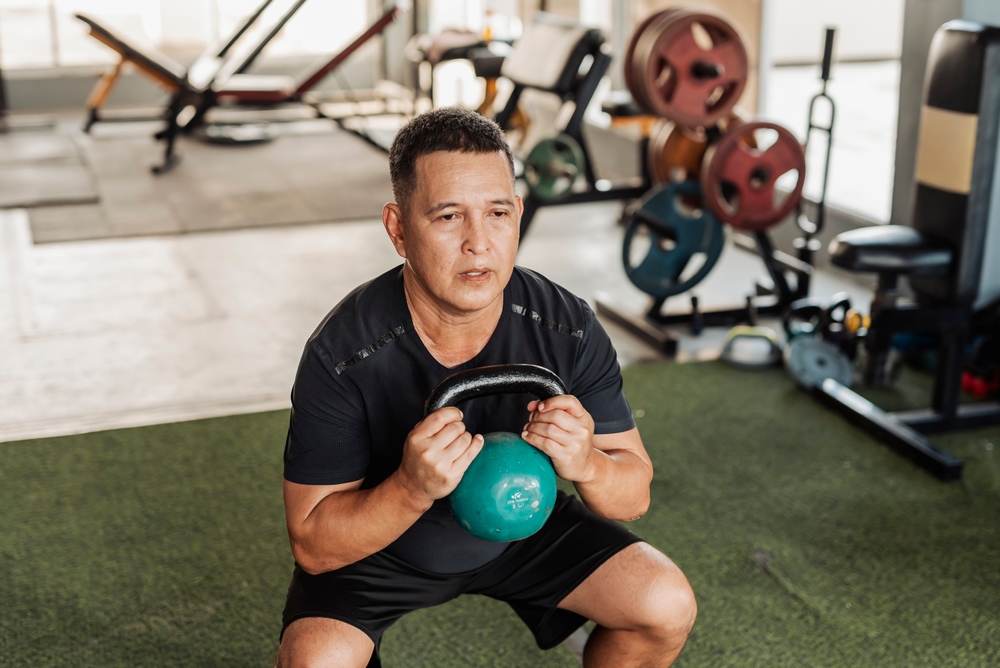
1. Goblet Squat
What is it?
A squat performed while holding a dumbbell or kettlebell against your chest. It teaches good technique while strengthening your entire lower body.
How to do it properly
Stand with your feet shoulder-width apart, holding the weight close to your chest with both hands. Brace your core and keep your chest lifted as you push your hips back and bend your knees to lower until your thighs are at least parallel to the floor, or as low as your mobility allows. Drive through your heels to stand back up.
Aim for three sets of 8-12 controlled repetitions.
Why every man over 50 should do it
The ability to sit down and stand back up is one of the most fundamental movements you’ll ever perform. Squats strengthen the quadriceps, glutes and core while helping maintain bone density, mobility and balance. Strong legs also reduce stress on the knees and make everyday activities—from gardening to climbing stairs—feel significantly easier.
2. Romanian Deadlift
What is it?
A hip-hinge exercise that targets the hamstrings, glutes and lower back rather than the front of the thighs.
How to do it properly
Hold a pair of dumbbells in front of your thighs. Keeping a slight bend in your knees, push your hips backwards while maintaining a flat back. Lower the weights until you feel a stretch in your hamstrings before driving your hips forward to stand tall again.
Think about moving your hips backwards rather than lowering the weights.
Why every man over 50 should do it
Many adults spend much of the day sitting, leaving the muscles on the back of the body weak and underused. Strengthening this posterior chain improves posture, supports the spine, protects the lower back and makes lifting everyday objects considerably safer.
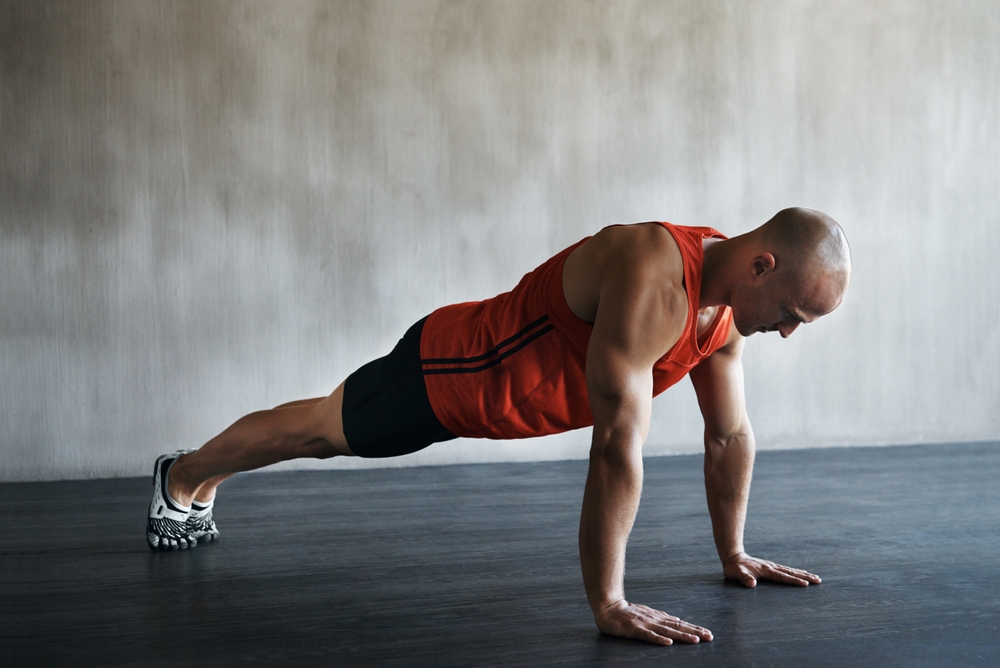
3. Push-Up
What is it?
One of the simplest and most effective upper-body exercises ever created.
How to do it properly
Position your hands just wider than shoulder-width apart and form a straight line from head to heels. Lower your chest under control until it’s just above the floor before pressing back up.
If standard push-ups are too difficult, begin against a wall or bench before progressing to the floor.
Why every man over 50 should do it
Push-ups strengthen the chest, shoulders, triceps and core simultaneously while improving shoulder stability. Better still, they’re infinitely scalable and provide a simple benchmark of upper-body fitness that can improve for decades.
4. Pull-Up (or Assisted Pull-Up)
What is it?
A vertical pulling exercise using your own bodyweight.
How to do it properly
Grip the bar slightly wider than shoulder-width. Pull your elbows down towards your ribs while lifting your chest towards the bar. Lower yourself slowly under control.
If you can’t yet perform one, use an assisted pull-up machine or resistance band, or substitute with the lat pulldown.
Why every man over 50 should do it
Pulling strength often declines faster than pushing strength. Maintaining it helps counteract rounded shoulders, improves posture and keeps everyday pulling movements—such as lifting, climbing or carrying—feeling easier. Few exercises also build relative strength as effectively.
5. Farmer’s Carry
What is it?
Simply walking while carrying heavy weights in each hand.
How to do it properly
Pick up two heavy dumbbells or kettlebells, stand tall and walk slowly while keeping your shoulders back and core braced. Avoid leaning to one side or allowing the weights to swing.
Walk for 30-60 seconds before resting.
Why every man over 50 should do it
Grip strength has emerged as one of the strongest indicators of healthy ageing. Farmer’s carries strengthen the hands, forearms, shoulders and core while improving posture and teaching your body to stabilise under load—something that translates directly into real life.
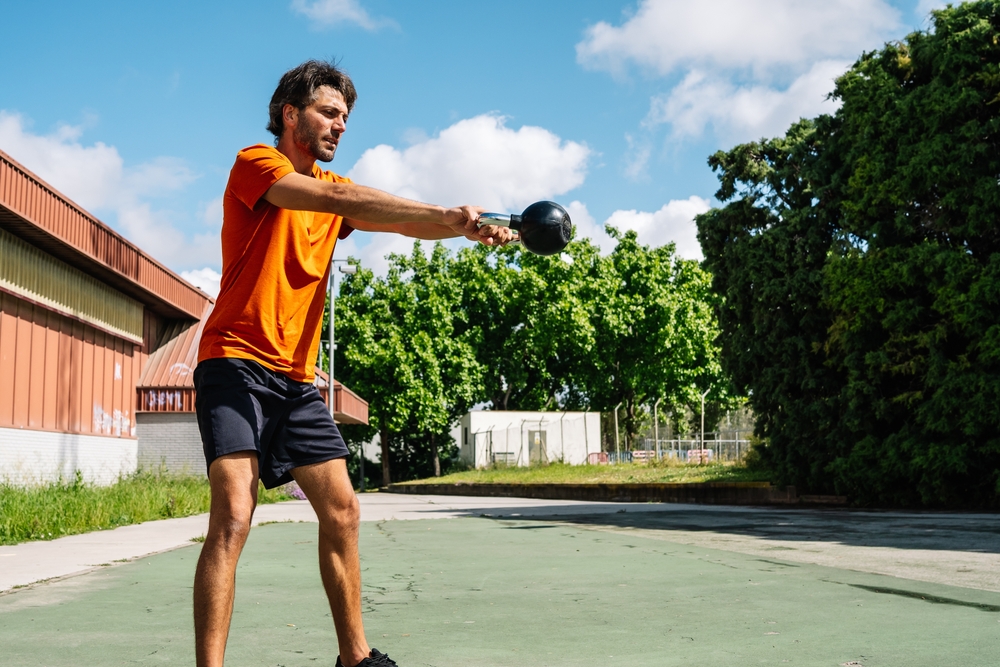
6. Kettlebell Swing
What is it?
A powerful hip-driven movement that develops strength and cardiovascular fitness simultaneously.
How to do it properly
Stand with your feet shoulder-width apart and hinge at the hips to swing the kettlebell backwards between your legs. Explosively drive your hips forwards to propel the kettlebell to chest height. Allow it to swing back naturally before repeating.
The movement comes from the hips—not the arms.
Why every man over 50 should do it
Power declines more rapidly with age than strength itself. That’s important because power helps you react quickly, climb stairs, recover your balance and remain athletic. Swings are one of the safest and most effective ways to preserve that quality while also delivering an excellent cardiovascular workout.
7. Walking Lunge
What is it?
A single-leg exercise that combines strength, mobility and balance.
How to do it properly
Step forwards into a lunge, lowering until both knees reach roughly 90 degrees. Push through the front foot and immediately step into the next repetition.
Maintain an upright posture throughout.
Why every man over 50 should do it
Unlike squats, lunges expose imbalances between the two sides of your body. They improve coordination, strengthen stabilising muscles around the hips and knees and reduce the risk of falls by challenging your balance in a controlled way.
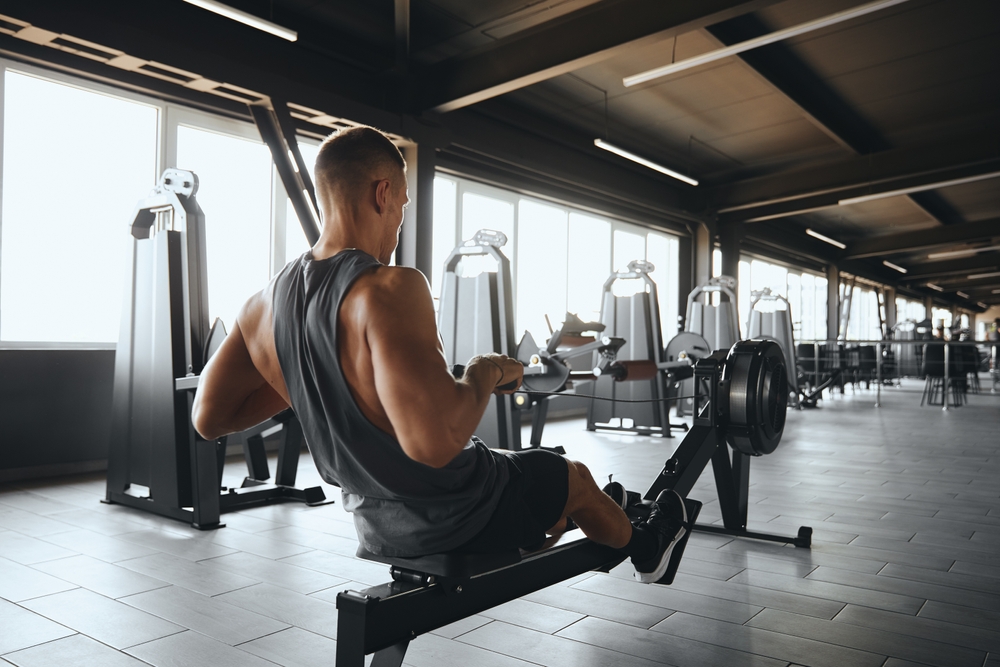
8. Rowing Intervals
What is it?
Short bursts of hard effort on a rowing machine separated by periods of recovery.
How to do it properly
After warming up, row hard for 30 seconds, then recover gently for 90 seconds. Repeat for eight to 10 rounds.
Focus on powerful leg drive before finishing with your arms.
9. Pallof Press
Why every man over 50 should do it
Cardiovascular fitness—often measured as VO₂ max—is one of the strongest predictors of long-term health and longevity. Rowing delivers an intense heart and lung workout without the impact associated with running, making it ideal for older joints.
What is it?
A core exercise that teaches your body to resist rotation rather than create it.
How to do it properly
Attach a resistance band or cable at chest height. Hold the handle close to your chest before pressing it straight out in front of you. Resist the urge to twist towards the anchor point before returning under control.
Why every man over 50 should do it
Real-life movements rarely involve endless sit-ups. Instead, your core works to stabilise your spine while your arms and legs move around it. The Pallof press builds exactly this type of functional strength, helping protect the lower back while improving posture and movement efficiency.
10. Turkish Get-Up
What is it?
A full-body movement that takes you from lying on the floor to standing while holding a kettlebell overhead.
How to do it properly
Break the exercise into stages: roll onto one elbow, then your hand, lift your hips, thread one leg underneath you and stand up before reversing every step carefully.
Learn the movement without weight first before progressing gradually.
Why every man over 50 should do it
Few exercises challenge as many qualities simultaneously. The Turkish get-up develops mobility, shoulder stability, coordination, balance, core strength and body awareness. Perhaps most importantly, it reinforces the ability to get safely up from the floor—something many people don’t appreciate until they struggle to do it.
Build your future, not just your physique
If there is one lesson to take away from this list, it’s that training after 50 isn’t about accepting decline – it’s about slowing, and in many cases reversing, the physical changes that ageing brings. You may never recover quite as quickly as you did at 25, but with the right exercises you can remain remarkably strong, capable and resilient for decades.
These 10 movements cover every major component of fitness that matters most as you age: strength, power, cardiovascular health, balance, mobility and coordination.
Perform them consistently two or three times a week, increase the challenge gradually as you get stronger, and you’ll be investing in far more than bigger muscles. You’ll be building a body that’s ready for long walks, active holidays, weekends with the grandchildren and all the moments that make life enjoyable.
Because after 50, the real goal isn’t simply to add years to your life – it’s to add life to your years.