


Don’t let life get the better of you – try these stress-relieving tactics and calm your mind and body
In the UK, a high 67% of men have felt so stressed at some point over the last year, they’ve felt overwhelmed or unable to cope, according to research by the Mental Health Foundation. Work, finances and health cause the most stress for men; however this stress isn’t just a mental issue.
It’s a performance issue, too, affecting everything from your sleep, recovery, testosterone levels, focus in the gym and even how your body holds onto fat. The old advice of ‘just relax’ isn’t always enough now, because modern stress is very different from the stress men were evolved to handle.
Janice Cowin, Senior Psychological Wellbeing Practitioner and Trainee Champion at Living Well UK, says stress is “one of the biggest problems men are facing right now.”
“The stress system in the male body evolved to deal with short, intense challenges; things like physical danger which would then be followed by proper rest,” she explains.
“Today’s stress runs at a constant, low-level pressure. Many men feel like they never really switch off.”
So, your body stays on alert all day without a clear end point. Elevated levels of the stress hormone cortisol become the norm. The nervous system, aka, your ‘command system’ rarely drops into the parasympathetic state, which is the rest and digest state; instead it stays in the sympathetic state, which is fight or flight.
“That’s not something our biology was built for, which is why so many men feel permanently on the go, but perpetually stressed out,” says Janice.
Plus, as Janice explains, men still have the ‘stiff upper lip’ mentality. “Men are societally perceived to be physically strong and high-achieving; yet on the flipside, the interior may feel completely fried on the inside. On top of that, a lot of high performers turn everything into a challenge, including exercise, further adding to the stress.”
If you can’t get a handle on your stress, give one of these tactics a try.
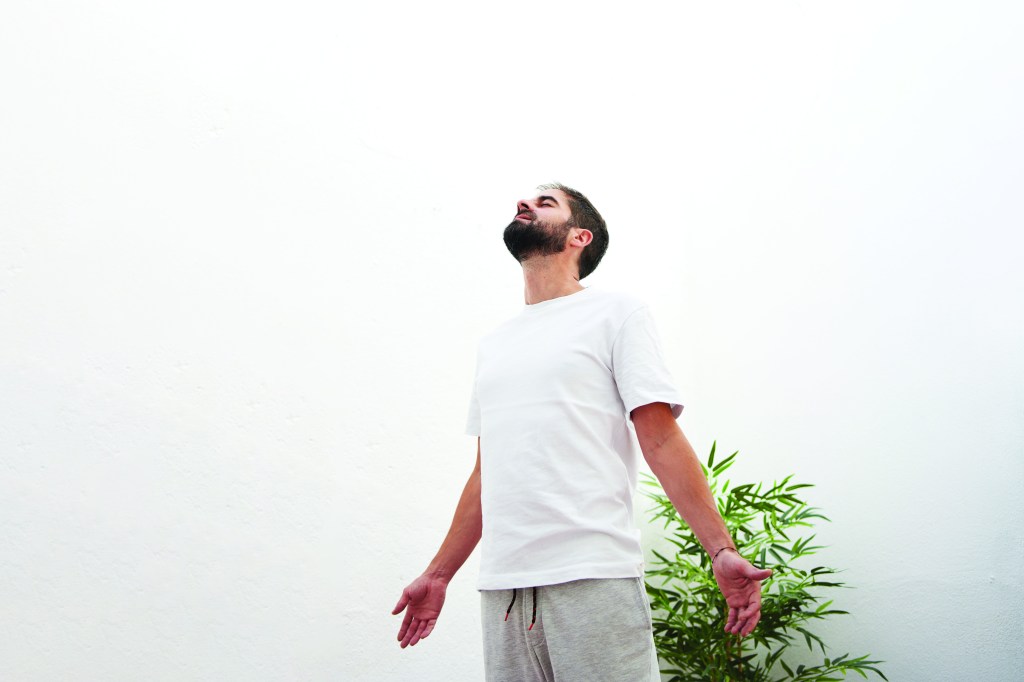
Try Sophrology
Often described as ‘meditation for those who can’t meditate’, Sophrology combines breathing, gentle movement and visualisation to reduce stress and improve mental focus.
“Sophrology gently guides you back into your body and calms the mind. It works by strengthening the connection between body and mind, shifting the nervous system from fight-or-flight into a calmer, more balanced state where performance and recovery improve,” says Dominique Antiglio, Sophrologist and founder of Sophrology platform BeSophro.
Dominique suggests, ‘The Pump’. “This is a liberating and energising movement that’s hugely effective for bringing you back into your body, rather than staying in your mind, and for processing a range of emotions that we would like to let go, such as stress.”
Stand relaxed, arms by your side. Notice how you feel mentally, emotionally and physically. Clench your hands into fists, exhale through your mouth and inhale, then hold your breath and ‘pump’ your shoulders up and down, keeping your arms straight, for several seconds. Then exhale. “As you release the arms and hands, use it as a symbolic gesture of letting go. Listen briefly for a sensation and then repeat,” explains Dominique.
Walk side-by-side
Walking isn’t just a means of getting from A to B. In fact, done with a friend or colleague, it’s an ideal way to open up.
“You are not sitting face-to-face, which can feel intense,” says Janice. “Moving alongside someone else gives men space to talk naturally without feeling put on the spot; the walking is almost analogy of this, one small step at a time may feel better than jumping into a full sprint.”
Plus, walking itself helps the body burn off stress. Research in the journal Frontiers in Behavioural Science found that walking in both green and urban environments led to a reduction in negative emotions such as stress, while green environments also led to an increase in positive emotions.
The Sunset Protocol
It’s unrealistic to suggest that work stress can be eliminated completely, but you can stop it from bleeding into your evening.
Before you leave the office, Janice recommends her 3-2-1-Sunset Rule.
“Five minutes before you finish work, take three minutes to write down your top three tasks for tomorrow, to stop you brain from ruminating over them all evening; two minutes to slow down your breathing or simple sit quietly; and one minute to physically ‘exit’ your workspace, even if it’s just stepping outside the door of the room you’ve been working in, if you work from home.”
She adds: “This creates a hard psychological boundary between ‘provider mode’ and ‘recovery mode,’ ensuring you aren’t carrying the office into your evening with your family.”
Your new breathing regime
Whether you’re at your desk, commuting, at the gym or even flitting between meetings, when you feel stress, Ramon Ghosh, Breathwork and Running Coach and Founder of Evolve-breathwork.com, suggests long exhales, to down regulate the nervous system.
For two to four minutes, inhale gently through your nose, then exhale through your mouth slowly and hum for as long as you can.
“Inhale again and repeat; this will slow your breath down to three to four breaths per minute, while normal functional breathing is 12 to 15 breaths per minute,” says Ramon.
To keep stress at bay, try breathing light, slow and low.
Sit or stand tall with a long spine to free up the diaphragm. Breathe in and out through your nose, breathing lightly and quietly, slowly and low into the diaphragm so you can feel your ribs expanding.
“Focus on six to eight breaths per minute. Breathing low into the diaphragm rather than high into the chest keeps your breathing more functional, which is exactly what you want when leading a pressurised life. This is also why elite athletes breathe this way before a race,” says Ramon.
What about nasal breathing?
It’s been made popular by biohackers, but Ramon says it’s best avoided if you’re already dealing with a busy mind.
“I don’t recommend that runners focus too much on their breathing-other than listening to effort levels- because this can increase the cognitive and mental load on the runner, resulting in poor coordination and form.”
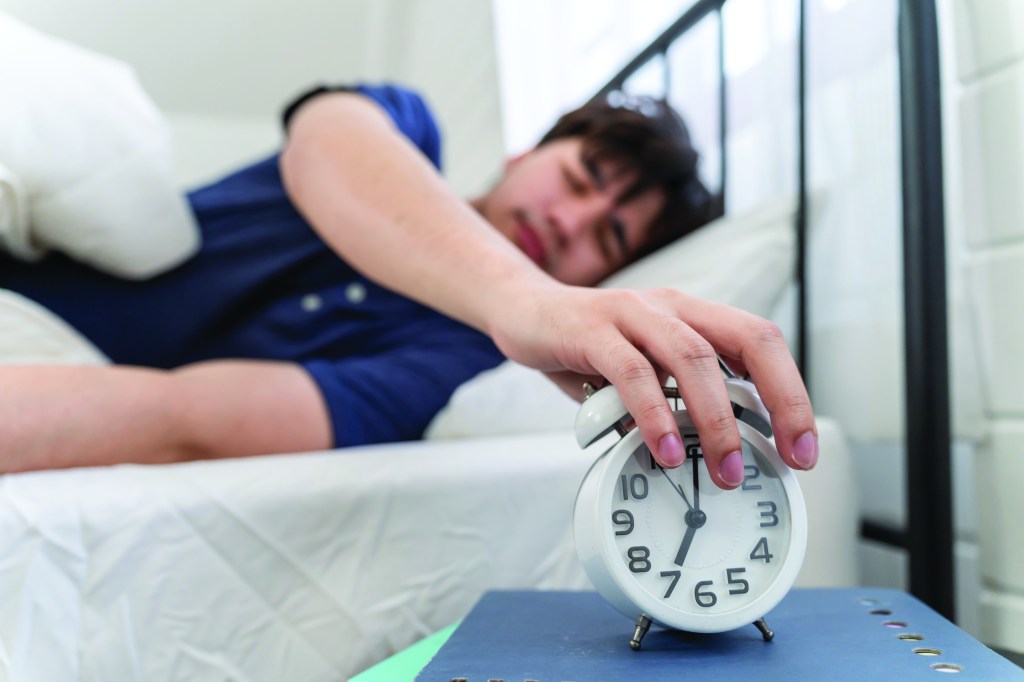
Invest in an alarm clock
Before phones dominated our bedside tables, alarm clocks were a standard fixture. And screens in the bedroom? Unheard of! Next time you’re scrolling Amazon Prime, add a basic alarm clock into your digital shopping bag.
Janice explains that by using a clock rather than a phone, your brain no longer expects interruption, so sleep becomes deeper and more continuous.
“If you’re constantly using your phone throughout the day, external factors like work emails, stressful conversations or unexpected phone calls can leave you in a lasting state of stress, or worry,” says Janice.
“An old school alarm clock removes those triggers completely.”
In the morning, waking up is calmer without the instant bright light from your phone or the stresses of the previous day or evening.
Runner? Go for Zone 2
It’s been a buzzword for a while, for good reason. Zone 2 running or cycling, which means working at 60 to 70% of your maximum heart rate, can help stave off injury or illness while still boosting your endurance and improving your running or cycling economy.
Crucially, it’s also a great way to manage overall stress load.
“High-intensity sessions spike cortisol and place heavy demands on your nervous system, so they need to be programmed carefully and not overused,” says Ramon. “Zone 2, on the other hand, builds your aerobic base without tipping you into fight-or-flight mode, making it easier to recover, especially if work and life are high pressure.”
To find your zone 2 using a heart rate monitor, take 180 and subtract your age and then don’t above that number during a run.
“Or, simply run at conversational pace for Zone 2,” says Ramon. “To stay away from injury or illness, 80% of your weekly mileage should be Zone 2.”
Make time for deload weeks
Constantly hitting PBs is great for your ego; not so good for your body. A well-programmed training plan makes time for deload weeks-periods of reduced volume or intensity – every six to eight weeks. After all, training is a huge stressor and your body doesn’t distinguish much between a brutal workout and a brutal week at work.
“These deload weeks follow the concept of periodisation, where we need to create space for our training to catch up and push our fitness and speed forwards,” says Ramon. “Where we don’t allow for deload weeks we can get to a state of overload which negatively stresses the body and likely leads to illness or injury.”
While deload weeks should be scheduled into your routine, regardless of how you’re feeling, Ramon says that time out is essential if easy runs or workout sessions get slower despite the same effort, if data markers such as your resting heart rate and HRV deteriorate, if sleep is not restful, and if you find yourself reaching for more caffeine or becoming irritable or sluggish.