
Men should be worried about the menopause – but a new guide can help them navigate these tricky waters and come out with a stronger relationship
In Burning Up, Frozen Out, Men’s Fitness writers Joe Warner and Rob Kemp explain how menopause affects women and their relationships, how men can better support partners, friends and family, and what midlife changes men face themselves – offering science-backed strategies to handle ageing with understanding, resilience and confidence
Contrary to the old stereotype, men do talk. We talk football, lifting PBs, fantasy leagues, craft beer, ageing knees, protein hacks, music, food, drink – even hair transplants if you catch us on the right day. But there’s one glaring blind spot almost no man brings up: menopause.
“It’s her thing,” you might think. In reality, the menopause affects you too – your relationship, home life, sex life, patience, confidence, energy, mental health and, yes, sometimes even your own hormones.
Between Joe and myself, we’ve spent decades interviewing doctors, coaches, scientists, athletes and health experts across every corner of men’s wellbeing. But if there’s one area where men are the least prepared, it’s understanding what their partner goes through during perimenopause and menopause.
So, we wrote this book for one simple reason: men need a playbook. When she hits the hormonal hurricane of midlife, you feel the storm too. And while she’s fighting for balance, sleep, sanity and identity, you’re often stuck on the sidelines wondering what happened — and how to help.
What’s happening to her?
Before we get into what you can do, you need the science. Perimenopause begins when her key hormones – estradiol and progesterone – start spiking and crashing like a stock market in an election year. Around 13 million women in the UK are currently going through perimenopause or menopause – roughly one-third of the female population. It usually begins in the late 40s or early 50s, though it can hit earlier, and it can last for years. Think less “gentle glide into menopause” and more hormonal whiplash.
These hormones don’t only control fertility – they influence sleep, mood, memory, stress, energy and even how the brain processes threats. Women also have testosterone, and hers is dropping fast. When her hormones go rogue, they don’t just rock the boat – they can capsize it.
That’s why she might be sleeping badly, losing focus, dealing with new aches, feeling disconnected from sex, or becoming unusually anxious or withdrawn.
“Even with a medical background, there were moments I felt like I was falling apart,” explains Dr Nicky Keay – medical doctor and author of The Myth of the Menopause (nickykeayfitness.com). “Menopause isn’t a disease – it’s a natural life stage – but without the right information the symptoms can feel frightening and completely disconnected.”

From barely coping to back in control
Thankfully, in more enlightened times, she doesn’t have to stay stuck in the storm. The taboo around menopause is fading and there’s now a far better understanding of how to manage it. Lifestyle changes – training, smarter nutrition, better sleep, improved stress management – are helping many women cope with what can be a traumatic, anxiety-inducing, life-changing transition. But often they’re not enough on their own.
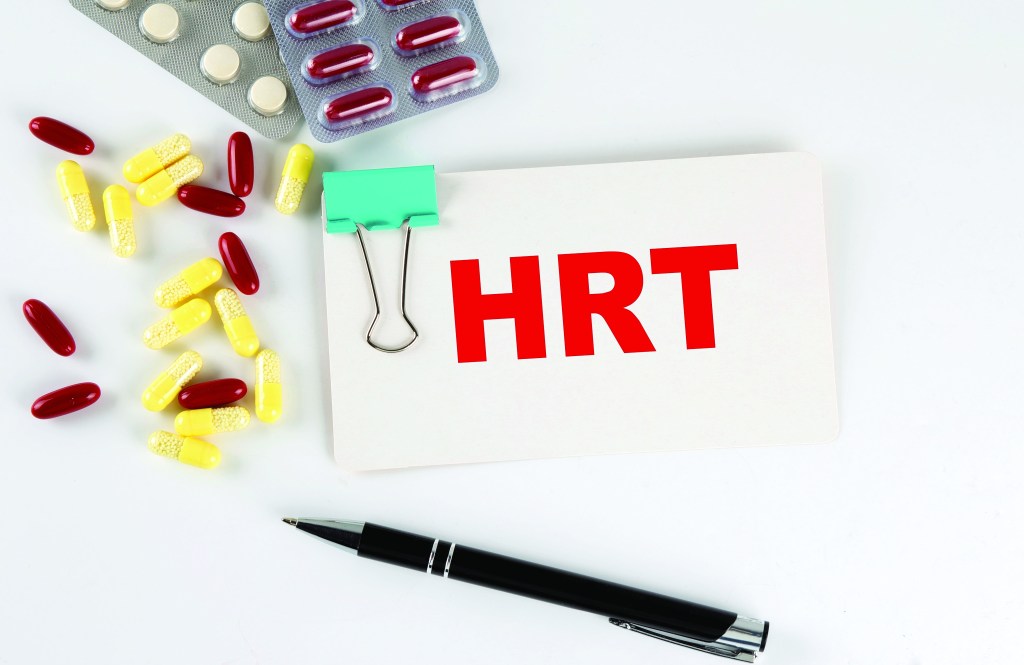
That’s where HRT (hormone replacement therapy) comes in. Replacing estradiol, progesterone and sometimes testosterone can be genuinely life-changing – restoring balance, reducing symptoms and improving physical and mental wellbeing. “Once you understand what’s happening, you realise you’re not ill, and that knowledge gives you back control,” says Dr Keay. “It helps you make practical, confident decisions.”
However, HRT isn’t always offered. There can be medical contraindications – such as a history of breast, ovarian or womb cancer – or concerns about risks. Sometimes the barrier is simply a lack of specialist training among healthcare providers.
What you can do to help her
You don’t need all the answers, and you’re not expected to fix everything. As her partner, husband, son or colleague, what you can do is encourage her to speak to a clinician who understands perimenopause. Help her prepare for the appointment. Offer to go with her. Knowing she isn’t facing this alone makes a huge difference.
You might feel out of your depth, so you stay quiet and hope it blows over. But it won’t – and silence is a terrible strategy. Remember:
1. It’s not your fault – so stop taking it personally
When you’re caught in the crossfire of her frustration or fear, it’s easy to assume you’ve done something wrong. But this isn’t a relationship crisis – it’s a hormonal one. Her hormones are surging and crashing, and she may feel she’s losing control of her own body and mind.
Your move: Don’t retreat, and don’t retaliate. Stay calm, kind and steady. She doesn’t need fixing – she needs an anchor.
2. You can’t fix this – so stop trying to be the mechanic
Men default to problem-solving, but perimenopause isn’t a faulty appliance. Jumping in with solutions can make her feel dismissed.
Your move: Listen properly. No interruptions. Reflect back what you hear:
“That sounds brutal.”
“I didn’t realise it felt like that.”
“Do you want me to just listen, or help you work through it?”
3. You’re struggling too – and that’s not weakness
Men hit their own midlife dips: stress, weight gain, low mood, libido changes. Powering through alone mirrors what many women experience. Acknowledging your own struggles doesn’t diminish hers – it strengthens the team.
Your move: Be honest, even in small doses. When you both stop pretending everything’s fine, you stop drifting apart. Midlife doesn’t have to be the beginning of the end – it can be a turning point, but only if you face it together.
What you can do to help you
In a twist to the menopause story, while you’re trying to figure out what’s happening to her, something’s happening to you. Midlife hits both sides of a relationship – but just as women have long been told to “just get on with it,” men have been conditioned to grit their teeth and keep quiet about the hormone-induced slowdowns and life-limiters creeping into their own lives.
While her hormones are staging a full-blown rebellion, your physiology is shifting too – more quietly, but no less significantly. No one warns men about the emotional crash of midlife – many speak about not only how their body changes but energy drops, work intensifies, pressure builds, and purpose blurs. There’s a creeping sense that something’s “off”?
The testosterone tangle
Testosterone peaks in your twenties and declines gradually through your thirties. Add stress, poor sleep, belly fat, inconsistent strength training, too much alcohol and nonstop workload, and that decline accelerates. Low testosterone isn’t only about sex drive – it affects confidence, mood, motivation, muscle mass, recovery, energy and irritability. You don’t feel broken, just less you.
If this sounds familiar and you suspect low testosterone is dragging you down, don’t guess – test. A proper assessment should include early-morning bloods, total and free testosterone, SHBG, LH, FSH, prolactin, thyroid function and HbA1c. Many men never get this full panel through the NHS and are told their levels are “normal” even when symptoms say otherwise.
But before considering TRT, fix the foundations:
- Sleep – broken sleep destroys testosterone.
- Strength training – the most powerful natural T-booster
- Body fat – belly fat converts testosterone into oestrogen
- Stress – high cortisol suppresses T production.
- Nutrition – enough protein, healthy fats and key micronutrients.
Only after months of consistent lifestyle work – if symptoms persist and tests confirm low levels – should TRT be considered. It’s not a shortcut. It’s a clinical treatment for men who genuinely need it, improving energy, libido, mood, muscle, recovery and long-term health.
<crosshead> Why exercise is one of the most powerful tools you both have
If there’s one thing that consistently helps men at this and – and women through menopause – no matter the symptoms, age or fitness level it’s movement. Just moving more, more often, in ways that build strength, steady her mood and help her feel in control again.
During perimenopause and beyond, oestrogen levels dip, which affects mood, muscle, bone strength, sleep, energy and metabolism. That’s why many women suddenly feel weaker, softer, achier and more exhausted than they ever used to. Exercise can’t stop the hormonal chaos – but it can make her body more resilient to it.
Strength training is the real game changer. Lifting weights (or using resistance bands, kettlebells or bodyweight work) helps rebuild the muscle and bone tissue that naturally decline in midlife.
That means fewer aches, a stronger back, better posture, improved balance, better blood sugar control and a mood lift that often kicks in faster than HRT. Two to three sessions a week is enough – and doing them together can make her feel supported instead of intimidated.
Movement doesn’t have to mean the gym. Walking, hiking, yoga, Pilates, swimming, cycling – anything that nudges her heart rate, boosts circulation and helps her unwind is a win. Even ten minutes after dinner can improve sleep and reduce anxiety. Think of it as “shared recovery” rather than “exercise”.
The key message for men whose partners are going through the menopause is that your involvement matters. Not to coach her or correct her form in this instance, but just to show up. Suggest a walk when she’s overwhelmed. Book a joint PT session. Do a mobility routine while the kettle boils. Celebrate the small wins.
Understanding her menopause isn’t just about being a supportive partner – it’s about protecting the health of your relationship, your home life and your own wellbeing.
When you know what’s really going on, you communicate better, argue less, and become a genuine teammate instead of a confused bystander. And by learning how to support her, you also learn how to look after yourself through your own midlife changes.
• Burning Up, Frozen Out: What Every Man Needs to Know About the Menopause (But No One Told You) by Joe Warner and Rob Kemp, publishes 26 Mar. 2026