


When Daily Mail journalist Guy Adams’s editor saw Sacha Baron Cohen’s transformation in Men’s Fitness, she challenged him to go from ‘Dad Bod’ to cover model fitness. Here’s how he did it!
Guy Adams, 47, from Monmouthshire, Wales, is no stranger to deadlines, tough investigative assignments, a lack of sleep and the occasional takeaway dinner. But in September 2025 the journalist was tasked with a different kind of challenge: transforming his body, fitness, and mindset.
The goal wasn’t just aesthetics – it was energy, confidence, and reclaiming control over his health. All courtesy of a challenge thrown down by his newspaper editor. “We’d seen the amazing transformation Sacha Baron Cohen underwent to appear on the cover of Men’s Fitness,” says Guy. “My editor asked, ‘could any man really go from ‘dad bod’ to cover model fit in just a few months?’ It was the kind of question that’s more of a request from editor to investigative reporter – if it can be done, you’re the man to find out.”


Getting started: The first conversation
To meet the demands of the challenge Guy enlisted personal trainer Jason Smith https://www.instagram.com/fitinmidlife, who specialises in transforming the fitness levels and physiques of men in mid-life.
Jason’s philosophy is simple but effective: fitness must fit into your life, not compete with it. “To begin with I need to understand why a client wants to change, their key goals, their lifestyle, family and work commitments, travel, past experiences, and even what they enjoy,” he explains.
Guy’s life posed particular challenges. He splits his time between London, with access to a fully equipped gym, and his home in Wales, where equipment is limited. Jason knew any programme had to be flexible, effective, and adaptable across locations.
“I had the advantage that, like Sacha Baron Cohen, I wasn’t coming to this from an extreme place,” says Guy. “I play tennis regularly, run a bit and use the gym. When I contacted David Castle, the editor at Men’s Fitness to ask whether such a transformation was achievable, he said yes, ‘as long as you’re starting from a reasonable level…not massively out of shape.”
Like many men of a certain age, injuries had in recent years taken their toll on Guy’s sporting activities: a torn meniscus here, tennis elbow there. Rehabbing those issues had revealed a hidden problem: muscular imbalance.
“My glutes weren’t strong enough,” says Guy, “and my other muscles were doing too much work, because tennis and cricket are one‑sided sports. Your body gets out of kilter. So, even before I started Jason’s programme, I was concerned that intense activity might exacerbate old problems.” To put things another way, Guy wondered whether he’d bitten off more than he could chew with this assignment.
Fortunately, in the hands of Jason Smith, Guy had the ideal trainer. Once overweight, pre-diabetic, and managing a demanding career alongside a young family, Jason understands the mental and physical hurdles many men face. “I found a way despite all the blockers,” he says. “Now I guide others through similar barriers – often mental ones – and show a very effective route to better fitness, energy, and mood.”

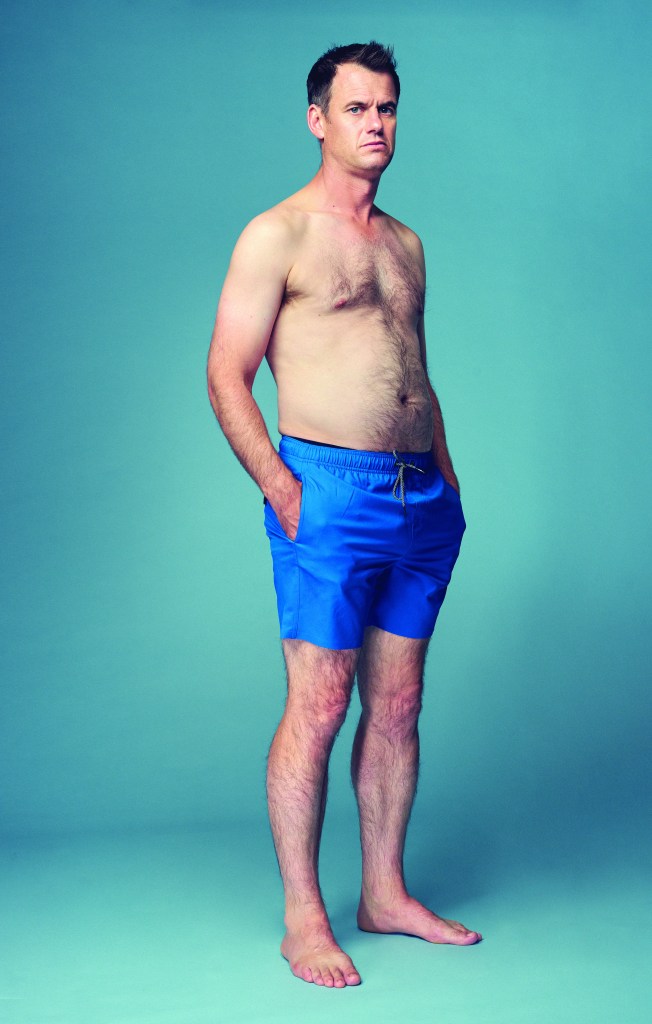
Designing a flexible programme
Jason built a three-phase programme for Guy that progressed steadily and adapted to his two bases.
- London (gym) sessions focused on traditional strength training, using an upper/lower body split and interval training on a stationary bike.
- Wales (home) sessions relied on home equipment – dumbbells and a bench – using resistance-based circuits and core work. About halfway through, Guy purchased heavier dumbbells for home use, a tangible reflection of his progress.
All workouts were delivered via Jason’s coaching app, which contains instructions, exercise demonstration videos, and a tracking system for sets, reps, and feedback. Guy also submitted weekly photos and measurements, allowing Jason to tweak the programme as needed.
“The first session I did in person, showing him how the app worked and demonstrating each exercise,” Jason says. “After that, we stayed in constant communication via calls and messages, discussing progressive overload, mind-muscle connection, and keeping him challenged.”
When it comes to tackling the ‘dad bod’ dilemma, Jason finds that men face familiar barriers:
- Self-belief: thinking it’s too late to change.
- Time constraints: work, family, travel, and other commitments.
- Conflicting advice: social media and online content can be overwhelming.
Jason’s message is clear: consistency and the right guidance beat extremes. “I’ve been where they are,” he says. “Having done this myself and worked with many men, I know how to overcome both mental and practical barriers. It’s about showing the route, supporting them, and proving change is achievable.”
“He really understood what I do,” Guy says. “One week I’m in a hotel on an industrial estate in Oxford (with a very limited gym). Other weeks I’m back home in Monmouthshire with just dumbbells in my bedroom. And then there’s London where I have access to a proper gym.”
Rather than impose a rigid programme, Jason built one that worked around all of that. Six days a week, Guy trained. “He showed me the correct form, then loaded everything into the app. I’d get a workout a week in advance, each session is 45 to 60 minutes in total, manageable, no two‑hour gym slogs.”
The app times rest periods, tracks weight and reps, and makes sure Guy is always progressing. A typical training week cycles through different themes. Guy’s “leg day” session, for instance, includes barbell back squats (3 x 8), dumbbell forward lunges (3 x 10 per side), leg press followed by calf raises, and a superset of leg extensions and curls.
“On an upper body day, I’d do press-ups, bench press, shoulder press and accessory work – all sequenced to challenge the same muscle groups,” says Guy. “Other days involve interval cardio, dumbbell circuits or core work, while Sundays are reserved for a 40-45 minute run.”
“The app removes the faff,” Guy adds. “I press start, it tells me what to do, I do it, rest, repeat. No scrolling through Instagram or wandering from machine to machine as I’d usually go at a gym.”
Jason also stresses proper form, tempo, and range of motion. “It’s not about lifting heavy,” he says. “It’s about working the muscles safely to fatigue and progressing over time.”
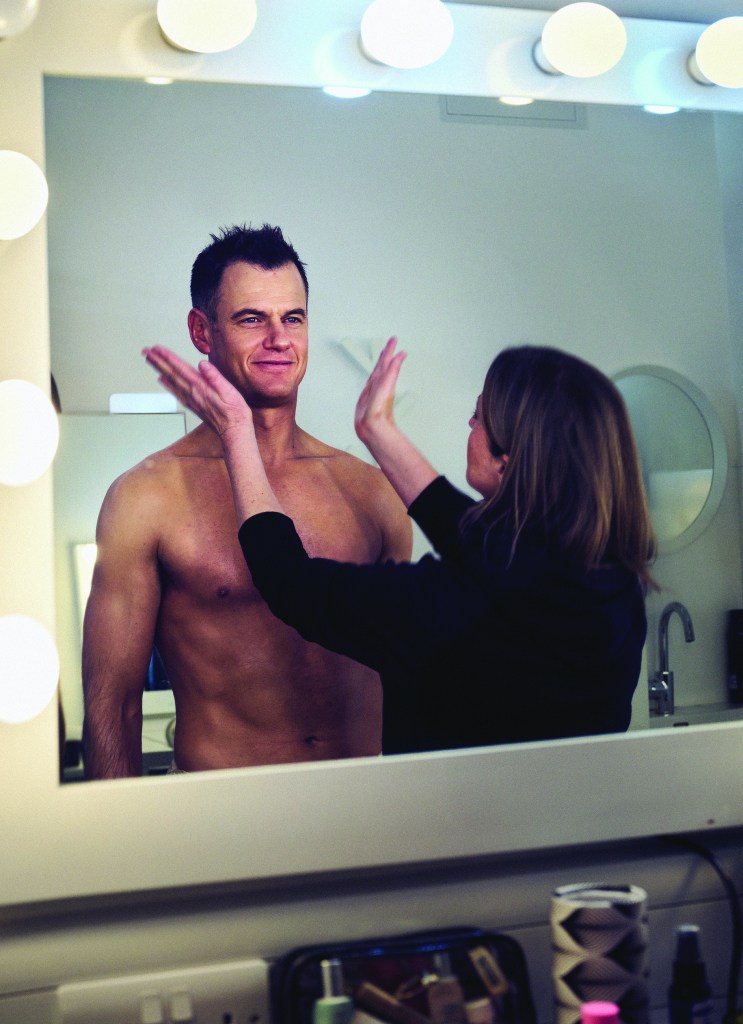
Coaching beyond workouts
Guy kept a food diary for a week in the build-up to the challenge, as advised by Men’s Fitness nutrition consultant Chris Baber. “I wasn’t eating tons of junk, but I was grabbing quick calories – a chocolate bar at teatime, a can of Coke at my desk, chips, crisps.”
“Chris gave me a list of “do not” foods: “No deep‑fried food, no fizzy drinks, and stop mindless snacking. His advice wasn’t about restricting what I was eating but more about removing unnecessary excess.”
Guy’s breakfast became Skyr yoghurt with chia seeds, simple and protein-rich. If he needed a snack, it was either a protein bar or peanut butter on toast. Carbs weren’t banned, but moderated: on roast dinners, he limited potatoes in favour of extra veg. He laughs at how his mindset shifted: “I went to a steak restaurant last night – had steak and spinach, no chips. When you stop having chips, you realise how little they actually bring to the party. They’re delicious for a moment, then they’re just empty calories.”
The food adjustments were honest but manageable. The booze was harder to tackle – but Jason and Chris didn’t demand total abstinence. “Chris also said no booze,” Guy recalls. “I negotiated that one.” Rather than force him to go teetotal, they suggested a cutback.
“To be honest, the more I trained the less I craved having a beer. I might have one beer and then think, you know, I don’t really need another. That never happened before. He also noticed another benefit: sleep. “I’ve always slept better when I don’t drink. I don’t wake in the night needing to go to the loo. It’s small but meaningful.”
Supplements didn’t become some huge, expensive sideline. Instead, Guy kept it simple. He talked to experts from Holland & Barrett and chose four affordable, effective items.
- Creatine monohydrate: 5g daily (often half an hour before training).
- Hydration tablets with electrolytes, for workout days.
- Orange-flavoured Tri-Active powder with minerals, and whey protein (chocolate flavour). “Post workout I’d mix the two together and they taste like Jaffa Cakes,” says Guy.
Spotting the changes
“By about week two I started to feel a bit sharper,” says Guy. “It wasn’t just my body changing – my mind did too.” As the training progressed, those little wins multiplied: shirts started fitting better, his waist shrank by two belt notches, his energy spiked during the day.
Guy saw meaningful, visible results early in his transformation. In the first week alone, he dropped three and a half kilos, going from 92kg to 88.5kg – a weight he hadn’t seen in years. While the pace of weight loss slowed, he continued to make steady progress and now sits about 87.5kg or 4.5kg down overall.
But the headline change wasn’t just on the scales. His body composition shifted dramatically: his muscles grew noticeably, his shirts no longer fit across the arms, and his biceps gained two to three inches in circumference. The visual difference is clear in his weekly progress photos.
The physical improvements were reinforced by changes in daily habits. Cutting out deep-fried food, fizzy drinks, processed snacks and reducing carbs helped reshape his diet without feeling extreme. “It’s proof that impressive physical change doesn’t require living like a monk,” says Guy. “With consistent training and simple nutrition shifts, he discovered that meaningful, visible progress can come surprisingly quickly.”
Looking ahead, Guy doesn’t plan to maintain the exact same regime. “I’m not going to the gym six days a week forever,” he says, “but I do want to keep lifting more weight than before.”
Guy proved that what Sacha Baron Cohen did, you can do too. But this isn’t a story about a dramatic, Hollywood-style makeover. “It’s not that hard to dramatically improve how you feel, look, move – even in your late 40s or 50s. You just need a plan, accountability, and the willingness to stop eating chips.”
He’s not promising perfect abs or a magazine cover – but he is proof that real change is possible, not by being ascetic, but by being consistent, disciplined and intentional.
How Guy did it
Trainer: Jason Smith
Format: 6‑day plan, 45-60 min sessions, via app
Training Split
- Leg Day: Back squats (3×8), forward lunges (3×10 per side), leg press → calf raises, leg extension + leg curl supersets, deadlifts
- Upper Body Day: Press-ups, bench press, rows, pulldowns, shoulder press, flyes, triceps + biceps work
- Conditioning Day: High‑intensity intervals on bike or treadmill + 15 min of abs
- Dumbbell Circuit Days (home): Bench press, rows, goblet squats, RDLs, core work, repeated for 3-4 rounds
Cardio Day: 40-45 minute run (Guy estimated ~7 km)