
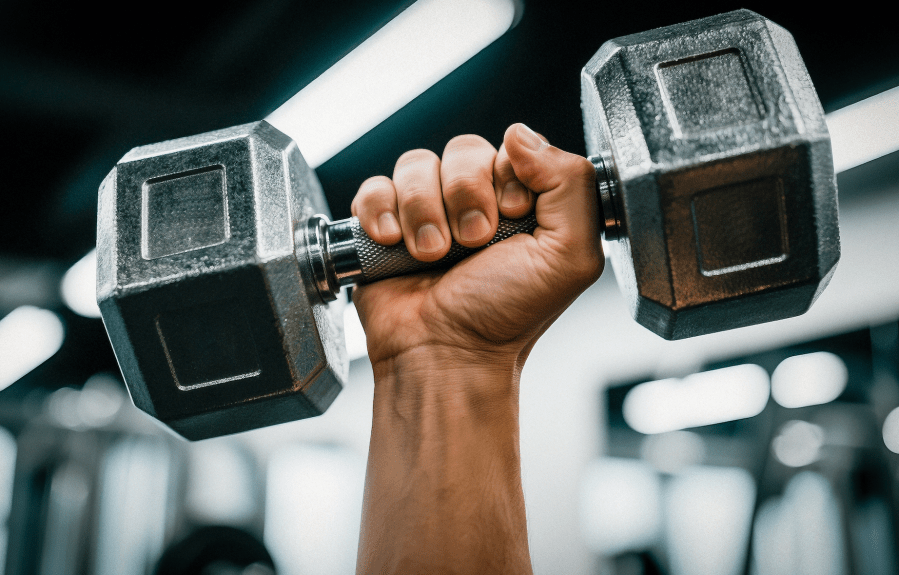
Your grip strength doesn’t just matter in the gym. Studies suggest it may reveal more about your future health than you think
PICS: Shutterstock
Over the past few years, a growing body of research has been connecting a unique part of training with a longer, healthier lifespan.
The research stems from a heightened interest in the concept of a human lifespan – the total number of years you’ll live before eventually passing away – a topic that’s been spiking in popularity in wellness circles, where advice on supplementation, sleep, light exposure and longevity hacks all point toward an improvement in staying above ground for as long as possible.
One 14,000-person study in particular identified that there’s a simpler approach to adding more years to your life (and life to your years, better known as your healthspan): working on your grip strength. The study identified that grip strength was a more accurate predictor of lifespan than blood pressure — a more r traditional biomarker.
Further research backed these findings up, confirming that greater levels of grip strength improved our likelihood of becoming a centenarian. The research saw participants aged 100-years-old or more were twice as likely to have higher levels of grip strength.
Proof, then, that your ability to generate force through your grip isn’t just handy in the gym, but in the real world, too. Here’s how you can build yours up — you can thank us in 100 years’ time.
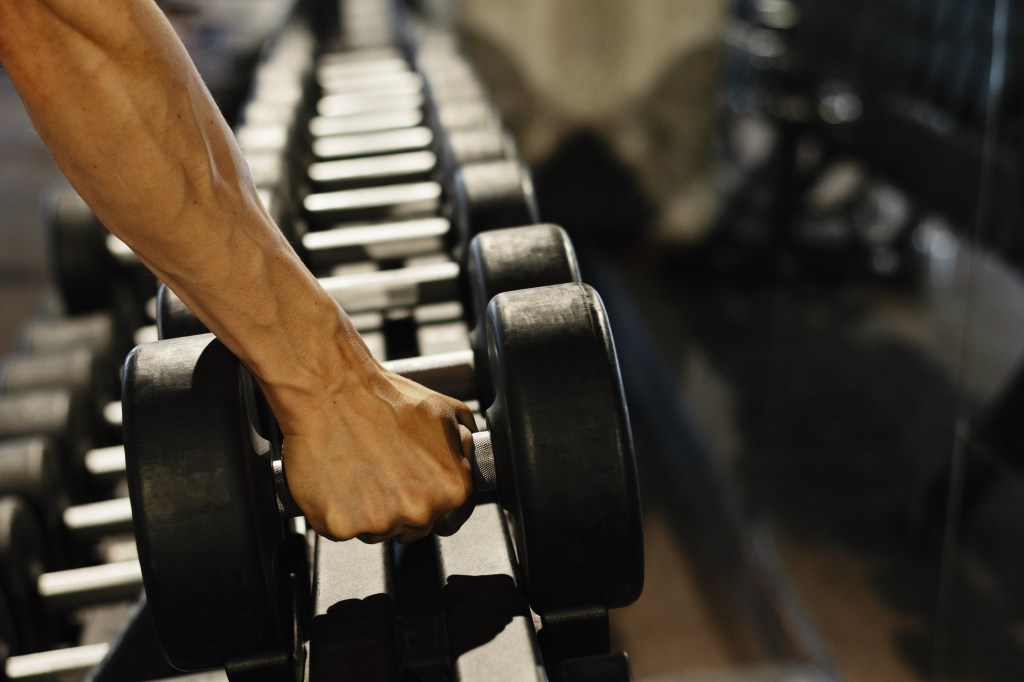
Farmer carries
Picking up a pair of dumbbells, kettlebells, or anything heavy enough to challenge your grip and simply walking with it is one of the most effective ways of building your strength. Better known as a farmer’s walk, this back-to-basics move is more popular than ever. This is in part thanks to HYROX, in which a heavy farmer’s walk is one of eight gruelling stations across the race.
How:
- Stand tall holding a dumbbell or kettlebell in each hand, arms hanging naturally at your sides.
- Engage your core and begin walking with controlled and deliberate steps.
- Keeping your chest elevated and your gaze forward, avoid the temptation to look down.
- Maintain a slight gap under your armpits to maintain tension, preventing the weights from swinging as you turn at the 20–30 metre mark.
Dead hangs
Performed correctly, dead hangs can build a rock-solid grip because they force your upper body to support your entire body weight against gravity.
This tension directly targets the forearms, specifically engaging the flexor digitorum superficialis and profundus—the deep muscles responsible for closing your fingers and your grip. Alongside the forearms, the exercise recruits the brachioradialis in the lower arm, the arm flexors (like the biceps), and stabilising muscles across your shoulders and upper back.
How:
- Reach up and grab a secure pull-up bar with an overhand grip (palms facing away from you), positioning your hands roughly shoulder-width apart.
- Step off the platform or bend your knees to let your body hang completely, keeping your arms straight and your core engaged to prevent your torso from swinging.
- Keep your shoulders packed—slightly pulled down away from your ears rather than letting them completely collapse upwards—and hold the position for 20 to 60 seconds while breathing smoothly.
Plate pinch
If you’ve ever picked up a 10, 15, 20 or 25kg weight plate and felt a touch of forearm flexion, you’ve got close to performing plate pinches. These develop high-level grip strength because they focus heavily on your thumb power, which is often the weakest link in hand strength.
Unlike typical bar exercises that rely on a crushing grip, pinching forces your thumbs to work in opposition to your fingers, improving pinch grip utility. This movement heavily recruits the thenar muscles (the fleshy base of the thumb) alongside the deep finger flexors in the forearms, such as the flexor pollicis longus, which controls thumb flexion.
The extensor muscles on the top of the forearm and the stabilisers in your wrist also work overtime to keep the heavy plates from slipping out of your hands.
How:
- Place two smooth-sided weight plates on either side of you.
- Stand between the plates, reach down and grip them using only your fingers on one side and your thumb on the other, making sure your palm does not rest on top of the plates.
- Squeeze the plates, lift them off the ground by standing up straight, and hold them at your side with a braced core for 20 to 30 seconds before lowering them safely back down.
- As your strength builds, aim to progress your total
Towel curls
By ditching the rigid metal of a barbell for a thick, unstable towel, you force your hands to work twice as hard just to maintain control. This shift in mechanical load recruits the brachioradialis, pronator teres, and the deep finger flexors in your forearms.
Because you are forced to aggressively squeeze the fabric to stop the weight from slipping, your thumbs, fingers, and wrists are under constant, intense tension throughout the entire movement—building the exact kind of real-world strength that keeps you robust well into your later years. Arm day will never look the same.
How:
- Loop a thick towel through the handle of a kettlebell or the centre of a weight plate, then grab both ends of the towel firmly with a tight, crushing grip.
- Stand tall with your core braced and your elbows pinned to your sides, then slowly curl your hands up towards your shoulders.
- Squeeze your forearms and biceps at the top of the movement, then lower the weight back down under complete control until your arms are fully extended.