

From strength and balance to cardiovascular fitness and lung health, these five simple tests can offer valuable insights into physical function, resilience and healthy ageing
Words: Lucy Miller PICS: Shutterstock/Pure Sports Medicine
When you think about it, every day is another step towards getting older. Our bodies are constantly ageing, but most of the time you barely notice it – until suddenly you do. You recover more slowly, your joints feel stiffer, and the strength or energy you once took for granted doesn’t quite feel the same.
The good news? Once you start paying attention to these subtle changes, you can start doing something about them – which is exactly why I booked in for Pure Sports Medicine’s LiveWell: Health and Longevity Assessment in Moorgate, London.
Across two hours of physical testing with exercise physiologist and strength and conditioning coach Carter Bailey, I was given a detailed breakdown of my fitness, physical capacity and potential long-term health risks compared with others my age.
Some of the results were reassuring. Others were a wake-up call.
These are the five tests that stood out most – and what they revealed about how well I’m ageing.
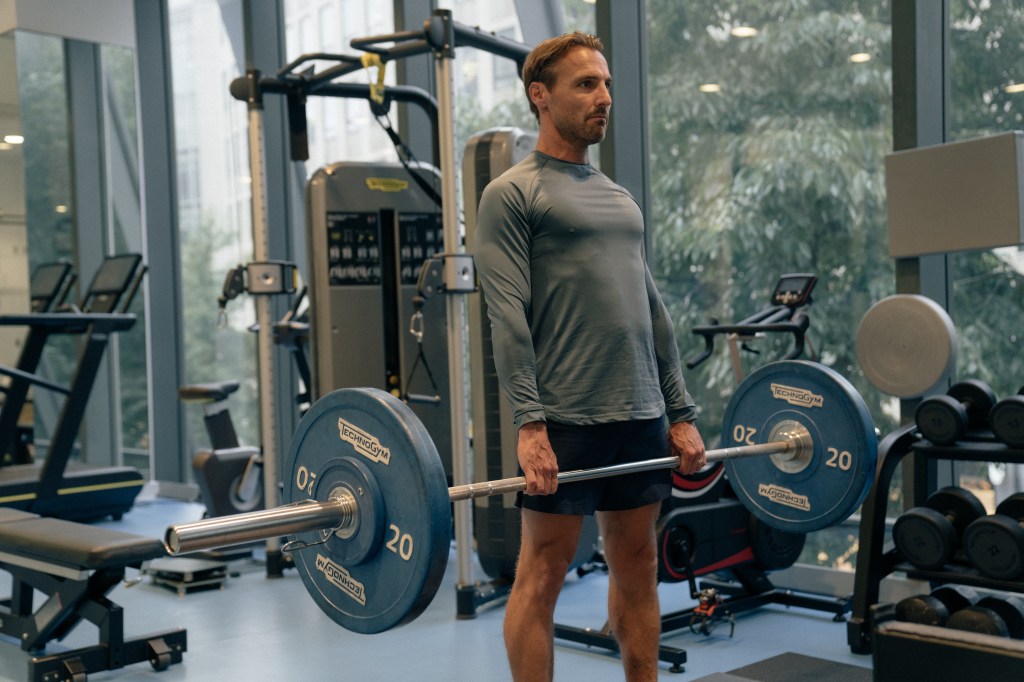
- Grip Strength
Grip strength is increasingly viewed as a marker of healthy ageing because it provides a simple but reliable measure of overall muscular health. Until you begin to lose strength in your hands, you probably never really think about how important your grip strength is.
“Research consistently shows that people with stronger grip strength tend to live longer and have lower risks of cardiovascular disease, frailty, disability and early death,” says Bailey. “If you’re losing strength in your hands and arms and, therefore, your grip, it’s an indication that it may be happening throughout the rest of your body too.”
My scores came out at 30.3kg on my right hand and 27.7kg on my left, which was considered average for women my age – although it’s something I’d like to improve. I already struggle to open jam jars!
According to Bailey, grip strength is considered one of the best simple indicators of ageing and longevity because it relies on coordinated muscle activation, tendon function and nervous system efficiency.
“It requires your nervous system to recruit and coordinate thousands of motor units to generate force,” he explains. “That makes it a useful indicator of muscle strength, nerve function and coordination.”
How to improve it
Bailey recommends progressive strength training rather than isolated hand exercises alone. “Heavy loaded exercises such as deadlifts, farmer’s carries, pull-ups, rows and dead hangs are effective because they strengthen the entire body while heavily challenging the hands and forearms.”
- Lung Function Test
To measure my lung capacity, I used a spirometer – a handheld device designed to assess how much air you can inhale in and then exhale out, and how efficiently your lungs function.
The assessment measured several markers, including Forced Vital Capacity (FVC), which measures the total amount of air you can forcibly exhale, and Forced Expiratory Volume in one second (FEV1), which tracks how much air you can expel in the first second of breathing out.
My results were reassuring. My FEV1 score came in at 102% of the predicted range for my age, while my Peak Expiratory Flow – which measures how quickly you can expel air – scored 107%.
How to improve it: “Lung function is strongly associated with lower all-cause mortality and better physical resilience as we age,” says Bailey. “The best way to improve lung capacity and functionality is to include regular aerobic exercise such as walking, running, cycling, or swimming, which will help the lungs and heart deliver oxygen more efficiently.
HIIT can also improve endurance and breathing efficiency, as well as strength training, breathing exercises, avoiding smoking or vaping, and maintaining a healthy weight.”
- Single Leg Balance
This test measures balance, which is an important predictor of longevity. “Balance, stability and mobility determine how well the joints and muscles move and work together to keep your body stable, safe and moving optimally. This allows us to stay active and reduce the likelihood of falls – one of the biggest threats to health and wellness as we age,” says Bailey.
Evidence shows that the inability to balance on one leg for 10 seconds is linked to higher all-cause mortality, so this is a powerful health marker. Thankfully, I managed 30 seconds on each leg – considered a strong benchmark for healthy ageing. I had a slight wobble here and there, but overall I felt pretty stable.
How to improve it: To perform the test, stand barefoot on a flat surface, place your hands on your hips, and lift one foot off the ground, keeping your eyes open. Time how long you can hold the position without swaying, hopping or putting your foot down.
If 30 seconds is a struggle, Bailey recommends simple exercises like a single-leg stand, heel-to-toe walking, step ups and standing on unstable surfaces that challenge body awareness, lower limb stability and coordination. “The good news is, balance is highly trainable and can be improved pretty quickly.”
- VO2 max
“VO₂ max is the maximum amount of oxygen your body can use during exercise, making it one of the strongest predictors of healthspan and longevity,” explains Bailey. It can be improved through consistent aerobic training, HIIT, and regular physical activity over time.
Keeping VO₂ max high is important because higher levels are strongly associated with lower risk of cardiovascular disease, diabetes, and premature death, as well as better energy, endurance, and physical function throughout life.
“Higher aerobic fitness is linked to lower cardiovascular and metabolic disease risk, better cognitive function and improved metabolic resilience as well as better energy, endurance, and physical function throughout life. While VO2 max is traditionally viewed as a measure of fitness, it’s also a meaningful reflection of how well your body is ageing internally.”
To measure mine, Bailey fitted me with a hefty face mask that covered both my nose and mouth, designed to analyse oxygen intake and carbon dioxide output while running on a treadmill. After a five-minute warm-up, the speed gradually increased every minute until I reached exhaustion and called time on the test at level 12.
In simple terms, the higher your VO2 max score, the more efficiently your body can use oxygen during exercise – an important marker of cardiovascular fitness and long-term health.
Thankfully, my VO2 max came out at 44.8 ml/kg/min, which is considered excellent for a 43-year-old woman. I’ll take that.
How to improve it
Regular aerobic exercise, such as running, brisk walking, cycling and swimming, can all help improve VO2 max while supporting heart health and energy levels as you age. Bailey also recommends incorporating interval training like hill sprints and track work, alongside steady-state cardio, to challenge the cardiovascular system more effectively.
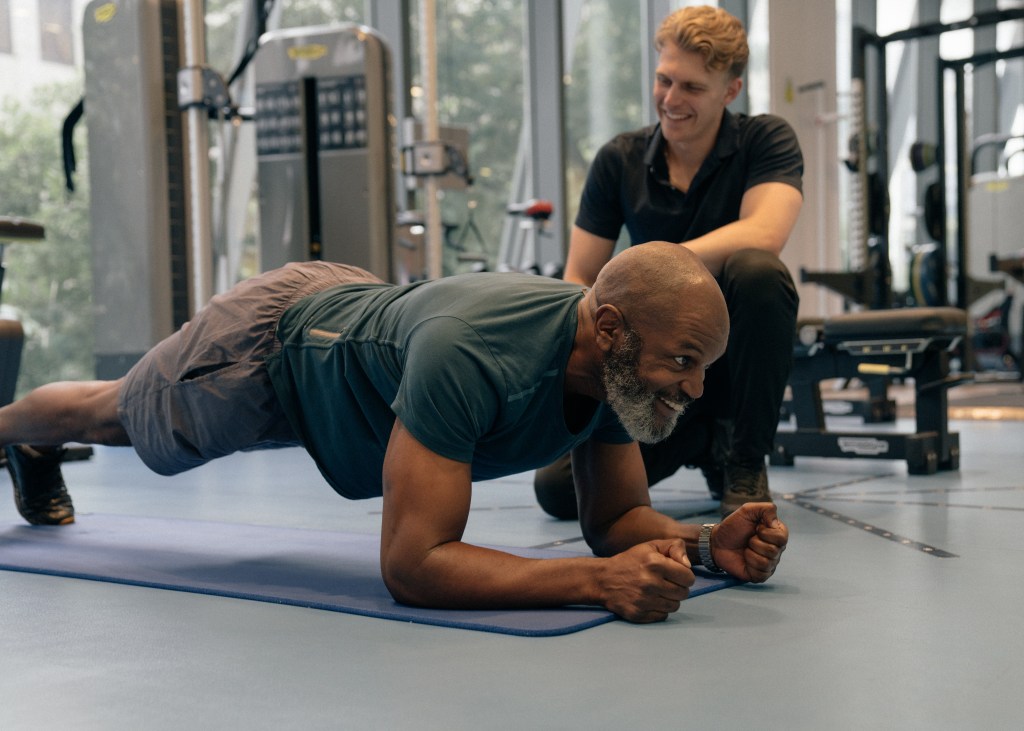
- Plank hold
The aim of this test was simple: hold a plank for 90 seconds.
“Good core endurance is crucial for maintaining spinal health, balance and reducing injury risk as we age,” says Bailey.
Thankfully, my score of 130 seconds was considered excellent and a good indicator that my body is strong and pretty much ready for what life has to throw at me.. It also showed that my core muscles – the deep stabilisers around the spine, pelvis and hips – are in good stead to help keep me upright and stable as I age.
“When these muscles weaken, the body starts compensating,” Bailey explains. “You lean forward when you walk, rely on furniture to stand up and place extra strain on the lower back, which can eventually lead to pain and poor posture.”
How to improve it
Core strength is less about sit-ups and more about resisting movement and keeping the spine stable while the arms and legs move around it.
Isometric holds such as planks, glute bridges and wall sits can all help build endurance through the core. Bailey also recommends stability exercises like dead bugs and bird dogs, which train the body to maintain spinal alignment during movement.
The Pallof Press is also an exercise that Bailey highly recommends, an anti-Rotational strength exercise that protects your spine and helps stability by fighting the force of the cable or band.