

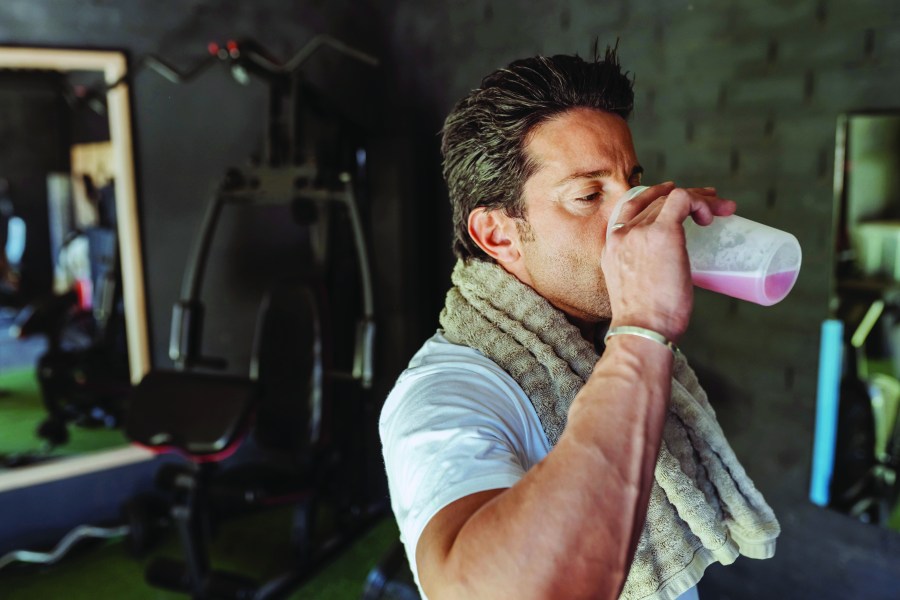
Recovery drinks have become increasingly sophisticated, but that doesn’t mean every workout demands one. Registered dietitian Paul McArdle RD MBDA explains when protein, carbohydrates and electrolytes can genuinely speed recovery – and when a glass of water and a balanced meal are all you need
Recovery drinks have moved on from the basic protein shake. Many now combine protein with electrolytes, carbohydrates and other ingredients, while a growing number are low in sugar or use non-sugar sweeteners such as aspartame, sucralose or stevia.
But before reaching for one after every workout, it is worth asking a simple question: what are you trying to recover from?
Start with hydration
After a long, sweaty session, particularly in hot weather, replacing fluid matters. For a short gym workout, water will usually be enough. But after heavier sweat loss, an electrolyte drink can be useful. Sodium can help your body retain the fluid you drink.
That does not mean everybody needs electrolytes every time they train. If you have done a moderate session and are eating a normal meal afterwards, water and food may be all you need.
Protein shakes versus recovery drinks
Protein supports muscle repair, which is why shakes are popular after resistance training. They are convenient, particularly if you are not going to eat for a while.
But protein alone does not cover every aspect of recovery. It does not replace muscle glycogen, the stored carbohydrate used during exercise, and a standard shake may not provide much sodium.
After a normal weights session, that may not be a problem. Your next meal can provide the carbohydrate and fluid you need.
If you have completed a long run, played a match or need to train again within a few hours, the calculation changes. Carbohydrate helps replenish glycogen, while electrolytes and fluid support rehydration. In those situations, a drink containing carbohydrate, protein and electrolytes can be useful.

Does a recovery drink need sugar?
Not always.
Sugar is not automatically out of place in a recovery drink. After a marathon, a long bike ride or two demanding training sessions in one day, carbohydrate can be useful, and a drink is a convenient way to get it.
But most people who work out do not need a high-sugar sports drink after every session. If your main aim is hydration, a low- or no-sugar drink can be a sensible choice.
A drink does not stop hydrating you because it uses non-sugar sweeteners. It can still provide fluid and, depending on the product, electrolytes or protein. But the sweetener itself does not refuel your muscles or speed up recovery.
The bottom line
- After a light workout, drink water and eat normally.
- After a strength session, a protein shake can be a convenient option if a meal is not practical.
- After a long or sweaty session, particularly in hot weather, consider electrolytes.
- And when you need to recover quickly before training or competing again, a drink combining carbohydrate, protein and electrolytes can earn its place in your kit bag.
- The best recovery drink is not necessarily the most complicated one. It is the one that does the job you need it to do.
• For more on the science of recovery drinks, visit https://www.britishsoftdrinks.com