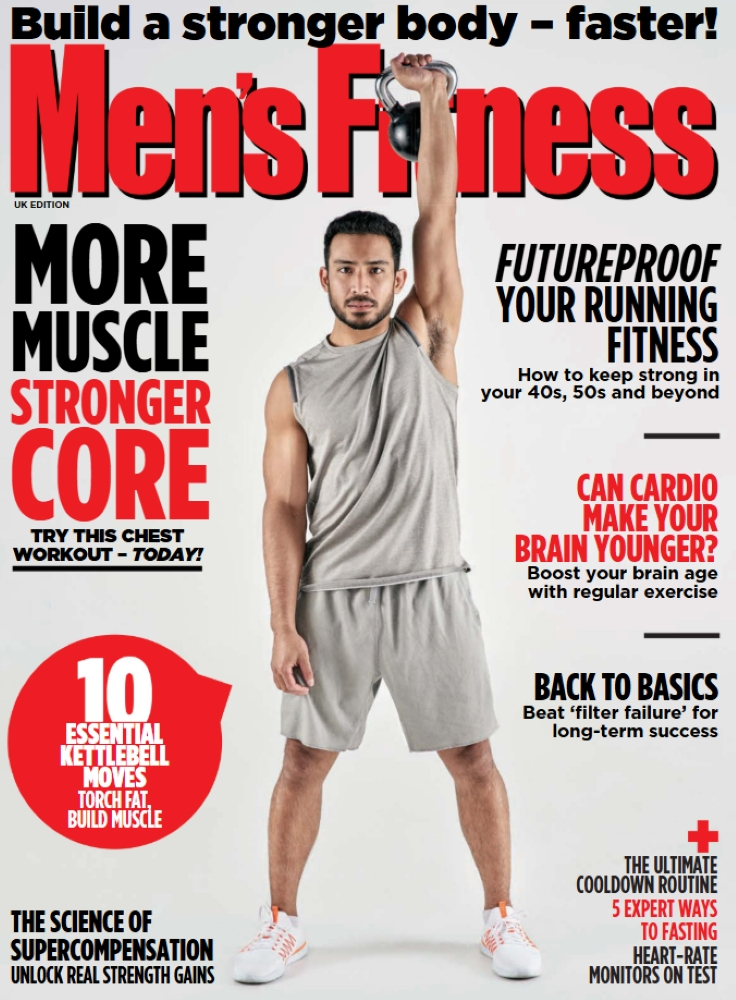

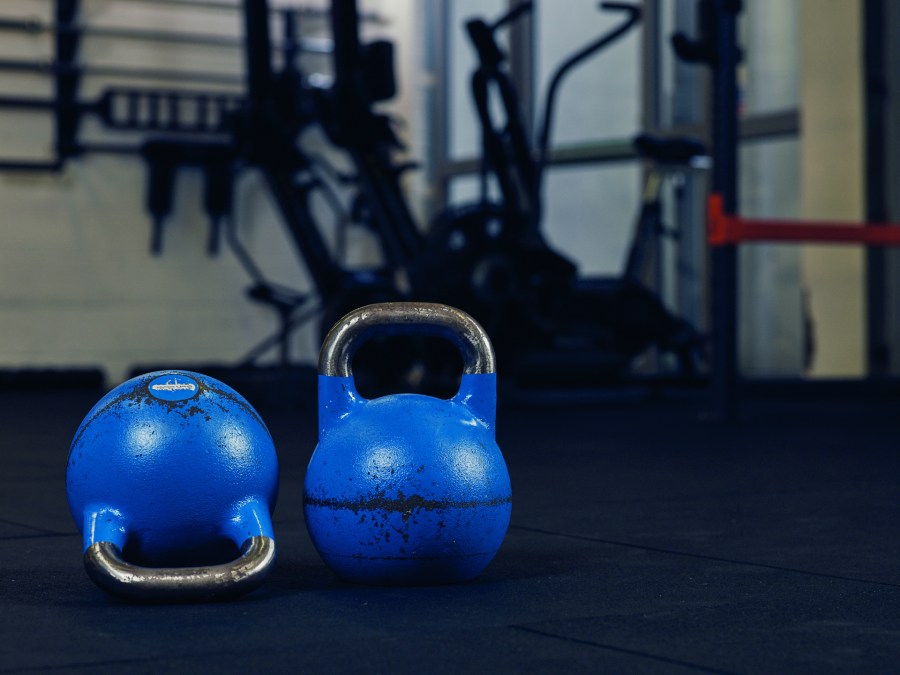
The kettlebell is an amazingly functional piece of gym equipment, perfect for building explosiveness and core strength. Here’s 10 key kettlebell exercises you must do!
Used for decades by Russian soldiers, kettlebell exercises have become fashionable in the decadent West over the past few years and with good reason. Their top-mounted handle makes them ideal for ballistic, swinging movements, giving workout options that are tough to replicate with dumbbells or a bar. Because moves like the swing, snatch and clean use virtually every muscle, they can be done for low reps to build full-body explosiveness, or ultra-high reps (50 in a set isn’t uncommon) to burn cardio and fat.
But there’s more. Since the 1700s, farmers and strongmen have been using lifts like the windmill and bent-over press to show off their strength and coordination, and incorporating them into your routine will help you build muscles you barely knew you had. Want to get strong, explosive and lean? Time to unleash bell.
What are kettlebells best for?
Building explosiveness and core strength. Kettlebell exercises come into their own for swings, cleans and snatches – where they’re more comfortable to use than dumbbells and less technical than barbells – making them excellent for building power.
Because you’ll often use them unilaterally, in ways that involve holding them at odd angles to your body, they’re also great for teaching your body to “resist” force, building the anti- rotational strength that experts agree is key to long-term health. Finally, because they’re suited to very high reps, they’re great for burning fat.
1 Two-hand swing
Primary target muscles Glutes
Secondary target muscles Hamstrings
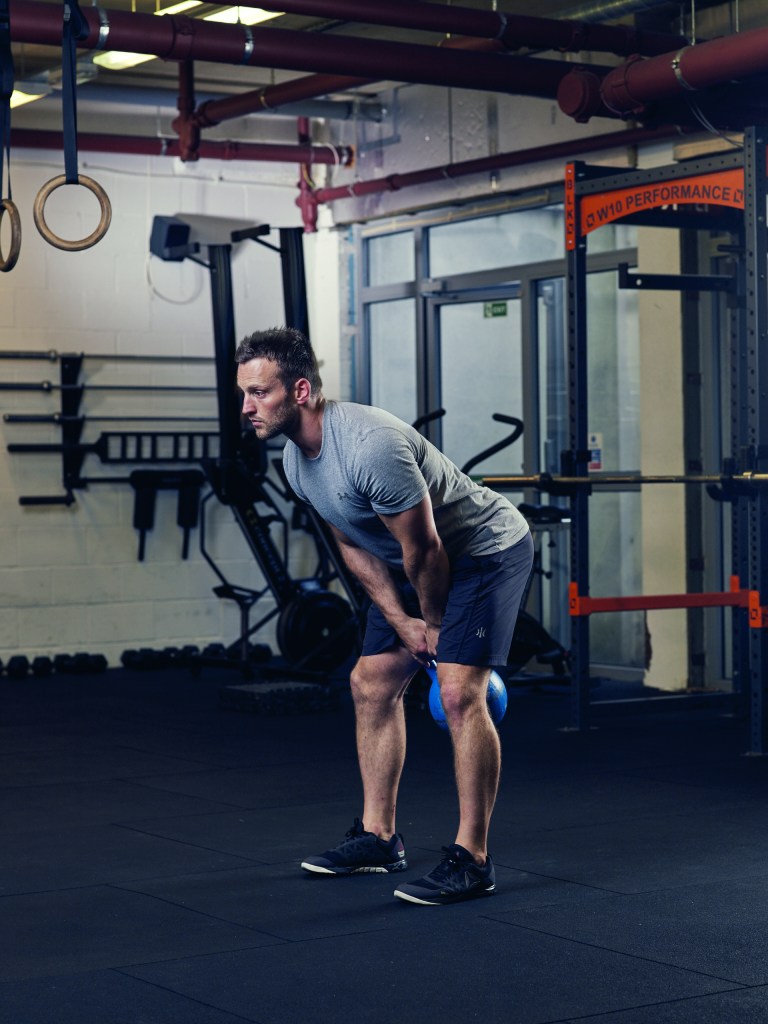
Why This full-body move engages all the muscles of your posterior chain, but also teaches the explosiveness you need to do everything from throwing a punch to jumping onto a box. Remember, it’s a swing and not a squat: you only need to bend your knees as much as you would before a big jump.
Swing the kettlebell between your legs with both hands, and then pop your hips forward to drive it up to head height, keeping your arms relaxed. Let the kettlebell swing back into the next rep – you don’t need to bend your knees much.
2 One-hand swing
Primary target muscles Glutes
Secondary target muscles Hamstrings
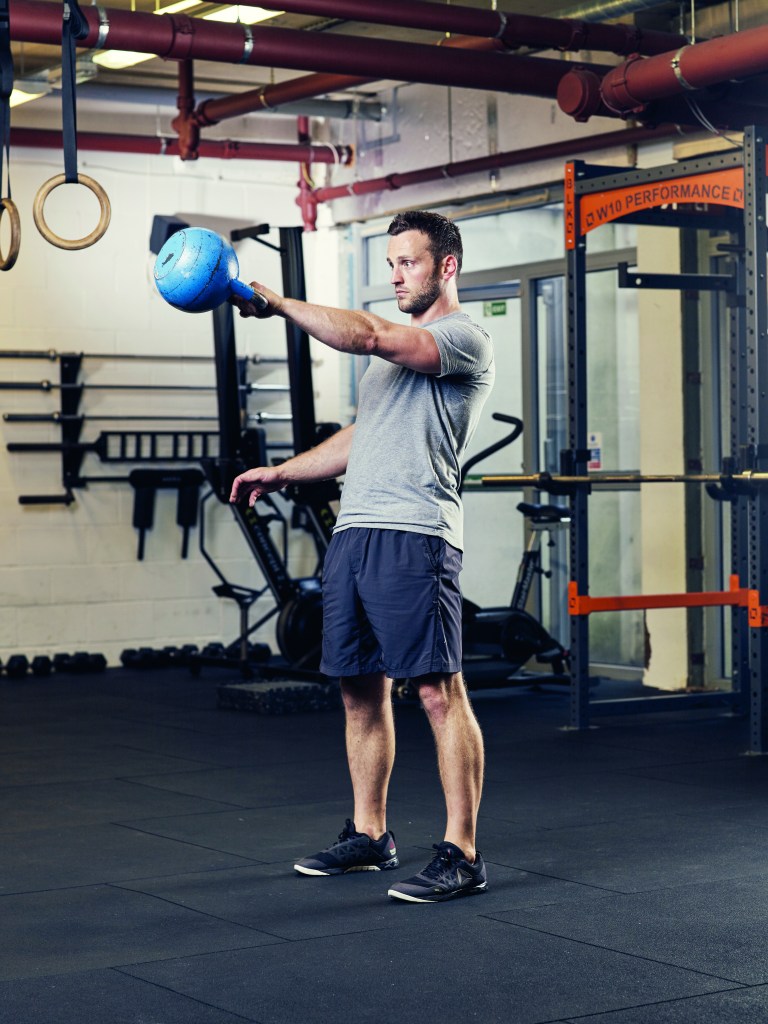
Why Swinging the kettlebell with one hand forces you to engage your core muscles to stay upright and in control, building strength through your obliques that will transfer to almost any sport. This is also a good way to “wake up” your abs ahead of heavy moves like a deadlift or squat.
Swing the kettlebell between your legs with one hand, bending your knees slightly, then pop your hips forward to drive it up to head height, keeping your arms relaxed. Do all your reps on one side, then switch to the other. This is a great kettlebell exercise.
3 Swing swap
Primary target muscles Glutes
Secondary target muscles Hamstrings
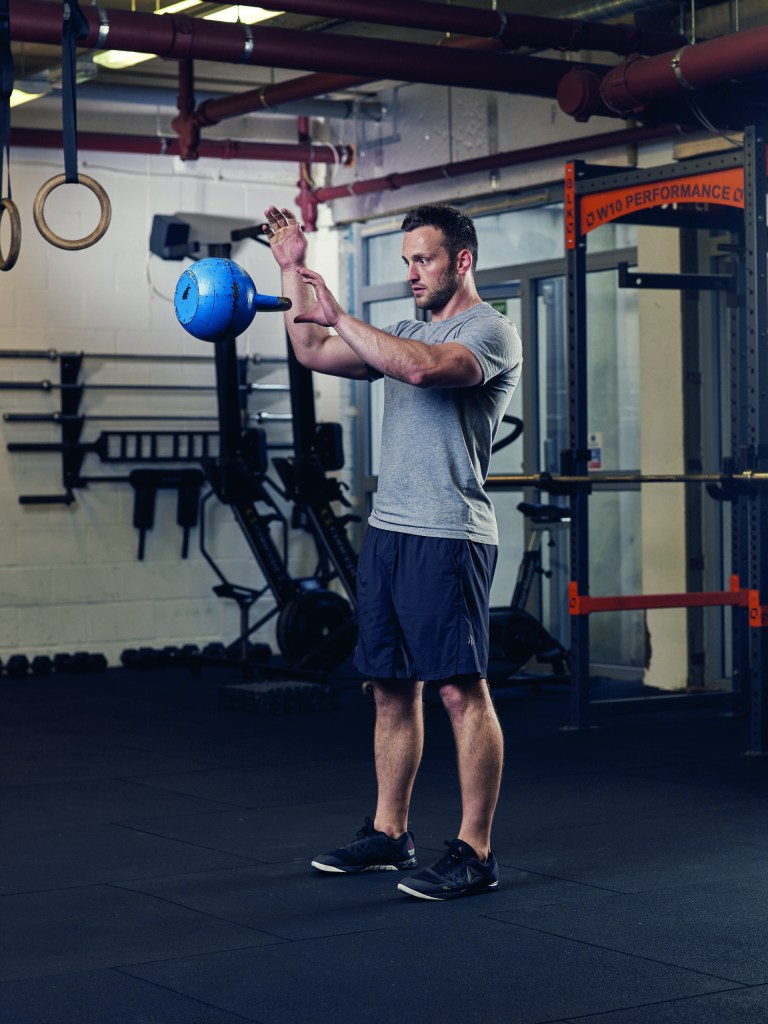
Why Building on the one-handed swing by switching hands in mid-air will work your coordination and proprioception. Once you’ve got the hang of it, you can even move into kettlebell “juggling” – flipping the bell over before catching it – as long as you’ve got a sturdy floor.
Swing the kettlebell between your legs with one hand, bending your knees slightly – and then pop your hips forward to drive it up to head height, keeping your arms relaxed. Switch hands in mid-air – but don’t let go of the kettlebell unless you’re confident you’ll catch it.
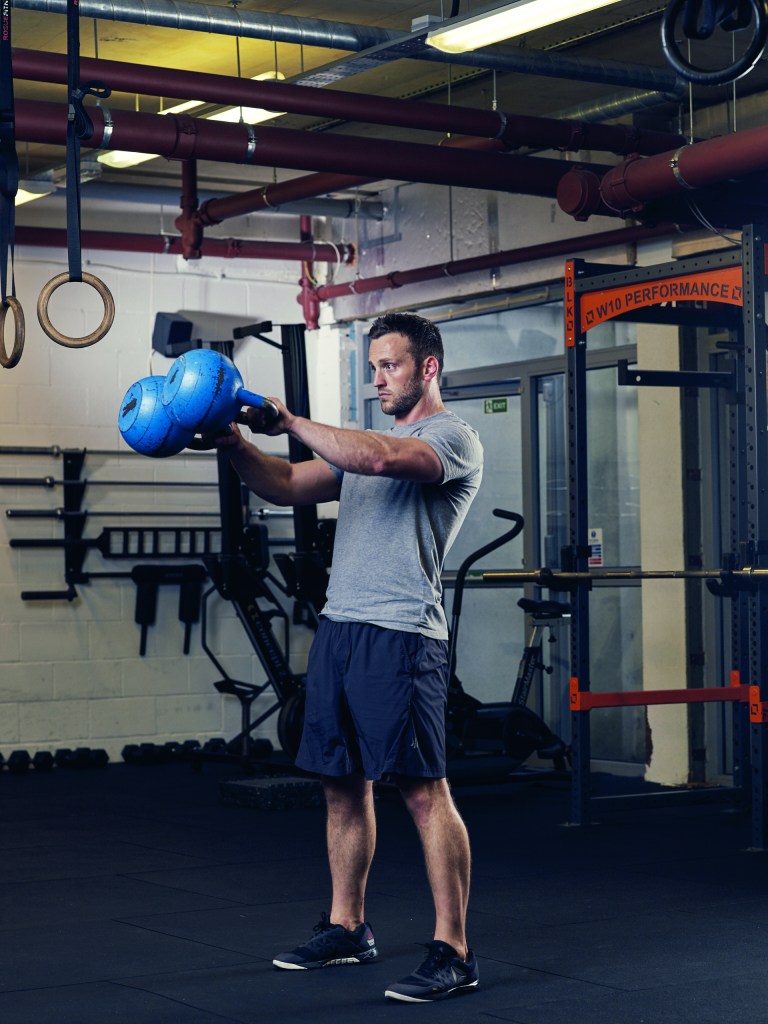
4 Double swing
Primary target muscles Glutes
Secondary target muscles Hamstrings
Why If you’re aiming to build strength or power but don’t have a heavy enough bell, using two at once is a solid option. Swinging between your legs will give you better glute and posterior chain activation – but you can also take a narrow stance and swing outside your legs to build your hamstrings.
Taking a wider stance than normal, swing the kettlebells between your legs with both hands, and then pop your hips forward to drive them up to head height, keeping your arms relaxed. Try not to let them collide.
5 Clean
Primary target muscles Glutes, hamstrings
Secondary target muscles Traps
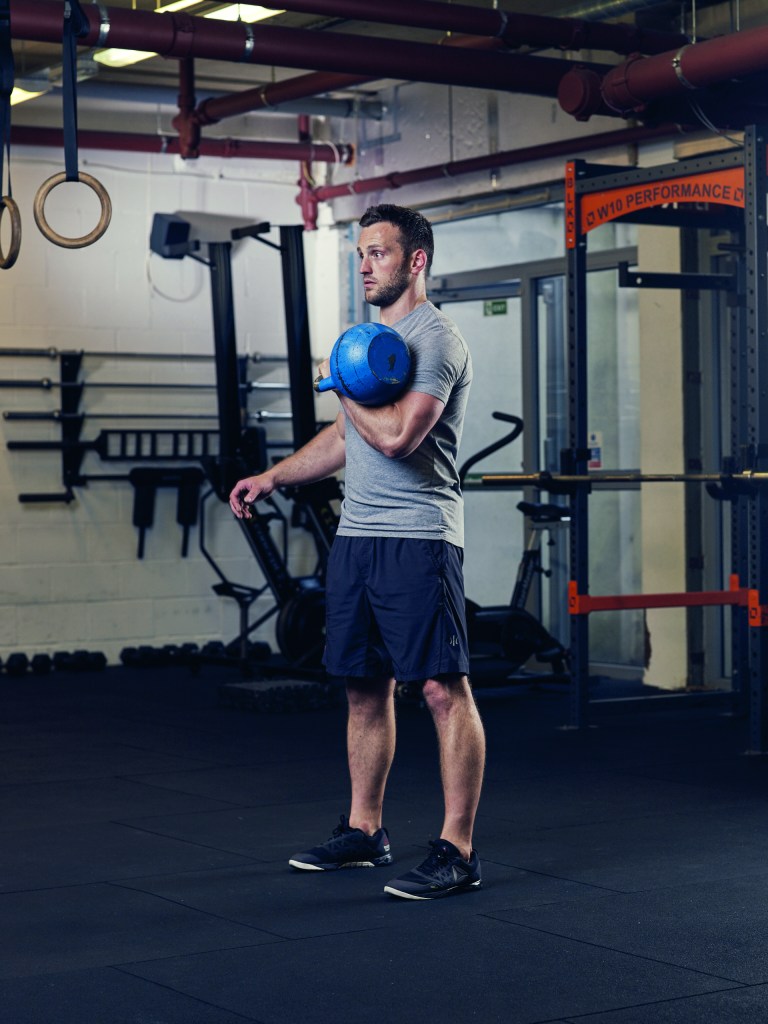
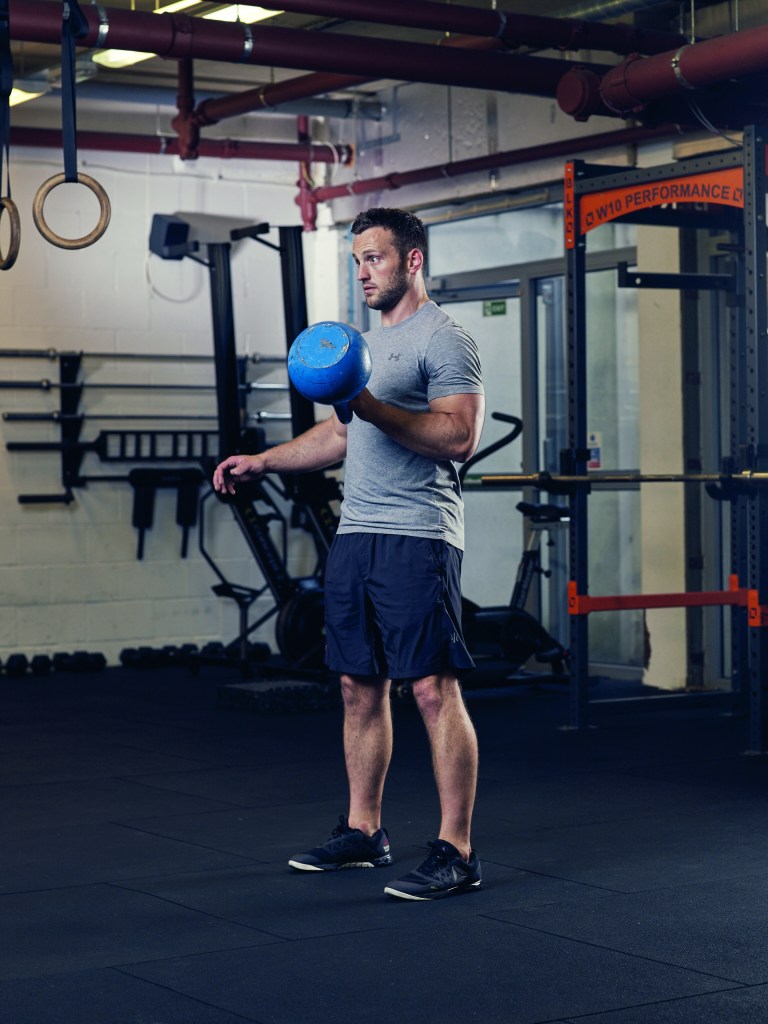
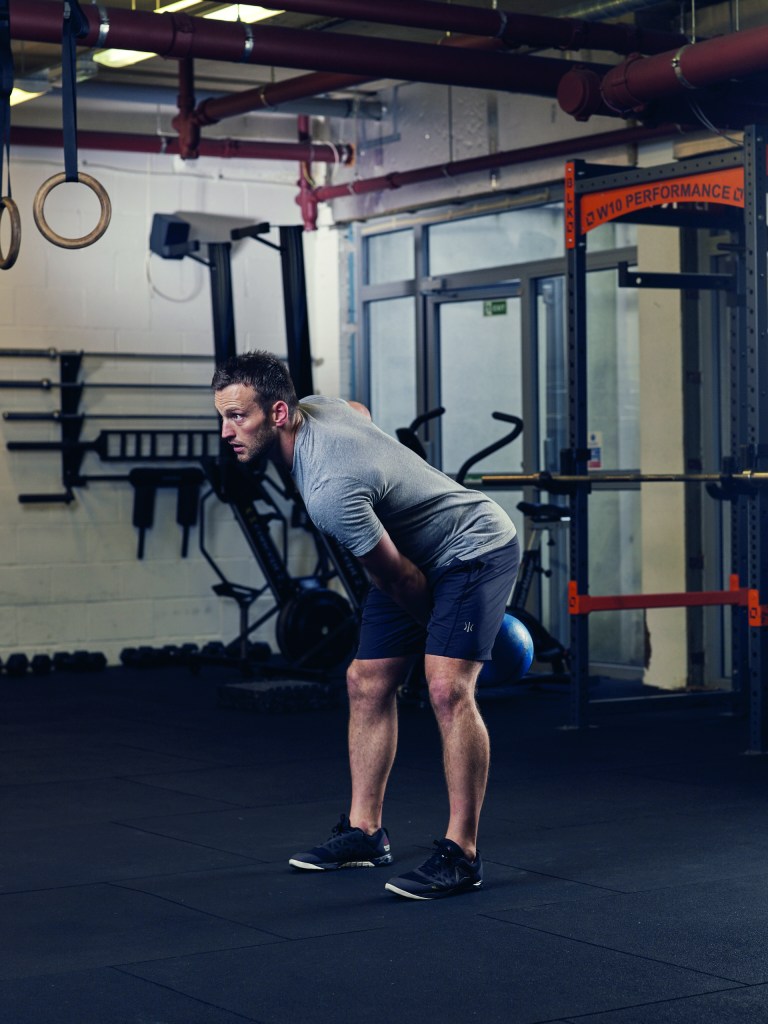
Why As well as being slightly less technical to learn than the barbell power clean, the kettlebell clean teaches what some coaches call “steering strength” – the ability to redirect a heavy object while it’s moving. This will build explosiveness through your posterior chain, while teaching you to deal with impact in a way the swing doesn’t via the rack-position “catch”. Finally, it’s a pretty good biceps builder – if you go heavy.
Swing the kettlebell upward with a pop from your hips. Bend your knees slightly to help with the catch – the kettlebell doesn’t have to go above chest height. As it moves upwards, bend your elbow and let the handle slide from your fingers down into the base of your palm. When you rack the kettlebell, keep your elbow tucked in to your body. Swing the kettlebell back down and go straight into the next rep. This is one of the most effective kettlebell exercises.
6 Bottom-up press
Primary target muscles Shoulders
Secondary target muscles Forearms
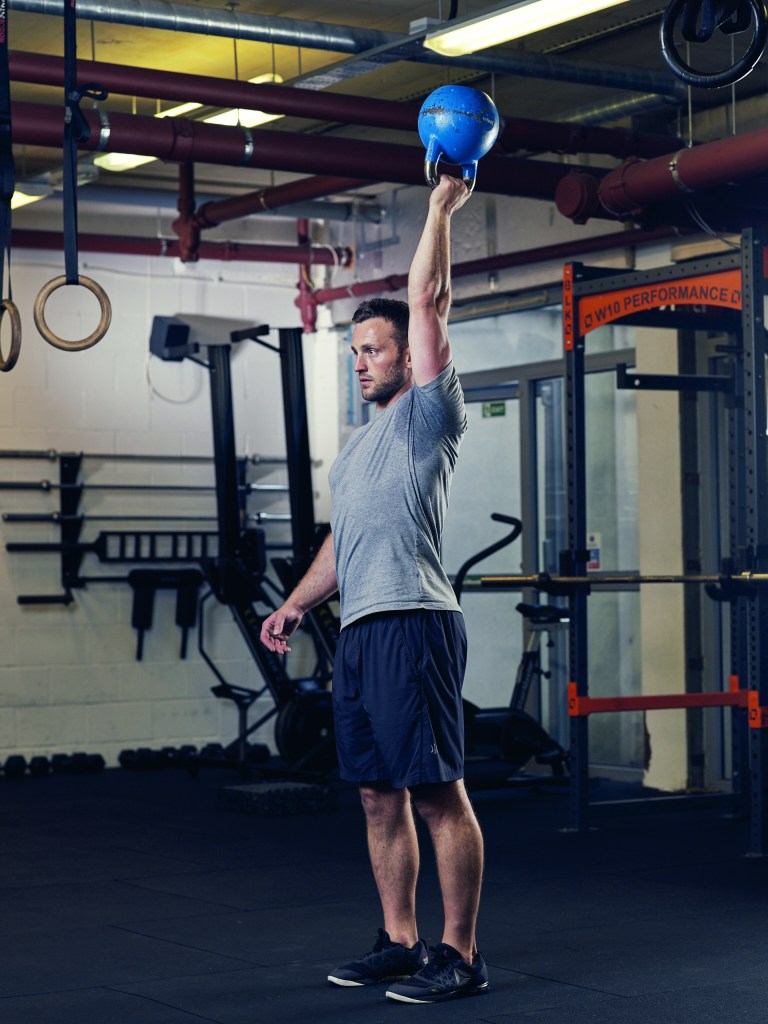
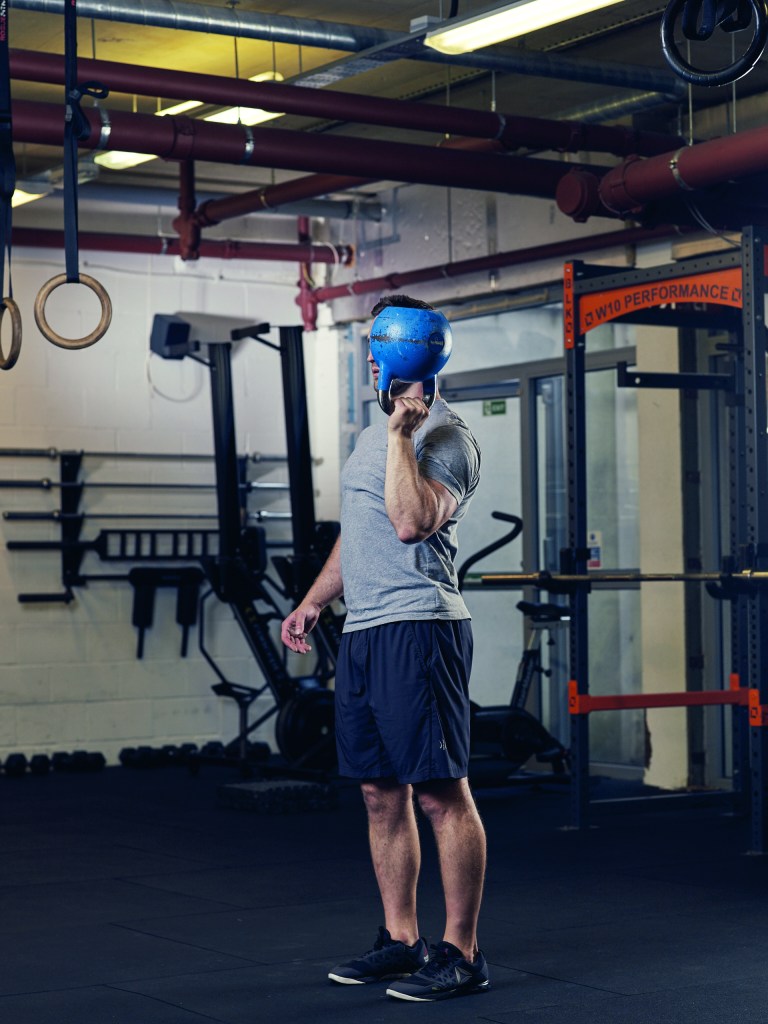
Why It’s more than a circus trick: this move will work all the stabiliser muscles around your shoulder girdle, keeping your rotator cuffs injury-free. It’ll also work your grip and forearms, and it might even help your chin-ups. Use it as a warm-up on shoulders day. Grip the kettlebell handle hard with the base facing the ceiling. Press it under control, pause at the top, then lower.
7 Lunge press
Primary target muscles Quads, shoulders
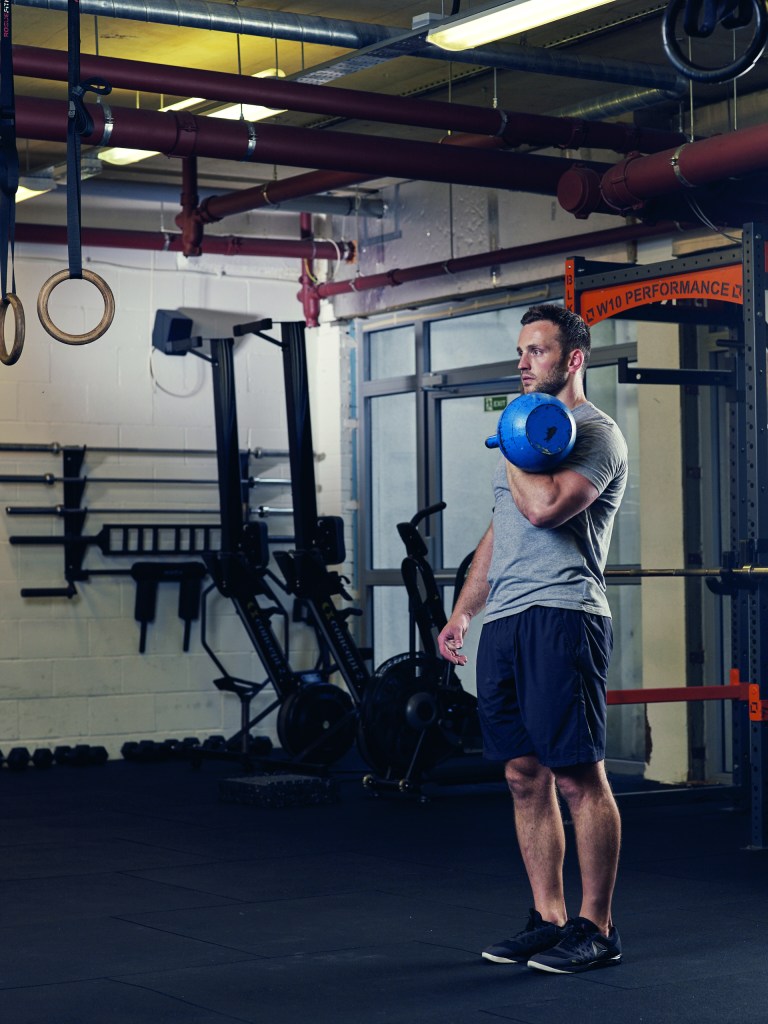
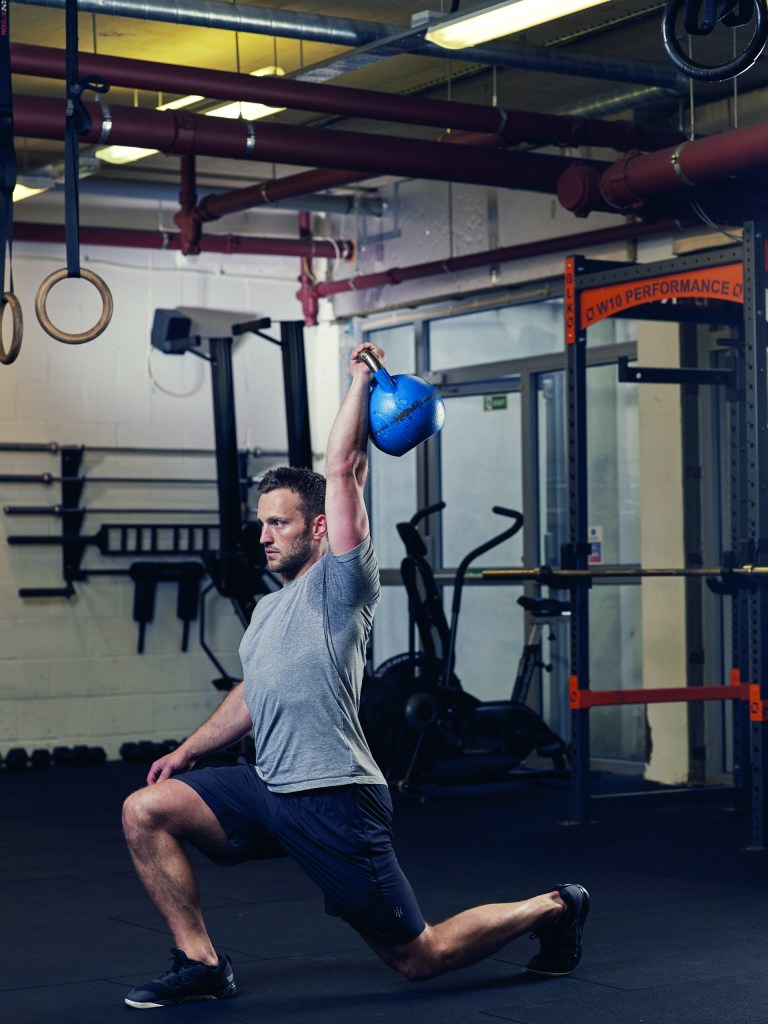
Why This move builds core strength by forcing your body to stabilise the kettlebell overhead, but also improves coordination and proprioception. Use it as a warm-up before heavy squats or lunges.
Holding the kettlebell in the rack position, lunge forward on the opposite leg as you press it overhead. Pause at the bottom of the move with the kettlebell overhead, then return to the start position.
8 Squat
Primary target muscles Quads, glutes
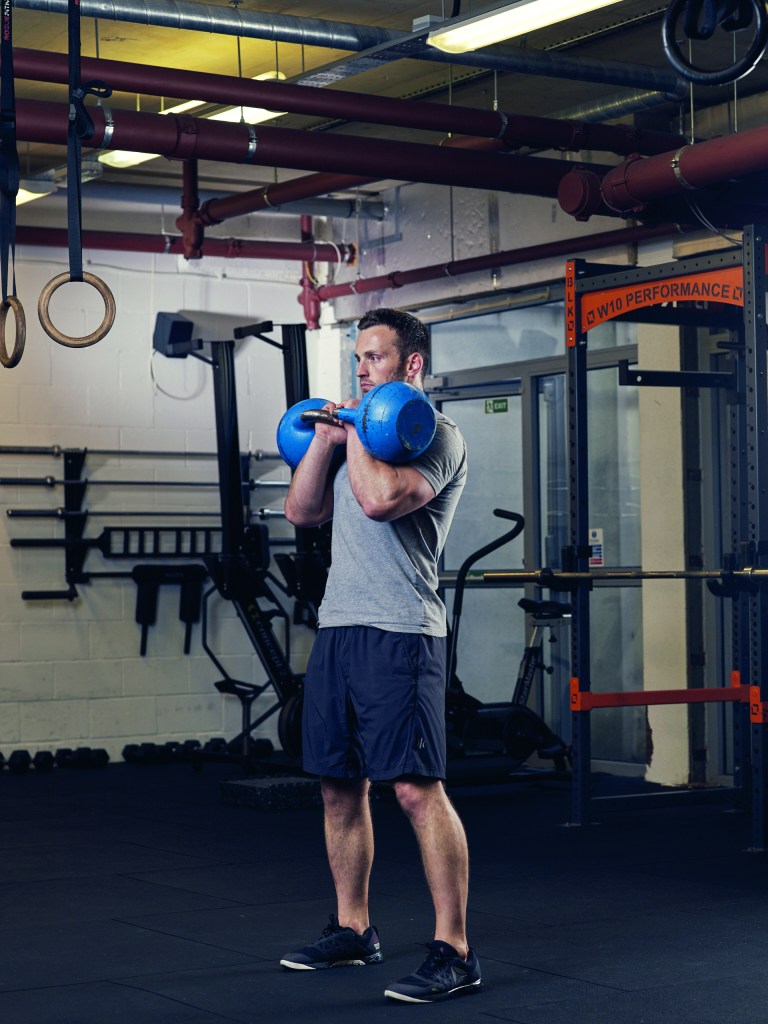
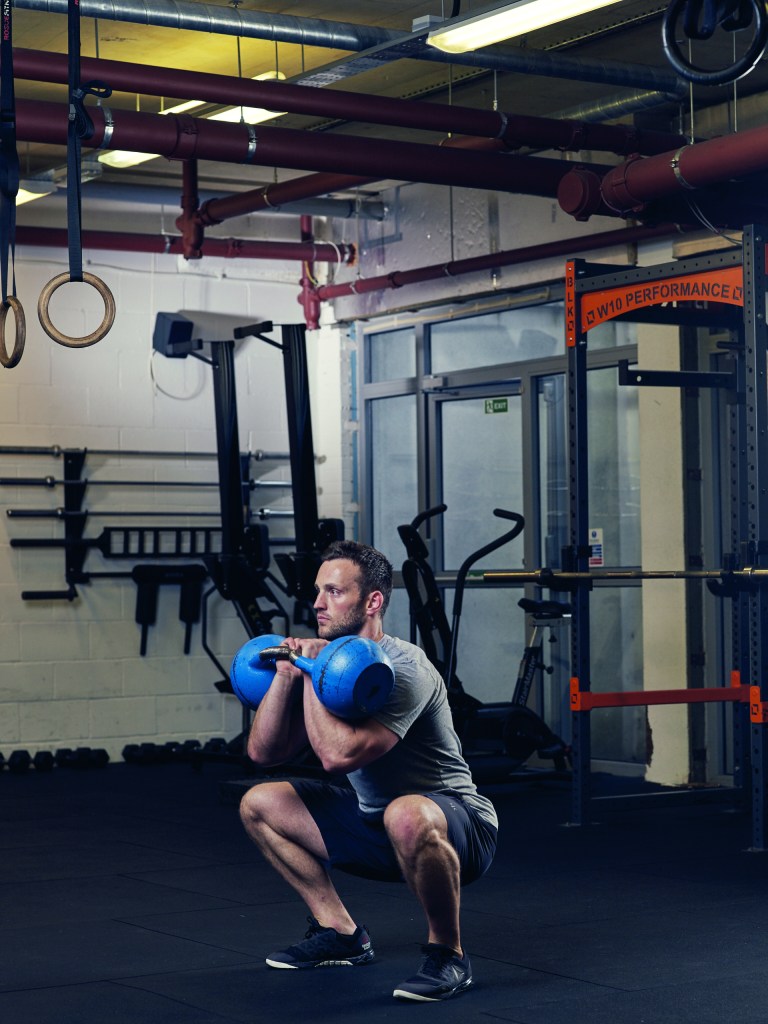
Why Using a pair of kettlebells for a “rack” squat enables you to be more self-correcting than the traditional barbell back squat. You won’t be tempted to lean forward, and holding the bells on your forearms will allow you to handle decent weight for moderate reps.
Stand with your feet shoulder-width apart and clean both kettlebells into the rack position, the bells resting on your forearms. Squat down as low as you can, pausing at the bottom. Drive back up through your heels. Repeat for the rest of your reps.
9 Romanian deadlift
Primary target muscles Hamstrings
Secondary target muscles Glutes
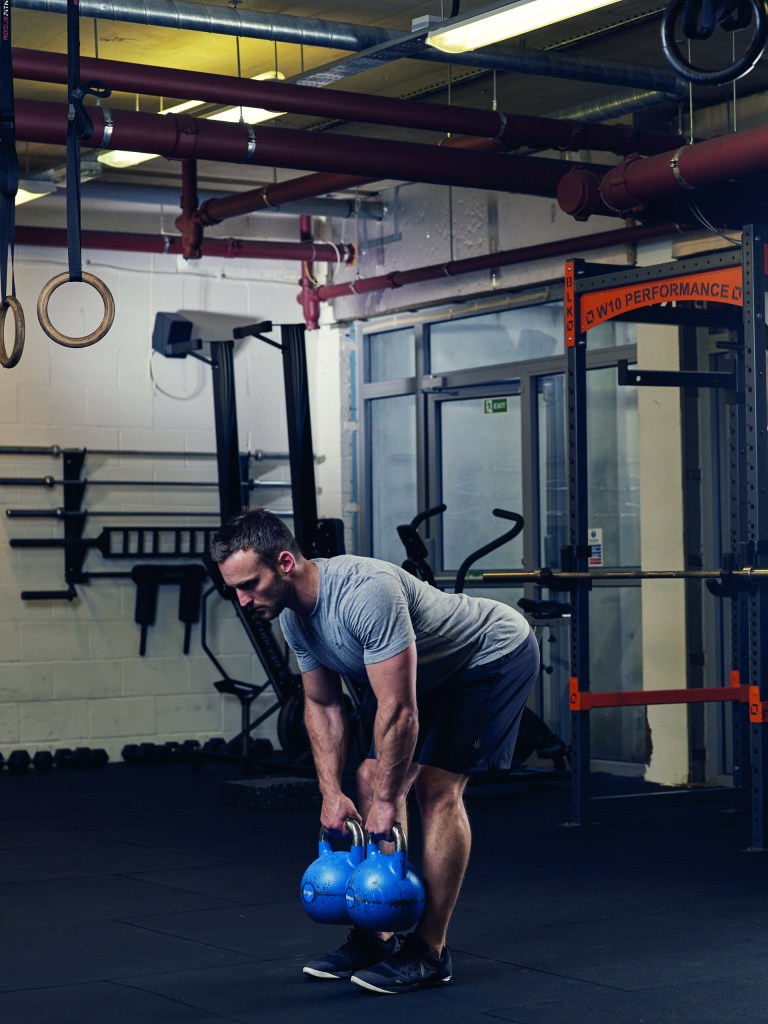
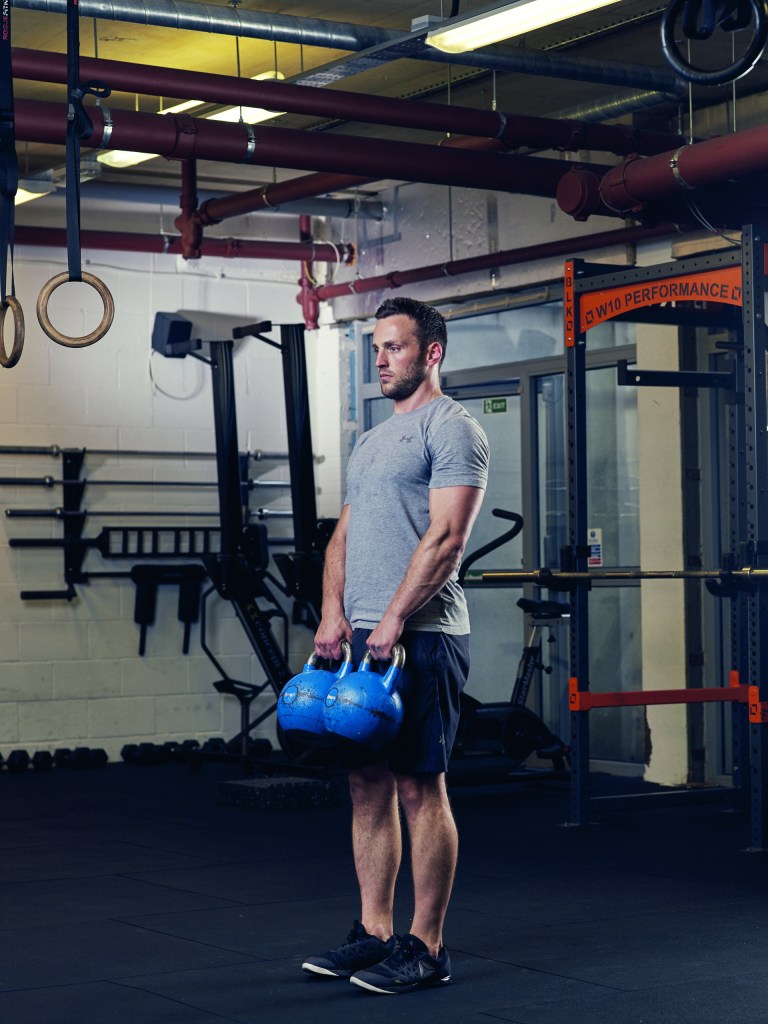
Why As well as providing a much-needed (for most people) hamstring stretch, this two-kettlebell move adds an element of instability while being more taxing on your grip than the barbell version of the move.
Holding a pair of kettlebells and keeping a slight bend in your knees, bend forward at the hips (keeping your back flat) until you feel the stretch in your hamstrings. Straighten up.
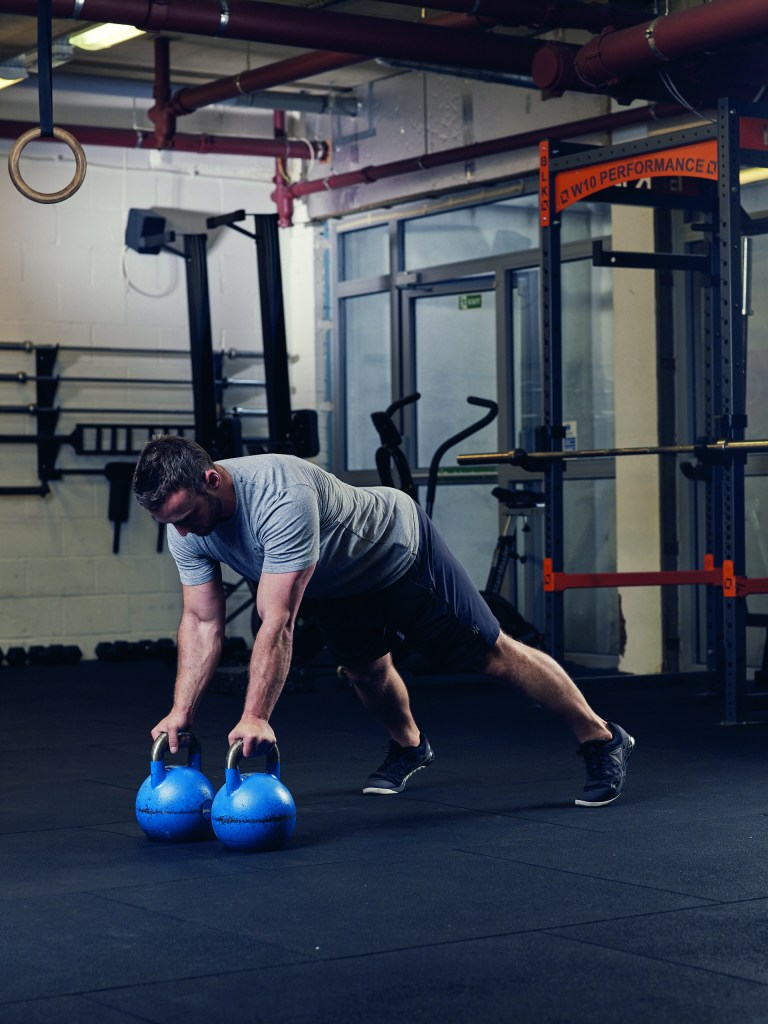
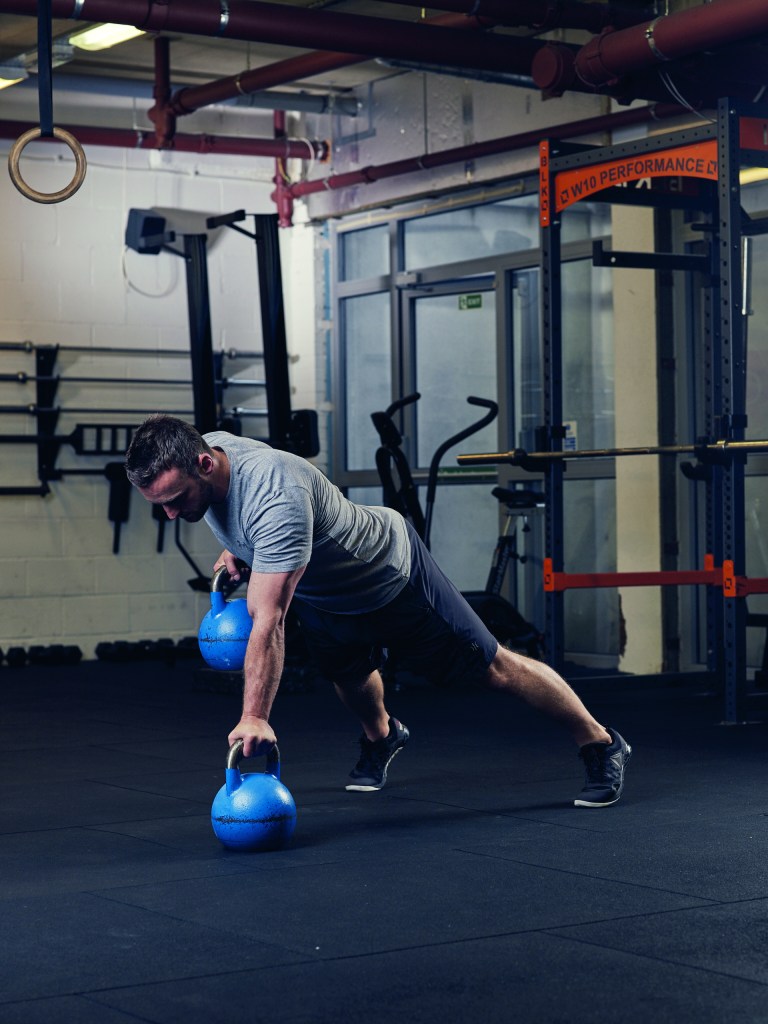
Renegade row
Primary target muscles Core
Secondary target muscles Lats
Why This move combines stability with pulling, so it’ll build your core as well as your back. It’s tempting to twist to one side as the reps get tougher, but the more you can stay parallel, the harder you’ll work your abs.
Do a press-up on the kettlebells, then – in the top position – lift one dumbbell, lower it, then lift the other. Raise them to your armpits, trying to keep your body parallel to the floor.