
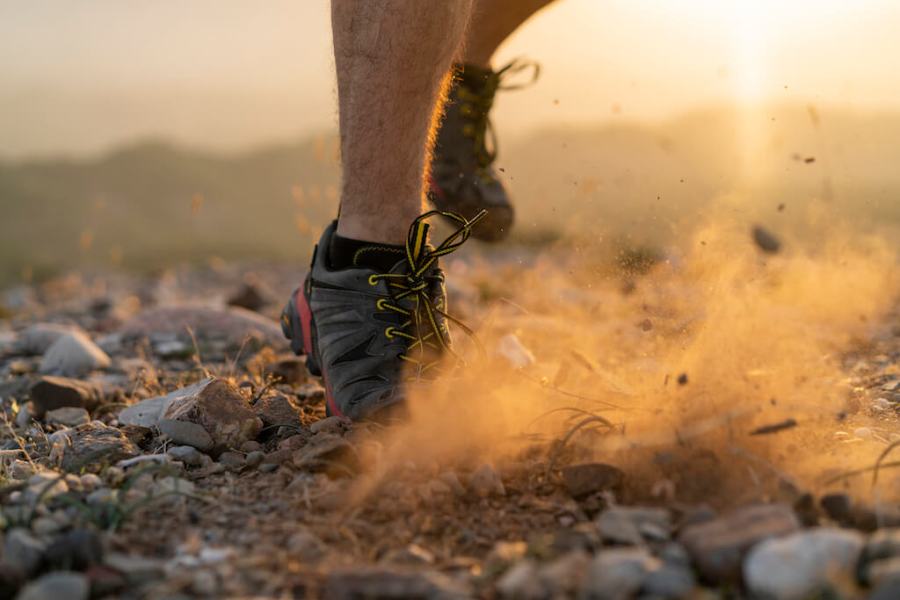
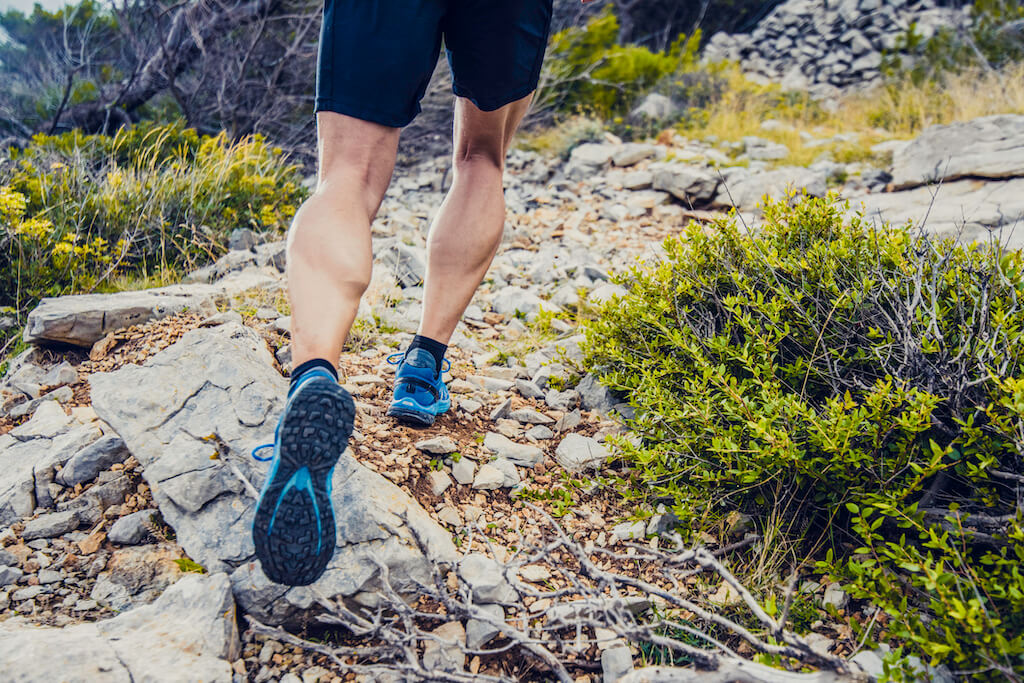
Trail running can be unpredictable, so choose a shoe with plenty of room for your toes to move and aid balance
3. Go big on toe space
Trail runners are a pedicurist’s worst nightmare. Mashed up feet are never pleasant. Choosing a shoe with ample space in the toe box gives your feet a chance to breathe and gives you a fighting chance of coming home with your toenails intact.
It will also help you spread your weight out, promoting a more balanced and responsive running style.
4. Go easy on the midsole
Trail runners might spend longer on their feet than roadies, but the ground is softer and you won’t always be striking it with the same uniform impact. Trail shoe midsoles offer anything from wafer-thin ‘barefoot’ thickness to ‘maximal’ water-bed support. The choice is largely personal.
Whatever your poison, assess the shoe’s flexibility by grabbing it at either end with both hands and twisting. Anything over a 90-degree twist will provide a smooth floaty ride. Anything less will provide more lateral support – well suited to anyone just getting into the sport.
5. Forget the high heels
Unlike road shoes, trail shoes often tend to have less ‘drop’. Drop is the difference in the natural raised position of your heel from your toes, measured in millimeters. Zero drop has become trendy in recent years, promising a more natural and responsive running style.
Don’t believe the hype too much. A dramatic change from your 12mm+ road shoes could cause an injury; 8mm is often the sweet spot but be sure to ask in the shop and feel what works best for you.
Related content:
Whether they’re daily mile-munchers or carbon-loaded race whippets, road running shoes are made for regimented pavement pounding. They might look fancy, but they are as predictable as a line dance. Quick or slow, they’re designed to aid metronomic repetition.
Trail shoes, on the other hand, with their extra grip and hard-wearing exterior, are all teeth and personality. If you plan to strut your stuff on park trails, mountains and fells, you’ll need to grab yourself a pair of dedicated off-road shoes. Unlike road shoes, they are made to cope with the undulations of the trails, offering grip, stability and protection. But not all off-road shoes are built the same (and don’t even get me started on road-to-trail shoes).
Here are the steps you’ll need to find the right trail shoe for you.
Why you can trust Men’s Fitness
Men’s Fitness has had its finger on the pulse of the healthy lifestyle scene since 2001. That means we’ve got more than two decades of experience in the industry and have built up connections with top professionals. As such, we only offer insight and advice from those who know best – and who have the credentials to prove it. Here, regular MF contributor shares his top tips on how to pick the best trail shoes for you.
How to choose a trail shoe
1. Choose excellent build quality
Trail shoes wear out in strange places. Look for reinforced areas around the toe box: this will stop holes appearing around your little toe, while also protecting your feet when boshing rocks out the way.
Some shoes have excessive plastic in the heel that can wear through and cause blisters. Stick your finger in the shoe and have a good poke around.
2. Double-down on grip
Wet grass, slick rock and slippy mud needs grip. Consider where you’re most likely to run off-road and choose your grip appropriately. Really aggressive off-piste running will require rubbery studs.
If a bit of morning dew in the park is the worst of your worries, a beefy road running type tread will see you right.
3. Go big on toe space
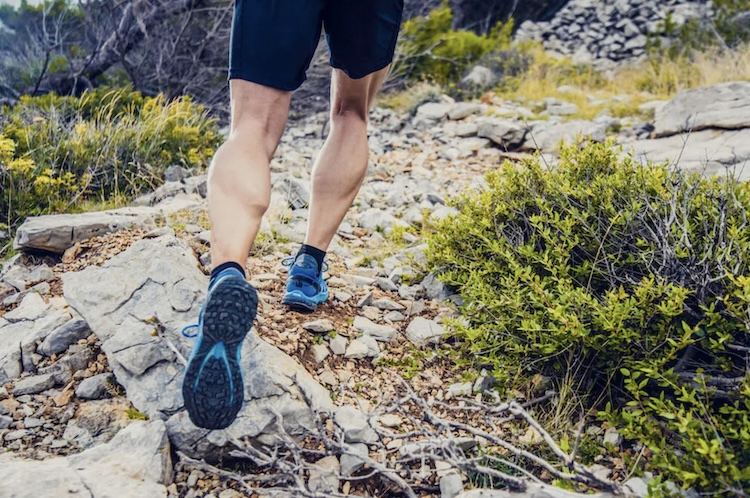
Trail runners are a pedicurist’s worst nightmare. Mashed-up feet are never pleasant, so choosing a shoe with ample space in the toe box gives your feet a chance to breathe and gives you a fighting chance of coming home with your toenails intact.
It will also help you spread your weight out, promoting a more balanced and responsive running style.
4. Go easy on the midsole
Trail runners might spend longer on their feet than roadies, but the ground is softer and you won’t always be striking it with the same uniform impact. Trail shoe midsoles offer anything from wafer-thin ‘barefoot’ thickness to ‘maximal’ water-bed support. The choice is largely personal.
Whatever your poison, assess the shoe’s flexibility by grabbing it at either end with both hands and twisting. Anything over a 90-degree twist will provide a smooth floaty ride. Anything less will provide more lateral support – well suited to anyone just getting into the sport.
5. Forget the high heels
Unlike road shoes, trail shoes often tend to have less ‘drop’. Drop is the difference in the natural raised position of your heel from your toes, measured in millimeters. Zero drop has become trendy in recent years, promising a more natural and responsive running style.
Don’t believe the hype too much. A dramatic change from your 12mm+ road shoes could cause an injury; 8mm is often the sweet spot but be sure to ask in the shop and feel what works best for you.
Related content: