

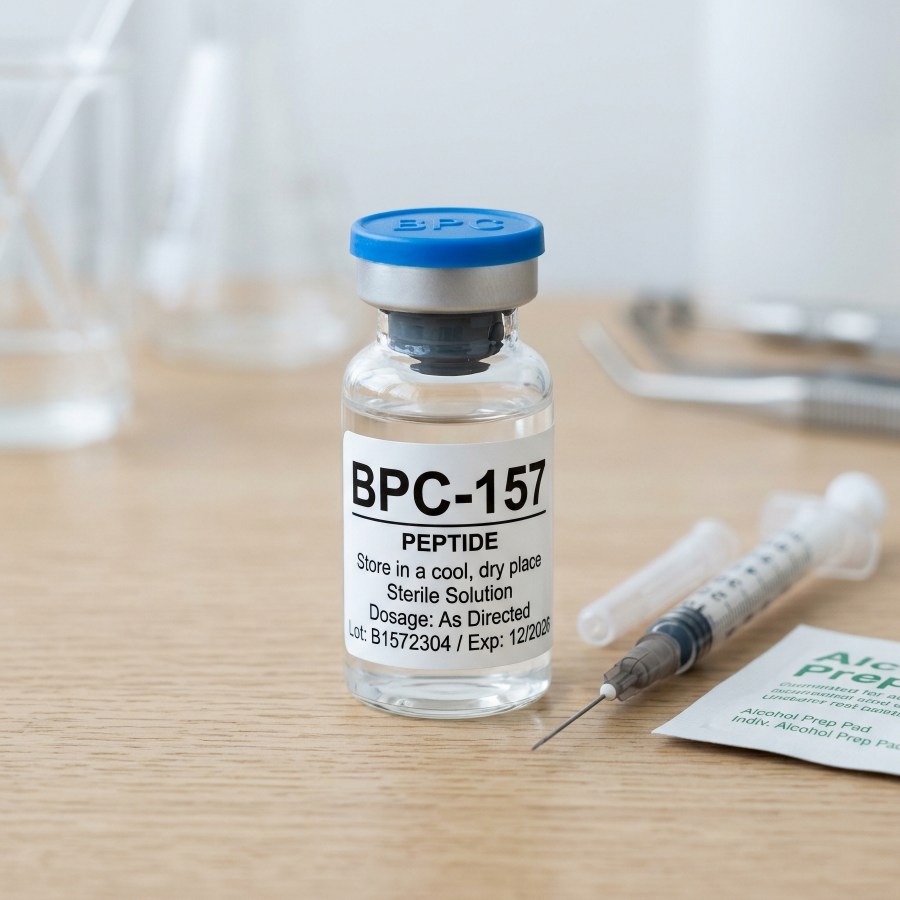
Protein powders once dominated gym conversations. Today, it’s peptides. Chief among them is BPC-157, a compound hailed by some as a breakthrough for injury recovery and tissue repair. But as enthusiasm surges among recreational athletes and biohackers alike, experts warn that the science has yet to catch up with the hype – and that the biggest risks may not be the ones people expect
Walk into almost any gym today and you’ll hear conversations that would have seemed out of place just a few years ago. Creatine and whey protein are still staples, but increasingly they’re being discussed alongside a new class of compounds: peptides.
Fuelled by social media, podcasts and the booming interest in longevity and performance optimisation, peptides have become one of the fastest-growing trends in fitness. And no peptide has generated more interest than BPC-157.
Advocates claim it can accelerate tendon healing, reduce inflammation, speed muscle recovery and even repair the gut. Scroll through Reddit forums or Instagram reels and you’ll find stories of chronic injuries disappearing in weeks and athletes returning to training faster than they thought possible.
It’s an enticing proposition, particularly for men in their 40s and 50s who want to keep training hard while recovering from the inevitable knocks that come with age.
But does the science support the extraordinary claims? Or has the popularity of BPC-157 outpaced the evidence?
From niche medicine to mainstream gyms
Five years ago, peptides were largely confined to specialist regenerative medicine clinics and the biohacking community. Today they’re being discussed by weekend runners nursing Achilles injuries, CrossFit enthusiasts chasing faster recovery and middle-aged lifters looking to keep sore shoulders and knees at bay.
According to Kerry-Dene Ihlenfeldt, Clinical Director at IVBOOST UK, that shift reflects a broader change in how people think about fitness.
“People today want to recover faster, train harder and stay active for longer,” he explains. “Add social media, podcasts and the growing interest in longevity and performance medicine, and you’ve got the perfect environment for something like BPC-157 to explode in popularity.”
Recovery, it seems, has become the new performance metric. Rather than simply asking how to lift heavier or run faster, many exercisers are searching for ways to heal quicker, reduce downtime and extend their sporting lives.
What exactly is BPC-157?
BPC stands for Body Protection Compound, and BPC-157 is a synthetic peptide derived from a protein naturally found in gastric juice. Peptides themselves are short chains of amino acids that act as signalling molecules throughout the body, influencing everything from hormone production to tissue repair.
In laboratory and animal studies, BPC-157 has shown intriguing effects on tendon healing, ligament repair, muscle recovery, inflammation and gut health. Those findings have made it one of the most talked-about compounds in regenerative medicine.
The problem is that promising biology isn’t the same as proven medicine.
Separating promise from proof
One of the biggest misconceptions surrounding BPC-157 is that its popularity reflects a strong body of clinical evidence.
It doesn’t. “I think it’s important to separate excitement from evidence,” says Ihlenfeldt. “BPC-157 is one of the most talked-about peptides at the moment, but the reality is that the strongest evidence we have is still from animal studies.”
That’s not to say it has no potential. “Those studies are genuinely encouraging and they show potential benefits around tendon healing, muscle recovery, ligaments, inflammation and even gut health,” he says. “But we don’t yet have the robust human trials that would allow us to say this is established mainstream medicine.”
That distinction matters. Many therapies that perform exceptionally well in animals ultimately fail to deliver the same benefits in humans.
Until larger, well-designed clinical trials are completed, researchers simply don’t know whether BPC-157 consistently delivers the dramatic improvements often claimed online.
Why the hype has become so powerful
Fitness has always embraced innovation, but today’s information landscape has dramatically accelerated the speed with which new trends spread.
A single viral podcast, YouTube interview or influencer testimonial can introduce millions of people to an emerging therapy overnight.
The result, says Ihlenfeldt, is that awareness has overtaken evidence.
“The challenge is that awareness has grown much faster than the evidence, so it’s become difficult for people to separate genuine science from clever marketing.”
For people frustrated by persistent tendon pain or recurring injuries, that marketing can be particularly persuasive. After months of physiotherapy and rehabilitation, the promise of a faster solution is understandably appealing.

The hidden risks
Much of the online conversation focuses on whether BPC-157 works. Less attention is paid to whether it’s safe.
“People often hear the word ‘peptide’ and assume it must be natural and therefore completely safe,” says Ihlenfeldt. “Unfortunately, medicine isn’t that simple. We still don’t have long-term human safety data for BPC-157, and that’s something we must acknowledge.”
For him, however, the greatest concern isn’t necessarily the peptide itself. It’s where people are buying it.
“Many peptides purchased online come from unregulated sources, so you don’t always know exactly what you’re injecting. That’s a far bigger concern than many people realise.”
Unlike licensed medicines, products sold through unregulated online suppliers may vary significantly in purity, concentration and quality. Without appropriate manufacturing oversight, there’s no guarantee that the contents of the vial match the label.
No shortcut to recovery
Another misconception is that BPC-157 can replace the fundamentals of injury recovery.
“Most people are looking for one thing and that is faster recovery,” says Ihlenfeldt. “Biologically, there are reasons why it could support tissue repair, and clinically we’ve seen encouraging outcomes in some patients. But it’s important to keep expectations realistic.”
He is quick to stress that no peptide can compensate for poor recovery habits.
“There isn’t a peptide in the world that replaces good sleep, good nutrition, progressive rehabilitation or addressing the underlying reason someone became injured in the first place. Recovery is never about one intervention; it’s about optimising the whole system.”
That’s a message that can easily be lost amid dramatic before-and-after stories on social media.
Looking beyond the hype
Despite the unanswered questions surrounding BPC-157, Ihlenfeldt doesn’t dismiss peptides altogether.
Far from it. “I don’t think it’ll be either extreme,” he says when asked whether BPC-157 will ultimately prove to be a breakthrough or a passing fad. “Over the next five years, we’ll almost certainly have better human trials, clearer safety data and a much better understanding of where BPC-157 genuinely has a place in medicine – and where it doesn’t.”
That may ultimately prove to be the real story.
BPC-157 isn’t simply another supplement or fleeting wellness craze. It represents a broader shift towards regenerative medicine, personalised healthcare and performance optimisation. Those fields are advancing rapidly, and peptides may well become an important part of that future.
For now, however, curiosity should be balanced with caution. The science is promising. The anecdotes are compelling. But until robust human evidence catches up, BPC-157 remains exactly what it is today: an intriguing experimental therapy whose popularity has raced far ahead of the research.
And for anyone hoping it will replace intelligent training, structured rehabilitation and the basics of good health, there is still no shortcut.