
From skull crushers to hero makers, Sarah Haselwood explains the origins – and meanings – of the strangest exercise names
Whatever your experience of training, it’s likely you’ve come across some of the strangest exercise names that either stunned, intrigued or terrified you. Some simply explain how the movement looks or feels (bear crawls, anyone?), while others may have been inspired by a military practice.
So, whether you know your good mornings from your gorilla rows, welcome to the wonderfully weird side of getting stronger and fitter.
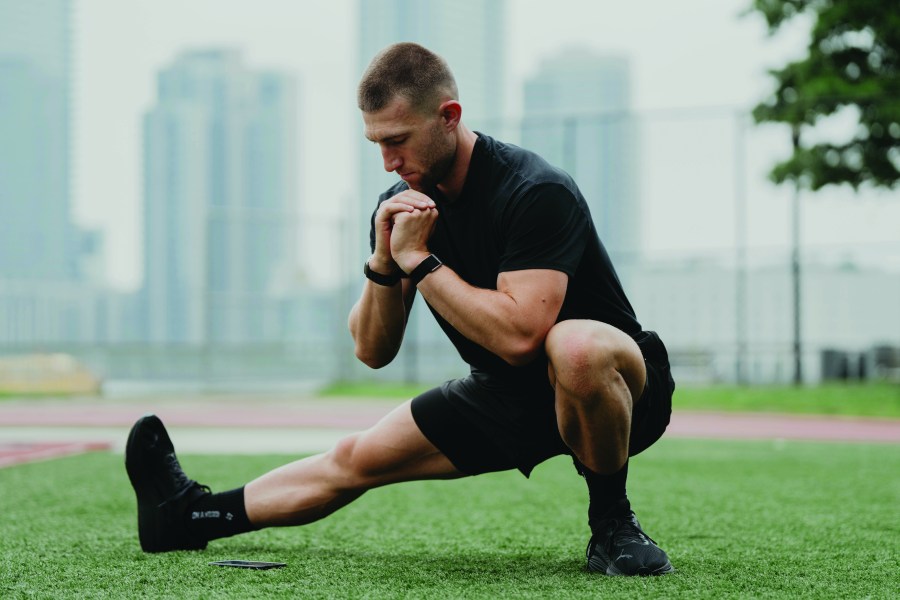
Cossack Squats
These squats, named after their resemblance to a folk dance move the Cossacks practised in eastern Europe, are good for building lower-body strength and mobility, especially in your ankles, knees, and hips. They allow your body to move in the frontal plane of motion, which is different from standard squats or lunges. The movements work the glutes, adductors (inner thighs), hip flexors, quadriceps and hamstrings.
How to do them
- Stand with your feet parallel and in the same position as you would start a sumo squat, so that your feet are at a 30-degree angle.
- Keeping your left leg straight, bend your right knee and shift your weight so you are ‘sitting’ in a deep side squat.
- Drop your hips (depending on your mobility) and let your left foot toes lift and point towards the ceiling.
- Make sure to keep both heels on the floor and your torso upright. Then come back up and move to the right side.
Zercher Squats
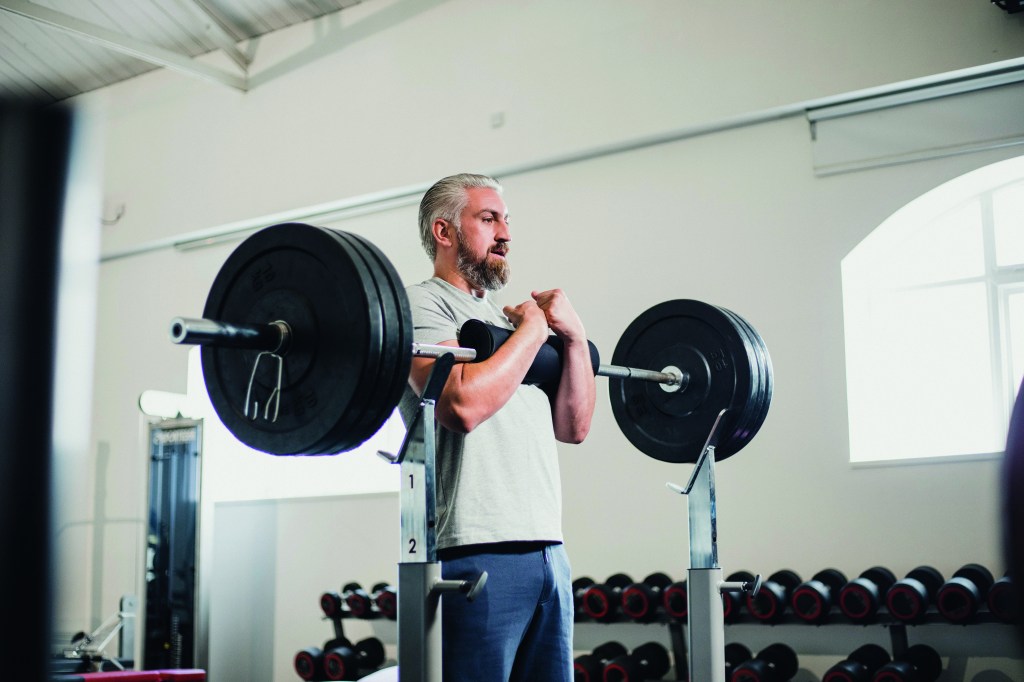
Working your core muscles, upper back, glutes and quads, these front-loaded squats are a full-body challenge. PT Emma Jane Taylor says, “The isolated position of the barbell also engages biceps and shoulders. Any functional strength exercise, such as the Zercher squat, adds great value to everyday life.”
How to do them
- Taylor advises you hold a barbell in the crooks of your elbow and squat through your heels.
- Ensure you keep your back straight, core tight and biceps flexed as you squat.
- You can also add many variants to this exercise, such as weights and reps, to target specific areas you want to work.
Zombie front squats
A squat with a bar resting on your front shoulders; this move works your glutes, lower back, quads, adductors, and calves.
“Imagine a zombie squatting with their arms in front!” says Sophia Parvizi Wayne, an elite Hyroxer and a former open world record holder. “It works to train your posture and your torso control because if you lean forward, the bar falls! Unlike other squats, this is more about form than load, so light-moderate weight for sets of five reps should do the job.” She adds it’s a good warm-up for back pain and poor posture.
How to do them
- With your arms out straight in front of you, rest the barbell on the front of your shoulders.
- Brace your core, step back from the rack and once comfortable, squat deeply.
- Repeat for reps.
Skull crushers
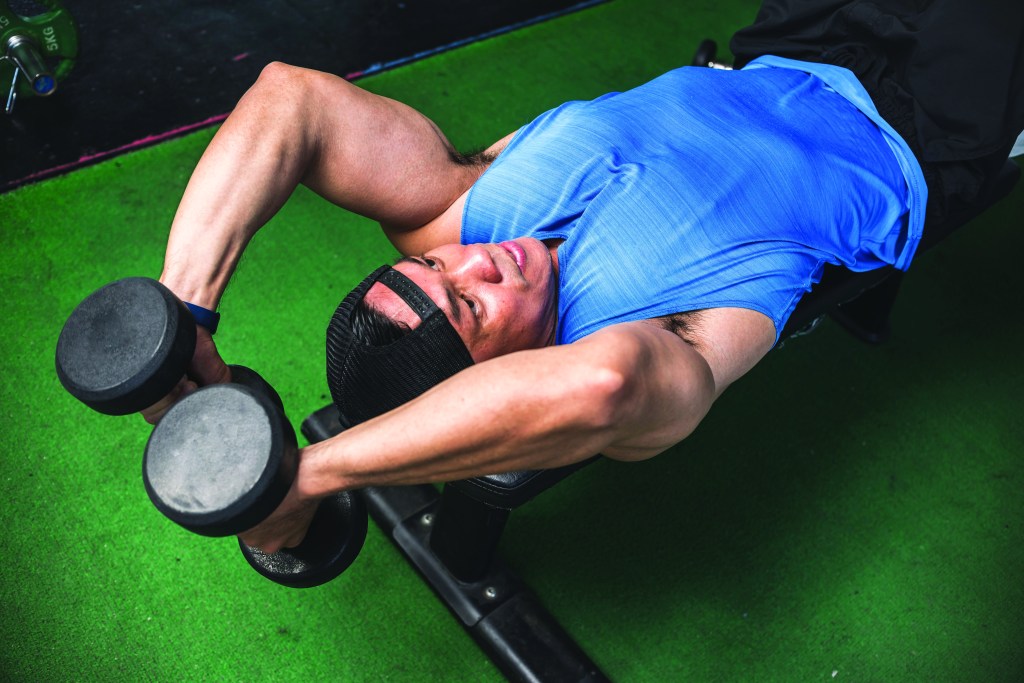
These are perfect for focusing on the triceps. “Performed with a variant of triceps exercises, the skull crusher feels like the super buffer, focusing on the triceps to give that extra definition,” says Taylor.
You can add variations by using dumbbells or an incline bench, which will slightly increase the triceps stretch.
How to do them
- Lie on a bench with your arms straight up and locked, with hands shoulder‑width apart.
- Taylor recommends, “Add these to your workouts with an EZ‑bar. You can use free weights, but the EZ‑bar gives you cleaner form, even load, and far less room to cheat.”
- She adds, “Curl the bar toward your forehead, then fully extend to fire everything up. Slow, controlled, and under tension.”
- Keep your elbows tucked throughout the lifting phase.
Dead bugs
Parvizi Wayne loves these exercises as a warm-up before a strength or Hyrox session. She says, “They don’t just focus on stretching but work on stability, coordination and activation and wake up the body neurologically ready for a big session.” The movements target the core (obliques, rectus abdominis, transverse abdominis, and erector spinae), but also engage the glutes, hamstrings, and hip flexors.
How to do them
- Parvizi Wayne says to lie on your back, engage your core and bring your legs to tabletop position with your arms reaching upwards.
- Each rep is the opposite arm and opposite leg, back down and up.
Stir the pot
By doing a forearm plank on an exercise ball and moving your elbows, you are firing up your core muscles and building stability and balance. You will also stabilise your back and muscles around the torso to keep your core under tension, which may help lower back pain and increase time under tension.
How to do them
- Using an exercise ball, kneel down and rest your forearms on the ball. Your elbows should be below your shoulders.
- Move into a plank position, keeping your forearms positioned on the ball. Engage your core and glutes, keep a neutral spine, and toes should be flexed.
- To stir the pot, moving from the shoulder joint, rotate your arms in a full clockwise movement.
- Aim to repeat this for about 10 reps, with three sets. It’s important to only move the shoulder joint, not the hips, spine etc.
- To make it easier, keep your legs wide and by moving your legs closer together, you’ll increase the challenge as you’ll need more core stability.
Inchworm
Parvizi Wayne says, “Inchworms hit a number of areas: hamstrings, calves, shoulders, core and your hip hinging. I love this because it’s active mobility for my hamstrings rather than just a stretch pre-session.”
How to do them
- Hinge forward and walk your hands to a plank before walking your feet back towards your hands.
- Repeat that a few times and you’re ready to move.
Copenhagen Plank
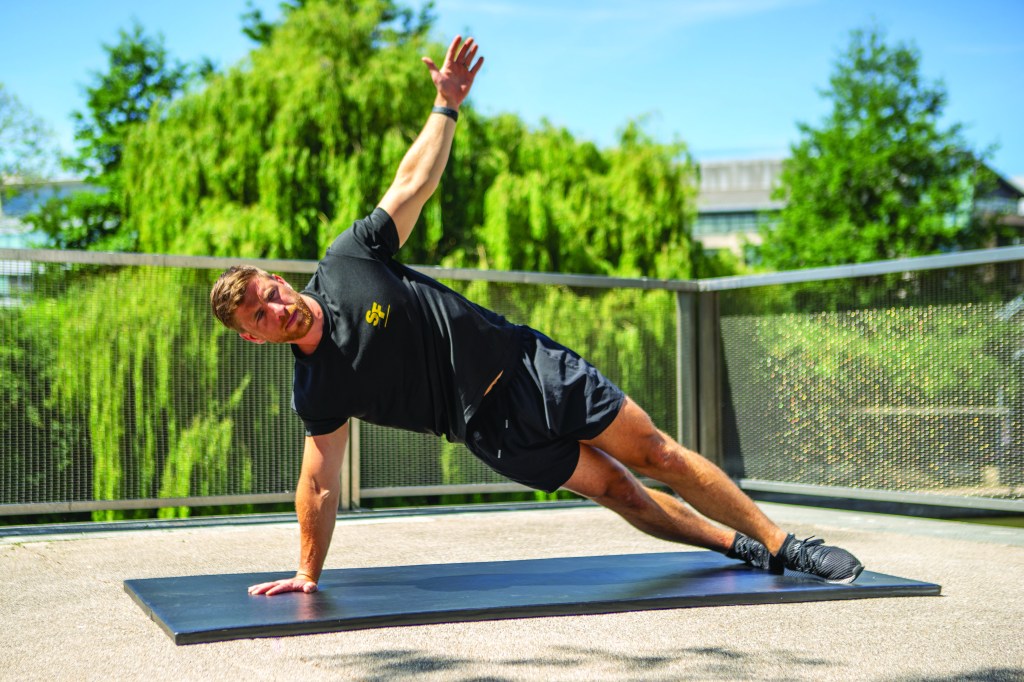
A challenging variation of a traditional plank, this bodyweight static hold leaves the upper leg supported, and the lower leg is suspended. These work the glutes, deep core muscles, obliques and adductor muscles (inner thighs) and may help prevent groin injuries.
These planks can enhance stability, especially in the hips. A 2021 study found that athletes who performed Copenhagen planks regularly over six weeks improved their stability.
How to do them
- In a side plank position, use a chair or bench to rest your top calf.
- Keeping the shoulders, hips and knees in a straight line, engage the core, inner thigh and glutes to raise your bottom leg and hips off the floor.
- Hold the position (up to 30 seconds, depending on ability) and then lower back onto the floor. Switch sides and repeat.
- To make it easier, leave your lower leg on the floor. To make it tougher, rest the top ankle on the bench instead of the calf.
Fire hydrant
“Another warm-up move to add to your list, it’s a great exercise for runners and hybrid athletes as it stops our hip dropping whilst striding and ensures hip stability before we exercise,” explains Parvizi Wayne.
How to do them
- Parvizi Wayne advises, “Starting on all fours with a neutral spine and truly imagine you are a dog peeing on a water hydrant – lifting one knee out at each time (between 45-90 degrees) before returning to neutral.
- She suggests doing 10-15 on each side before switching.
- The aim is to avoid rotation and swinging and focus on keeping your core engaged. The more you do this over time, the stronger and more stable your glutes become.
Navy Seal Burpees
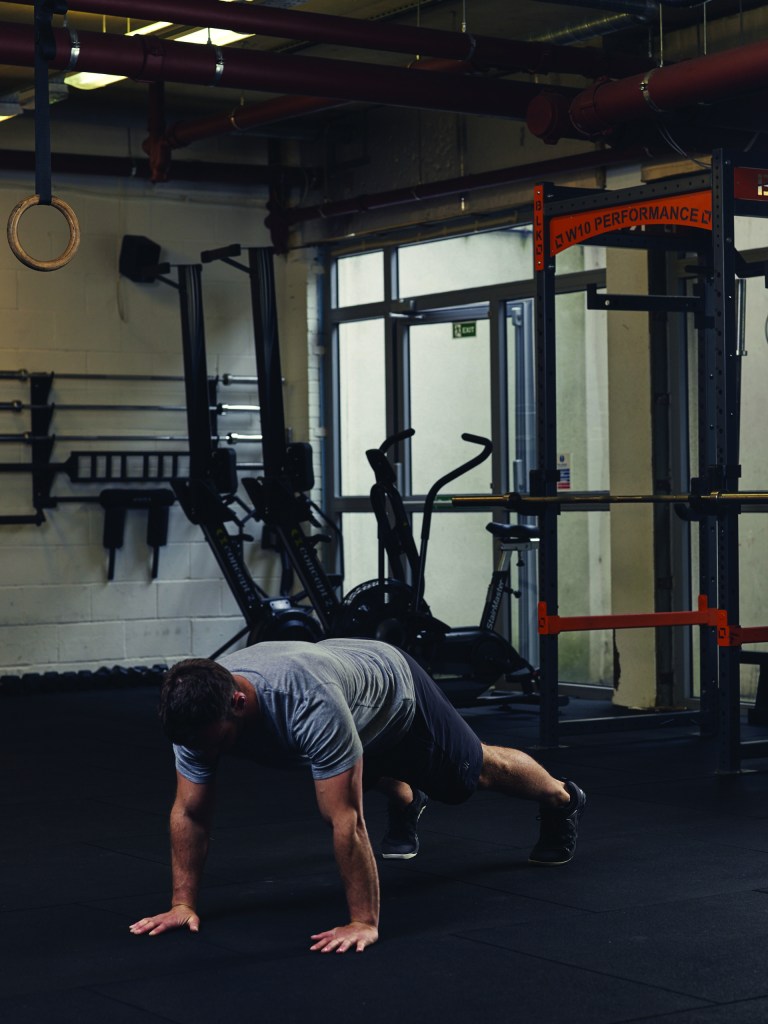
A burpee with an alternate mountain climber and push-up. “These burpees stand firmly on their own as a brilliant challenge,” explains Taylor. “They’re full‑body, efficient, and tick so many boxes in a single movement.”
She adds, “What I love most about the traditional burpee is how adaptable they are and that there’s always a way to progress, to add load, to increase complexity, or to introduce a new variant. That’s where real development happens, when you take a standard functional movement and keep evolving it so the body responds, strength improves, conditioning sharpens, and confidence grows.”
How to do them
- Begin a standard burpee with hands to the ground into a press up and back to the starting plank position.
- Bring the right knee in towards the chest.
- Return the knee back into a plank and do another push-up.
- Repeat the knee drive on the left side, do a third push-up and spring back to standing.
- Keep your core tight, your elbows at a 45-degree angle during push-ups and ensure controlled movements.
Hero makers
A complex dumbbell move to activate the shoulder, triceps, quads, glutes, and biceps.
How to do them
- Stand with a dumbbell in each hand. Place the dumbbells on the floor in front of your feet and kick back into a plank position.
- Do a push-up, then row your right hand up to your side, perform another push-up, then row your left hand up to your side.
- Next, jump both your feet up towards the dumbbells in a squat stance (dumbbells should be between your feet). Jump and pull your dumbbells to your shoulders and land in a squat position.
- Come out of the squat and press your dumbbells overhead.
Taylor concludes, “A new name, however quirky, has the power to capture imagination, enthusiasm and curiosity, and it is that curiosity that ignites change; challenging muscle memory and development and growth of the muscles.”