
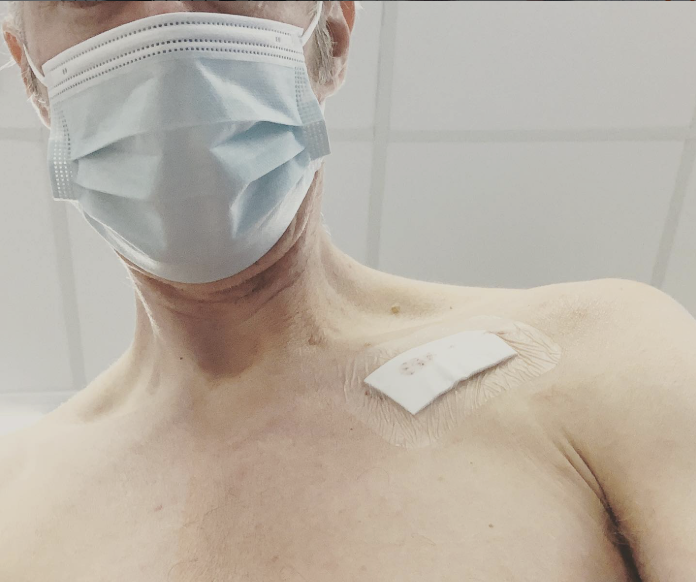
Men in their fifties are living in sniper’s alley: sudden cardiac issues appear without warning. Men’s Fitness editor David Castle recalls his own dice with death
For months, I thought I was just getting slower.
As someone who runs regularly and takes pride in staying fit, I noticed the change gradually at first. My times slipped. Hills that I used to power up suddenly forced me into a walk. Sessions that once left me pleasantly tired now left me drained and strangely light-headed.
I told myself what many of us do: you’re out of shape, you need to train harder, stop making excuses. But deep down, I knew something wasn’t right.
Alongside the drop in performance came a constant sense of dizziness — not dramatic enough to send me straight to A&E, but persistent enough to nag at the back of my mind.
My resting heart rate, usually low thanks to years of endurance training, seemed unusually sluggish even for me. During runs, it felt like my body simply couldn’t respond when I asked it to push harder. It was as if the engine wouldn’t rev.
Then came what I thought were panic attacks — sudden waves of fear, breathlessness, and a sense that something was very wrong. In hindsight, they weren’t psychological at all. My body was being starved of oxygen because my heart wasn’t speeding up when it needed to.
Eventually, trusting my instincts, I sought medical advice. That decision may well have saved my life.
After some initial tests, I was fitted with a 24-hour Holter monitor — a portable device that records heart rhythms over a day of normal activity. I went home thinking it was probably precautionary. When the results came back, everything changed.
During the monitoring period, my heart stopped for 11 seconds.
Let that sink in. Eleven seconds with no heartbeat. Technically, I was told, that counts as cardiac arrest. You’d think I would have been rushed to hospital – but I had to wait another 10 days before my ‘life-saving’ operation.
My pacemaker was implanted on New Year’s Eve 2020. It’s both surreal and scary: the operation is done under local anaesthetic and (if you have a cardio angiogram at the same time) can take as long as three hours.
The diagnosis: sinus node syndrome, sometimes called sick sinus syndrome.
In simple terms, the sinus node is the heart’s natural pacemaker — the tiny cluster of cells that generates the electrical impulses telling your heart when to beat. In sinus node syndrome, that system malfunctions. The heart can beat too slowly (bradycardia), pause unexpectedly, or fail to increase rate appropriately during exercise — a problem known as chronotropic incompetence. For someone active, it can feel like hitting an invisible ceiling no matter how hard you try.
Looking back, the warning signs were there all along:
- Unexplained drop in performance despite consistent training
- Inability to raise heart rate during exercise
- Persistent light-headedness or dizziness
- Unusually low heart rate, even by athlete standards
- Episodes resembling panic attacks or near-fainting
- Feeling forced to slow down or stop during workouts
As fitness enthusiasts, we’re conditioned to push through discomfort. We celebrate grit. But there’s a difference between training fatigue and something fundamentally wrong – and learning to recognise that difference is crucial.
The pacemaker surgery was both terrifying and reassuring. Knowing that a small device would now help regulate my heartbeat felt surreal, but also profoundly relieving. Recovery wasn’t instant. There was a period of physical healing, followed by the longer psychological adjustment of trusting my body again.
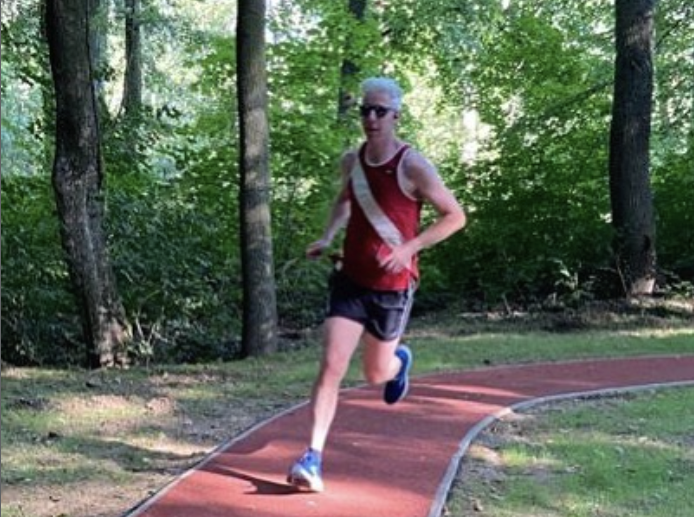
Returning to running was a gradual process. At first, every session felt like an experiment: How will my heart respond? Can I push a bit more today? Slowly, confidence returned. The pacemaker ensured my heart rate could rise when needed, and with careful training I rebuilt my fitness.
Am I at the same level as before? Probably not – and I’ve come to the realisation that I never will be. But I’m still able to train, stay fit, and even be competitive. More importantly, I run with a deeper appreciation for what my body does every day without us noticing.
This experience changed my perspective on health and performance. We often assume that if we look fit, we are fit. But underlying conditions don’t always announce themselves loudly. Sometimes they whisper through subtle changes – a slower split time, a strange dizziness, a session that feels inexplicably hard.
If there’s one message I’d share with other athletes and gym-goers, it’s this: listen to your body, and take persistent changes seriously. Getting checked doesn’t make you weak – it makes you smart. Don’t be a statistic.
Sinus node syndrome is treatable, and many people go on to live active, full lives with a pacemaker. Early detection can prevent frightening — or even life-threatening — events.
Today, when I head out for a run, I’m reminded that fitness isn’t just about pace or personal bests. It’s about resilience, awareness, and respect for the incredible system that keeps us moving.
My heart may have stopped for 11 seconds, but it gave me a lifetime lesson: never ignore the signals that something isn’t right — because sometimes, slowing down and paying attention is the strongest move you can make.