

Jamie Broadway, who himself suffers from a rare visual defect, shines a light on the daily challenges faced by those living with rare diseases and explains why exercise isn’t always the magic cure
It all started with a slight shimmer in the corner of my left eye: a sensation so strange that it was difficult to even describe it to the optometrist. They thought I was making it up. After all, everything looked fine. Even the local hospital disregarded it. “There’s nothing wrong with you, it’s a visual migraine” I was told repeatedly. But it wasn’t.
A year and a half later, following the complete loss of my peripheral vision, a misdiagnosis, an MRI scan and ocular electrophysiological testing, I was eventually diagnosed with AZOOR (Acute Zonal Occult Outer Retinopathy) in my left eye: a rare retinal inflammation which causes the sufferer to see constant flashing lights. It gradually robs the retina of its ability to send messages back to the brain, but on the surface there doesn’t seem to be any issues; the retina looks healthy and functional – hence the word ‘Occult’ in AZOOR.
The initial prognosis sounded positive. One consultant claimed it was a condition which eventually stabilises after a few years. However, in 2015, eight years after the initial symptoms and several doctors later, the condition intensified. It started depriving me of visual acuity and bulldozed my mental health.
By 2016, I was having sleepless nights and spending whole days obsessing over my eye. The constant flashing lights, whether my eyes were open or closed, meant that it was all I could think of and see – with no escape. Such a small piece of human tissue like the retina was now having a gargantuan toll on my emotional wellbeing.
Last year, for the first time ever, a comprehensive survey was conducted by Rare Disease UK into how rare conditions can impact mental wellbeing. The results were staggering: 95 per cent of rare disease sufferers have felt anxious, 90 per cent have felt low, 88 per cent have felt emotionally exhausted. The common symptom behind all rare diseases, it seems, is poor mental health.
Emotional toll
Thirty-eight-year-old Kehinde Salami can vouch for that. When he was 24, he was diagnosed with sickle cell disease, a hereditary conditions that means his red blood cells have an unusual crescent moon shape. Being also sticky, the cells clump together and can block blood vessels in what is known as a sickle cell crisis. This manifests itself as excruciating pain and eventually ends in organ failure and, ultimately, death. “I could potentially die any day,” says Salami, “that is how unpredictable sickle cell is.”
It is the unpredictability of rare diseases that gives rise to anxiety. However, as Salami can affirm, emotional support is often hard to come by: “I was in a hospital and even though I was being treated for my physical pain, I was then discharged and had to deal with the mental aspects of sickle cell by myself. I didn’t get any referrals. I didn’t get any counselling. I was at home waiting for another sickle cell crisis.”
Dr Lucy Davidson, a counselling psychologist in London who specialises in complex health conditions, says that when suffering from a rare condition, “the focus is almost always on the physical impact” and not on the mental side, which becomes “peripheral”. She also talks about rare disease sufferers feeling isolated, saying that as “no one can identify with what you’re going through, there’s complete isolation.”
For Salami, the toxic mix of isolation, unpredictability and lack of emotional support eventually became too much and after a severe sickle cell crisis on his retina in which he lost his sight, he sought to put an end to his pain and suffering. Salami took an overdose of painkillers – he wanted to die.
According to Rare Diseases UK, 36 per cent of rare disease patients experience suicidal thoughts. As Gemma Harris, a counsellor and therapist who also suffers from multiple sclerosis (MS) states, “Suicide ideation is common for these people due to the high levels of stress and isolation, and sometimes as a way of taking control of their lives. It is important that professional help is sought to help them deal with these feelings”
Luke Pembroke, 25, suffers from haemophilia B: a rare genetic bleeding disorder whereby his blood fails to clot due to the lack of a protein called ‘factor IX’. He admits that dealing with the mental health aspect of living with a rare disease, particularly depression, is something he’ll probably always have to deal with. “I have good days and bad days,” he says, although compared to five years ago, “there are generally more good ones than bad ones.”
High alert
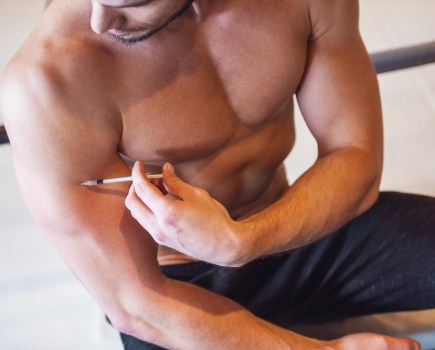
Haemophilia B means that any trauma injury can lead to internal bleeding in Pembroke’s joints. When this happens repeatedly in the same joint, it then becomes known as a target joint, leading to the onset of osteoarthritis and muscle atrophy. Therefore, to prevent the bleeding, he injects himself with clotting factor up to three times a week – something he had to learn to do at the age of seven.
He describes himself as always being on a heightened sense of alert, constantly listening to his body for any signs of internal bleeding. He says that the challenge is identifying whether he’s suffering from arthritic pain or internal bleeding, as the symptoms are similar: swelling, heat, loss of range of motion, sharp jabbing pains.
Prophesising the next doomsday event is also pretty common in people who suffer from rare diseases. Dr Davidson says that rare disease sufferers tend to share a sense of “hypervigilance and catastrophising.” She says “the assumption is that something bad is bound to happen.”
Fraught fitness
For Pembroke, haemophilia has at times affected his ability to lead a normal life. He says that when he was younger it was difficult for him to accept that he shouldn’t take part in any contact sports. And he admits that he only truly stopped playing football when someone ran across his groin by accident during a friendly match at university. This led to a potentially life-threatening psoas bleed – an excruciatingly painful pelvic muscle bleed.
The complex relationship between rare diseases and exercise is another crux which is often overlooked. For Prembroke, the relationship is “multi-layered”. He says that with haemophilia, exercise was traditionally discouraged due to the potential for bleeds. However, with the rise of preventative treatment and specialist physiotherapy, it has been encouraged as stronger muscles provide joints with more protection and stability.
When it comes to rare conditions and exercise, a lot of adaptation can be required which people don’t realise. Pembroke, for example, has to limit himself to 5k runs and load up on clotting factor on the days of his runs to prevent bleeds. Unfortunately, though, there’s an overemphasis on huge feats of athleticism – running marathons and so on – which has the effect of simplifying the difficulties of living with rare diseases.
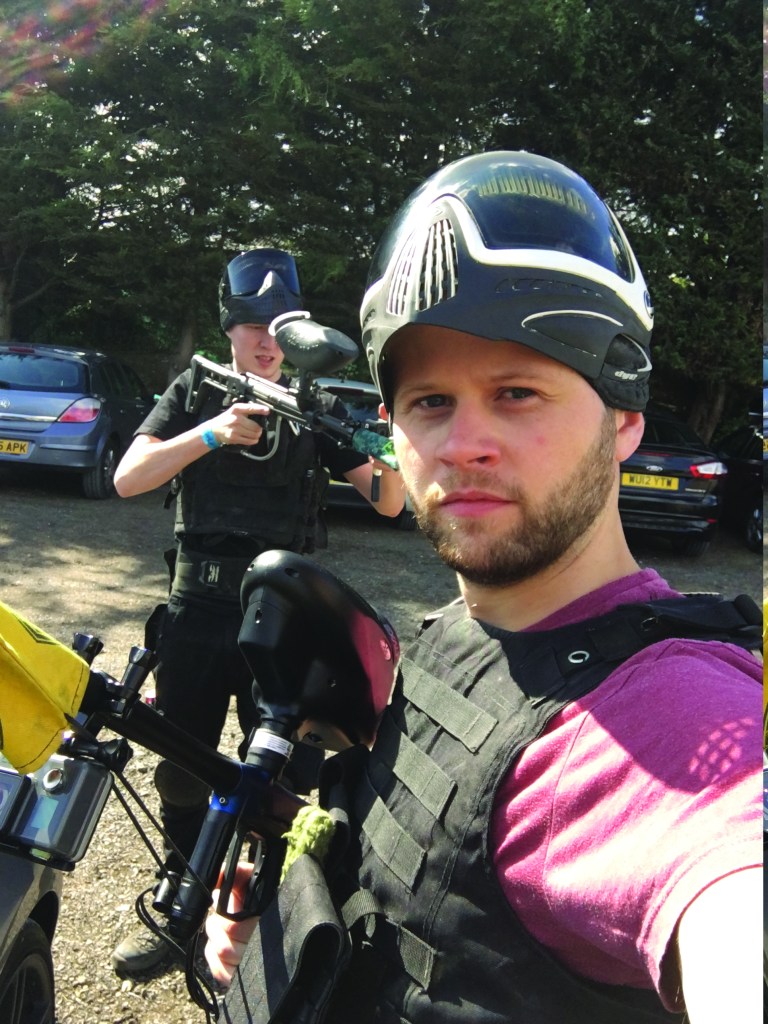
Likewise, there’s always talk of exercise as a miracle cure for poor mental health. However, for anyone living with a rare condition, this oversimplified link can be devastatingly problematic.
For Salami, exercise actually compounded his state of depression, because it highlighted his loss of fitness after the sickle cell crises started. “I realised that I couldn’t lift as much, I couldn’t run as fast, I couldn’t do as many reps. I hated going to the gym because I was trying to outperform my previous self.”
He says he would look back over old photos of himself where he was bigger and feel a sense of guilt. Personal trainers would also tell him that he wasn’t pushing hard enough, completely disregarding his condition. He also became paranoid about having a crisis episode while at the gym and ultimately stopped going. It took him a long time to build up the confidence in order to return. For Salami, going to the gym and trying to live up to societal norms of fitness and his previous self didn’t help his mental health at all, it merely worsened it.
In my experience, people have repeatedly prescribed yoga as a natural wonder drug for anxiety. However, being stationary and closing my eyes actually feeds into my anxiety, as I end up just seeing the AZOOR. Likewise, in any form of intens intense exercise, my eye can erupt into what I can only describe as an electric storm racing across my retina. For me, exercise is never free from the lights or intrusive thoughts.
This is not to in any way diminish the importance of exercise as a force for maintaining both physical and mental fitness. Nor is it to say that yoga doesn’t help people regulate stress and anxiety. It is to highlight the complex relationship between rare diseases and exercise, and show that exercise doesn’t have the same physical and mental benefits for everyone.
Combatting isolation
The key is to listen – truly listen – to other people’s realities, and accept that exercise isn’t a one-size-fits-all approach to mental and physical health.
With regards to looking after the mental health aspects of living with rare diseases, Harris says addressing the isolation is essential. She says it’s about finding people you can talk to and “trying to express how you feel. Blogging, shouting, singing – any way to express how you’re feeling.”
Pembroke has done just that. @TheClotThickens is his social media platform where he recounts his experiences of haemophilia. Similarly, Salami set up SickleKan (sicklekan.com), a charity to provide mental support to others with sickle cell disease. “I thought, if I’m not going to get the support, then I will create my own platform to give support and make sure others aren’t going through the same situation I was.”