
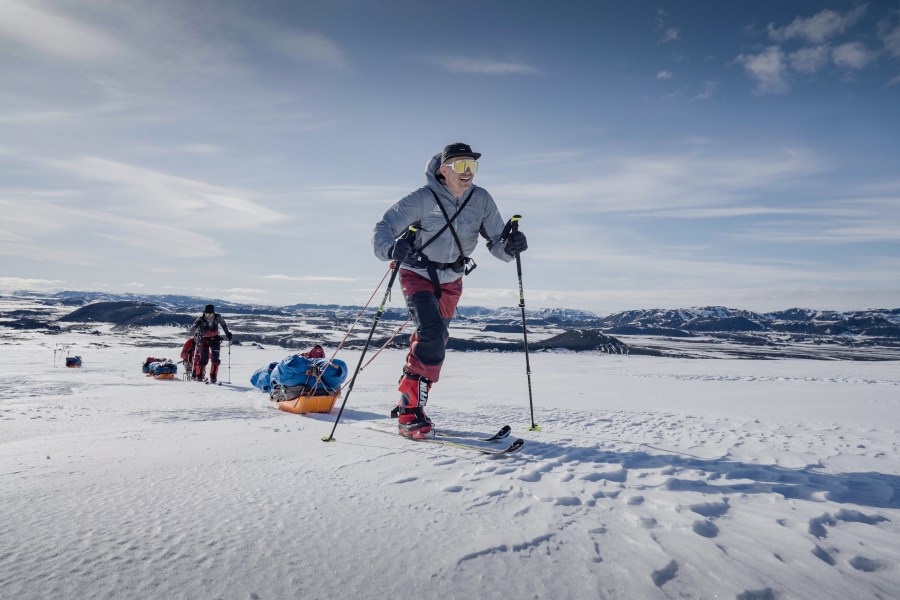
New film captures the hardships and exhilaration of Ed Jackson and his Alpha team as they journeyed across an Icelandic ice cap to raise awareness of what can be achieved with disabilities
* Produced in association with Berghaus
“I’m not scared of dying; I’m scared of not really living.” These are inspirational words of Ed Jackson, former rugby player, spinal cord injury survivor and now record-breaking adventurer.
At 27, Jackson was told he would never walk again. A freak accident, involving a swimming pool and a miscalculated dive, broke his neck and crushed his spinal cord. Jackson had to be resuscitated three times and spent weeks in intensive care – for the first of those, he couldn’t so much as twitch a muscle.
But rugby players are made from tough stuff, and eight years on from the accident, Jackson’s recovery is nothing short of miraculous. Defying the predictions of even the most optimistic specialists, the former London Wasps and Bath man has not only learned to walk again, he’s found a new calling: mountaineering.
Remarkably, less than a year after breaking his neck, Jackson had climbed Snowdon. He created a not-for-profit organisation, M2M, standing for the millimetres he moved his big toe to the mountains he now climbs.
One of his most recent expeditions saw him joining forces with two other spinal cord injury recoverees – Niall McCann and Darren Edwards – as they attempted to cross Vatnajokull, the largest ice cap in Western Europe, linked together by a single rope and without any support or guidance.
The journey – dubbed Project Alpha – has been made into a film called Alpha which follows their journey as they battle brutal weather, endless ice, and the limits of their own bodies, linked by that one rope, driven by resilience, and supported by adaptive gear from Berghaus Adapts.
The film premieres tomorrow 14 November at 7PM GMT on @Berghausoffical YouTube channel.
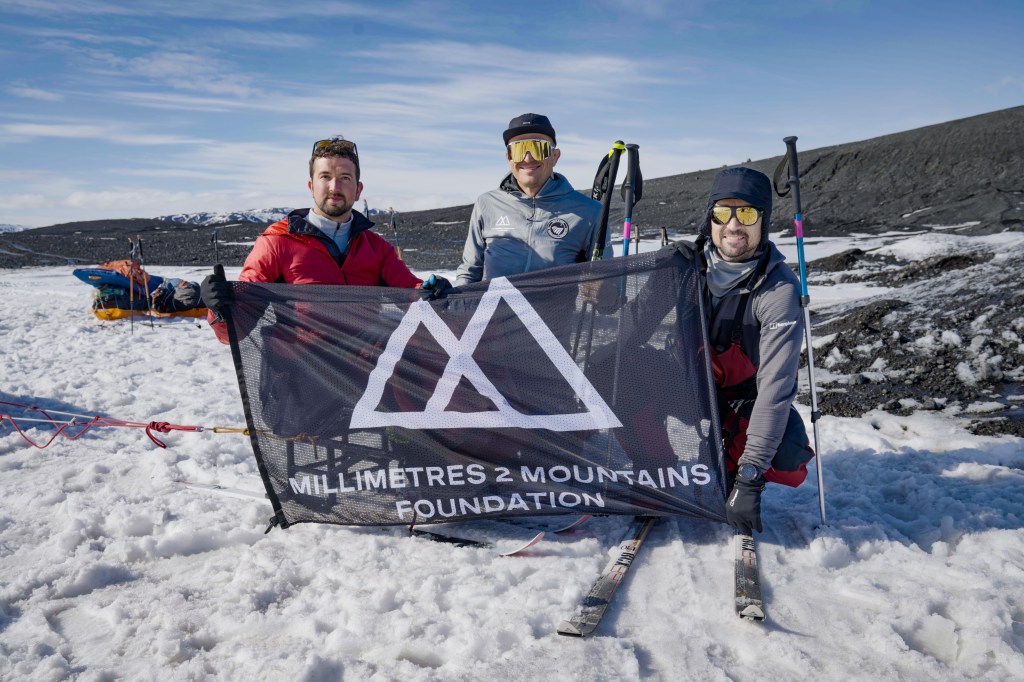
We caught up with Ed to find out more about Alpha, the expedition, how Berghaus’s Adaptive kit had helped the team and how mountaineering has changed his life.
Men’s Fitness: What was the inspiration behind the project?
Ed Jackson: Niall got in touch because he was keen to do some sort of expedition and, in particular, something as a group. Darren is a complete paraplegic and wheelchair-bound, so when he came on board, we started discussing what would potentially be possible for all of us to take on. Up until that point, I’d mostly been in the mountains, which isn’t ideal for a wheelchair user, for obvious reasons. We came up with the idea of doing some sort of ice cap crossing.
I’ve been to Iceland a few times: Vatnajokull is the largest ice cap in Europe. We researched it and found that an all-disabled team had never crossed it before, so we decided to give that a go. The interesting thing was, Niall was the only one of the three of us who had ever done any ice cap stuff. In fact, I’d never actually been on skis before. So, it was quite an ambitious target – to say the least.
MF: The film of your expedition, Alpha, is unveiled today. The challenge you set yourself is not only motivational for the team but for anyone watching it.
EJ: If you have to seriously contemplate your own mortality, it can have an interesting effect. I broke my neck diving into a swimming pool on a Sunday afternoon, even though for 10 years I’d played one of the most dangerous sports the world. You can wrap yourself in cotton wool but you could get hit by a bus tomorrow. It gives you this sense of gratitude for just being here at all and being able to do these things. But a big purpose of the film wasn’t just to motivate ourselves, but to try and inspire some other people so show that they can do it themselves and change their narrative.
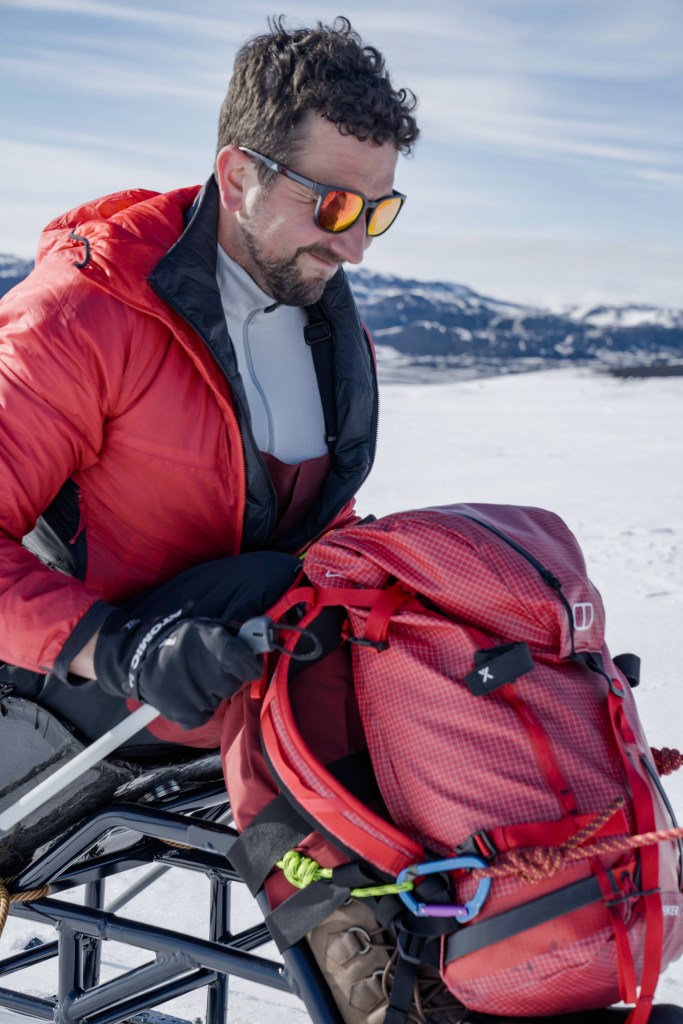
MF: Berghaus has supported you in the past and was instrumental in providing kit from its Adaptive range for this project. Can you explain how this helped?
EJ: My temperature regulation is all over the place, as I don’t sweat from below the chest, so I have extra ventilation zips in all my jackets which allows me to dump heat without having to take my jacket off. Because I move so inefficiently, it’s like I’m sprinting everywhere in terms of my energy output, which means I get very hot and sweaty; but if I take clothing off to cool down and it starts raining, I get cold very quickly. The extra ventilation zips allow me to better control heat regulation. And, because my manual dexterity is compromised, I have extra loops added to my trousers so I can manipulate them easier with my hands.
Darren has got no sensation in his legs at all, so, for him, there’s a real risk of frostbite. Berghaus created a ‘down skirt’ that he could wear to cover his legs and mitigate against the wind chill. We also had full zips that went down under and up the back of our salopettes so that we could go to the toilet without having to take all our kit off. Funnily, we’ve had lots of messages from women saying ‘welcome to our world’.
MF: How does this rate in terms of the challenges you’ve done so far?
EJ: Getting used to being on skis was incredibly difficult. For the first couple of days, it looked like it was going to be almost impossible. We got tented for two days in a storm in 100kph winds and the tent nearly takes off. But, as we got better at doing at moving on the snow, and our systems were more locked down, it did get easier. One of the biggest challenges was energy output. I burnt an average of 10,000 calories a day for 12 days, which is a level of calorie expenditure you’re just not going to replace on the ice, so that was hard.
And there’s also just the psychological challenge and monotony of an ice cap crossing. There’s something beautiful and freeing in doing the same thing every day, over and over again, because it creates headspace. And there were moments of almost spiritual beauty watching these big ice crystals that would form on the snow. But there were also days when you just think ‘what am I doing here?’
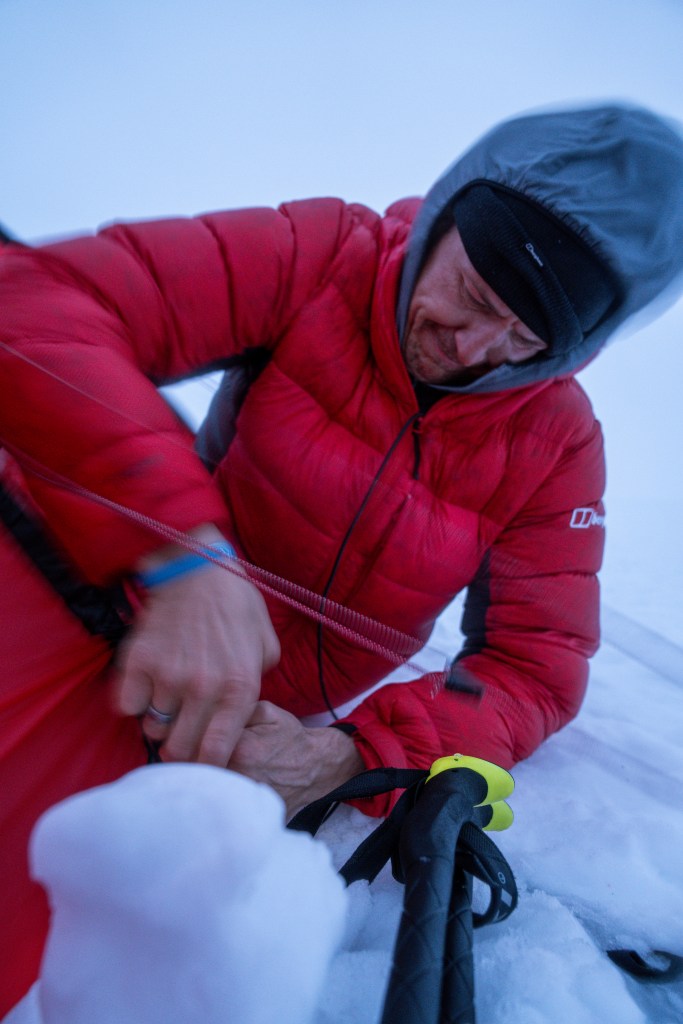
MF: Did the team mentality help when the going got tough?
EJ: I think the emotional support is one of the most important things. We’ve all come from similar backgrounds, although completely different fields, and our lives are very much changed. A huge part of that process is accepting the situation you’re in now and not getting frustrated that you can’t that you can’t do the things you used to be able to do.
Then it’s understanding that these challenges and situations – and acquiring a disability – give you a lot as well, whether it’s psychologically or your sense of gratitude. We would never have been on an ice cap trying to take on something like this as a three-man team if it wasn’t for our accidents. We had a lot of downtime in the tent with some really healing conversations between the three of us and just brutal, ruthless honesty and that was a special takeaway for all of us.
MF: Has being a Berghaus ambassador helped you achieve some of these dreams?
EJ: Totally. Helping support these missions and adventures and the dreams that I’ve had in the mountains – I wouldn’t be doing what I’m doing without the help of Berghaus. The brand has also opened doors to individuals I wouldn’t have been able to reach on my own, and these people have helped shape and mould the challenges by understanding the barriers and how we overcome them. I wouldn’t have been able to do that myself, so the support has been invaluable.
MF: What would your key piece of advice be for anyone who wants to attempt to follow in your footsteps?
EJ: I would say pick something that’s ambitious, that’s a little bit scary to you, and that you like the idea of. When I’m picking my challenges, they’re normally not achievable at that moment, and it motivates me to train and do more to get there. And tell people you’re going to do it so your accountable. Start fundraising and you’ll be surprised by what you can achieve.
• watch Alpha on Berghaus’s official Youtube channel