

A digital detox at Helix strips life back to its essentials – quiet, nature, and the uncomfortable realisation of how tethered to our phones we’ve become
PICS: Phillip Scott/Vicky Carlier
I was 23 when I got my first mobile phone. It was a Sony – grey, angular, and unapologetically brick-like. It cost a small mortgage to make calls, even more to receive them, and yet I carried it like a badge of honour. I thought I was Gordon Gekko: connected, important, indispensable.
Fast forward 30 years, and that clunky symbol of status has evolved into something far more powerful – and far more insidious. Today, our phones are not just tools; they are extensions of ourselves.
Alarm clock, news source, entertainment hub, social tether, work portal. We reach for them reflexively, often without thinking. Many of us don’t just use them – we depend on them.
So, when the opportunity came to spend 48 hours on a digital detox retreat at Helix, courtesy of Healf and Unplugged, I was equal parts intrigued and uneasy. The idea of willingly giving up my phone – even for a weekend – felt slightly absurd. But also, if I’m honest, necessary.
What surprised me most? We only had to drive 20 minutes. Twenty minutes from home. That’s all it took to arrive somewhere that felt like a different world entirely.
The arrival: leaving the noise behind
The transition is immediate and slightly disorienting. One moment you’re navigating familiar roads, half-thinking about emails you haven’t replied to or messages you should probably check.
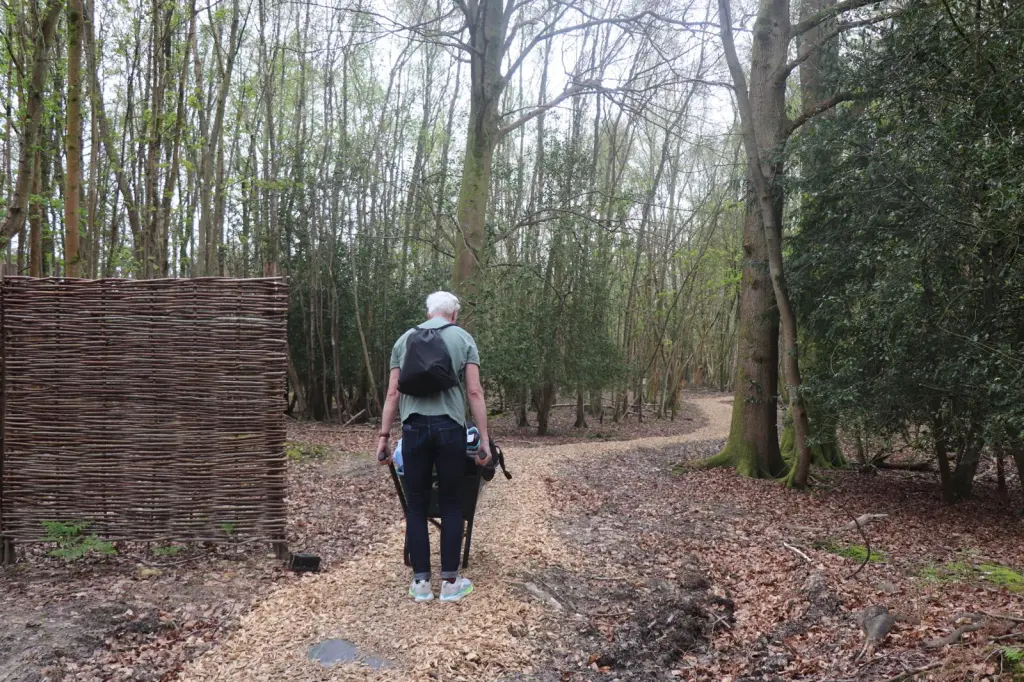
The next, you’re turning off onto a narrow track, trees closing in, signal bars quietly disappearing. And then – nothing. No pings. No vibrations. No digital hum in the background.
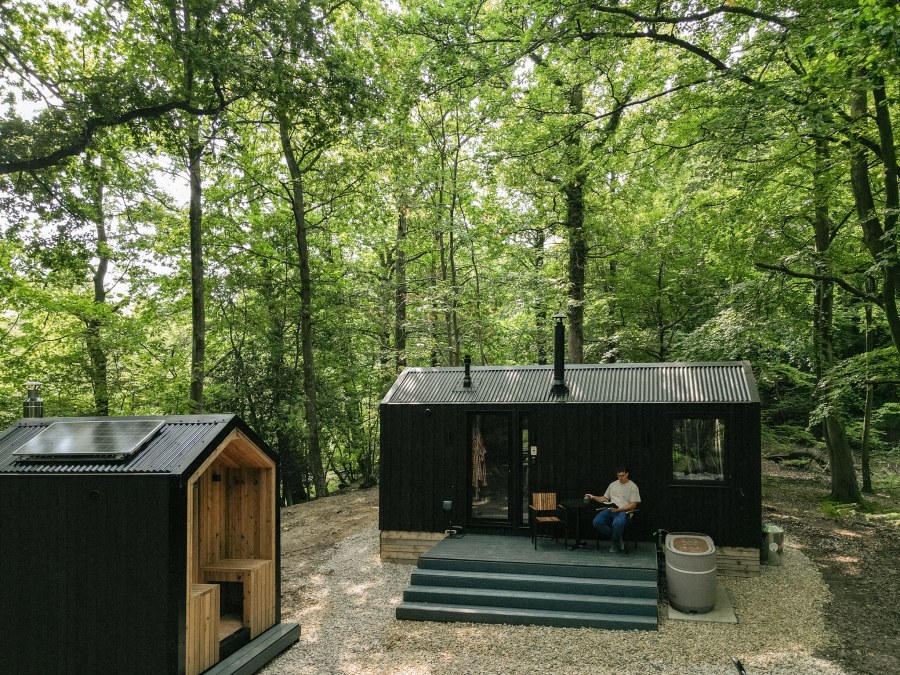
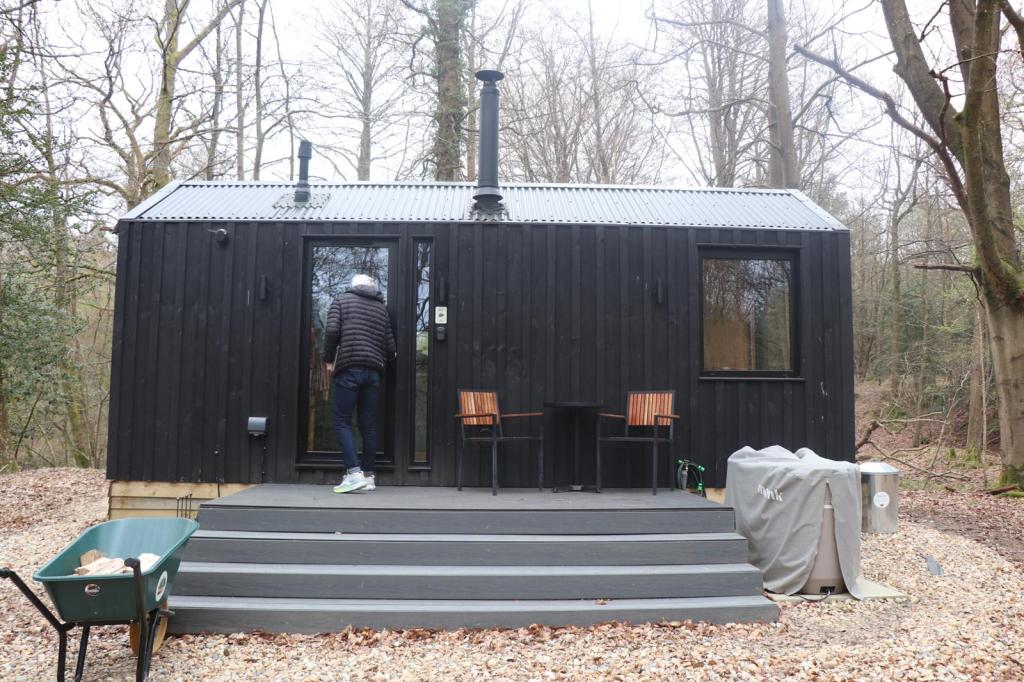
Helix isn’t just secluded; it feels deliberately hidden. Nestled within dense woodland, the cabin emerges subtly from its surroundings, like it’s been grown there rather than built.
Timber, glass, and natural textures dominate. It’s minimal, but not in a stark or clinical way – more like everything unnecessary has simply been stripped away. It even has a compostable toilet but more of that later.
You hand over your phone early on. Well, you put it in a lockbox. That moment is surprisingly loaded. There’s a flicker of hesitation, a brief internal negotiation – what if someone needs me? what if I need it? – before you let go. And just like that, you’re offline.
I should mention that you are equipped with an old-fashioned Nokia ‘brick’ phone (calls only). I had given this number to my daughter and sister with strict instructions to ring only in an emergency. And no, the cat miaowing is not an emergency.
The first few hours: withdrawal symptoms
It’s impossible not to notice how often your hand instinctively reaches for your pocket. The phantom phone-checking habit is real – and relentless.
You sit down, and there’s a pause. Normally, that pause would be filled instantly: scrolling, tapping, checking. Instead, there’s…nothing. At first, that nothing feels uncomfortable.
Time stretches. Conversations slow down. Even your thoughts seem louder, less filtered. Without the constant drip-feed of stimulation, your brain doesn’t quite know where to land.
But then something shifts. Not dramatically. Not all at once. Just a subtle recalibration. You start to notice things.
The setting: your own woodland palace
The phrase “woodland palace” might sound like a stretch – until you’re there.
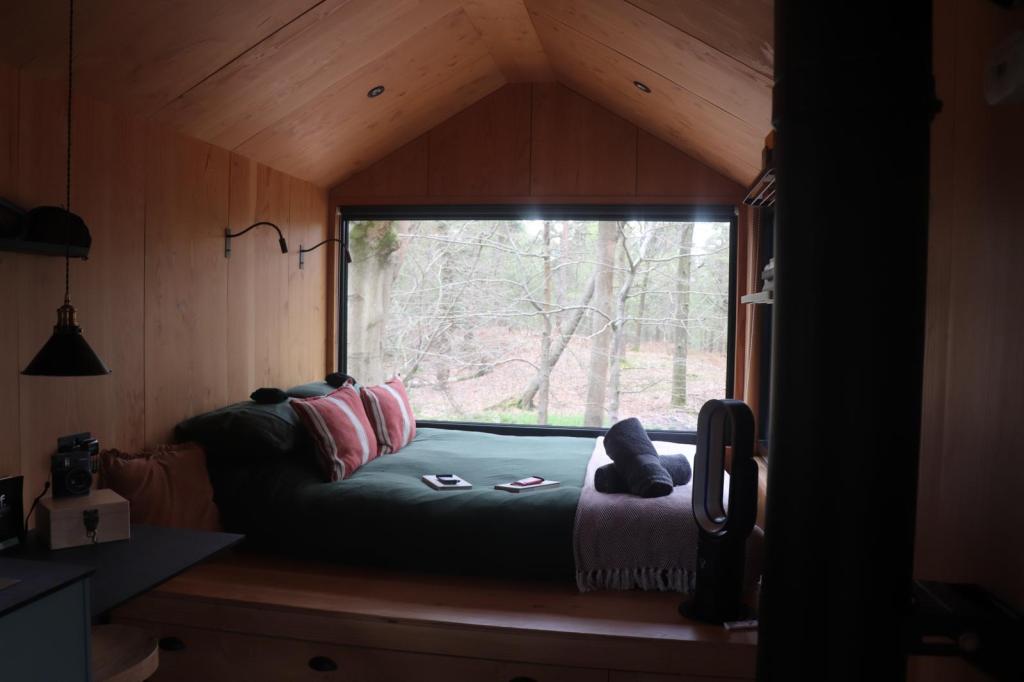
Your cabin is simple but perfectly considered. Large windows frame the forest like a living painting, with 180-degree views straight into the trees.
The bed is perfectly positioned to just lie and look. Light filters through the trees in shifting patterns, marking the passage of time in a way no digital clock ever could.
If I was being twee (and I am prone to this), I could tell you that I’d christened the cabin our own private ‘love shack’ in the woods. But I won’t.
Step outside, and you’re surrounded by nature in its purest form. No traffic noise. No distant sirens. Just wind moving through branches, birds calling, the crunch of leaves underfoot. It’s astonishing how quickly the outside world fades.
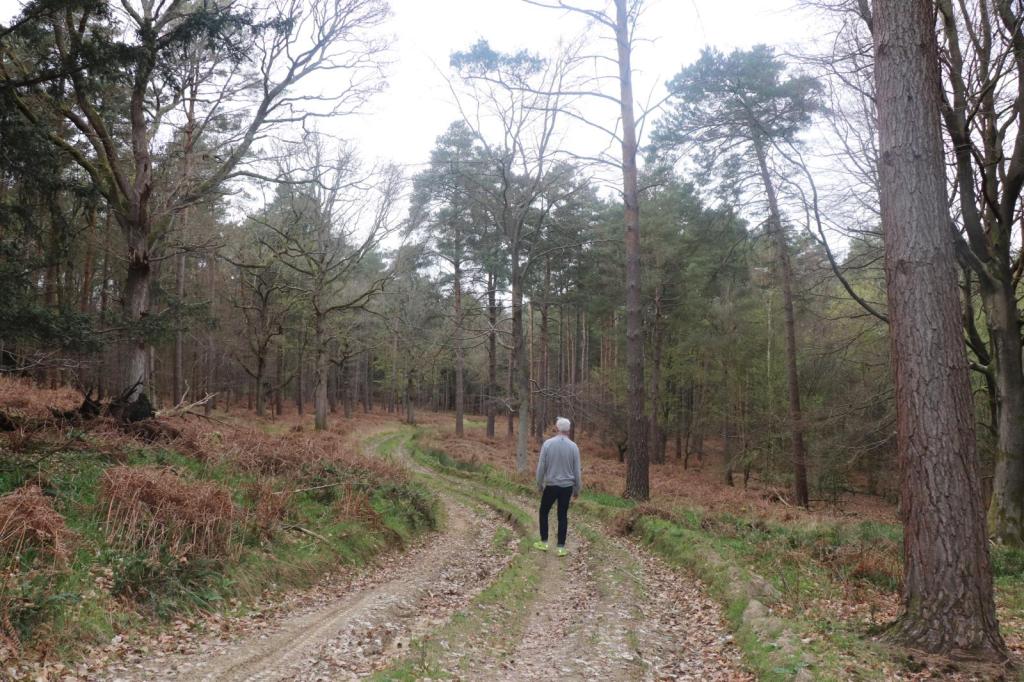
You go for a walk – not as exercise, not to hit a step count, but just to walk. No headphones. No podcasts. No distractions. Just you, your loved one and the dual rhythm of your footsteps. We saw more wildlife in that first walk than I would see in a month in the town.
Deer, ducks, birds, squirrels – it feels almost unfamiliar at first. Then deeply, unexpectedly satisfying.
The rituals: heat, cold and stillness
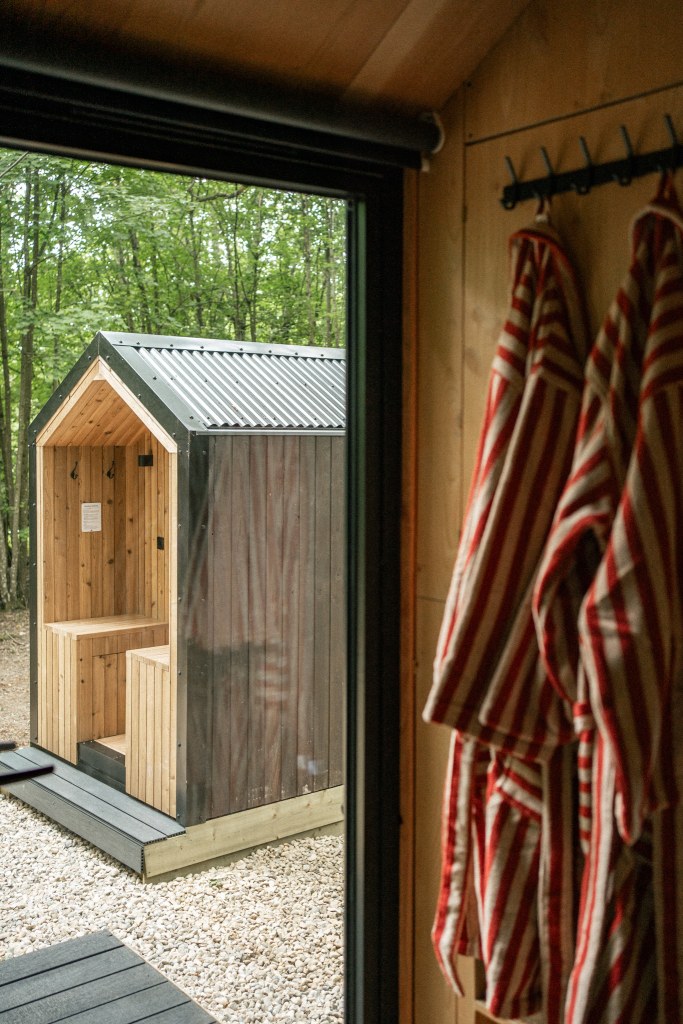
One of the standout features of the Helix experience is the wood-fired sauna and plunge pool – a combination that feels both primal and restorative.
Lighting the sauna becomes its own ritual. There’s something grounding about it: gathering wood, building the fire, waiting for the heat to build. It demands patience, presence.
The visitor book is replete with comments about the length of time to achieve optimum sauna temperature – around 70 degrees centigrade. We sat in the sauna, stoking the fire and just enjoying being together, while the temperature slowly built – and the beads of sweat went from droplets to a river (in my case, certainly!).
The heat was enveloping. Not the dry, mechanical warmth of a gym sauna, but something more alive. You could feel it in your skin, your breath, your heart-rate. We were connected in this moment like never before – and we loved it.
Then comes the plunge. Cold water shocks the system in a way that no caffeine ever could. It’s immediate, bracing, and oddly addictive. OK, so the screams might have been heard by our distant neighbours but we didn’t care – you surface sharper, more alert, more awake than you’ve felt in a long time.
This cycle – heat, cold, rest – becomes a rhythm. A reset button for both body and mind.
The unexpected luxury of time in a digital detox
Without a phone, time behaves differently. There’s no constant checking of the hour, no micro-scheduling of your day. You eat when you’re hungry. You rest when you’re tired. You move when it feels right and you nap, well, just because you can.
You read, properly read – without the urge to switch tabs after a few minutes. You sit with a cup of coffee and simply drink it, rather than pairing it with a scroll.
You talk. Properly talk. We never struggle for conversation but here our talk was about everything – our lives, our love, our future, our families, our work (but in a positive way!).
It’s a reminder of something simple but powerful: presence is rare, and therefore valuable.
The lowlights (or adjustments)
Of course, it’s not all idyllic. The compostable toilet is…an experience. Perfectly functional, entirely in keeping with the eco-conscious ethos, but still a small adjustment if you’re used to modern plumbing conveniences. And a sizeable adjustment if you want to maintain a modicum of mystery in your relationship.
And then there’s the music. We joked about only having Lana Del Rey and Fleetwood Mac on cassette – and it wasn’t entirely off the mark in spirit. The point isn’t endless choice – it’s intentional limitation. You don’t scroll through thousands of songs; you listen to what’s there. And in doing so, you listen differently.
What might feel like constraints at first gradually reveal themselves as freedoms.
Digital detox day two: the shift
By the second day, something has undeniably changed. The urge to check your phone has quietened. Your thoughts feel less scattered. There’s a clarity that’s hard to articulate but easy to recognise.
You wake up without an alarm, guided instead by natural light. Your first instinct isn’t to reach for a device – it’s to look outside, to step into the day.
Even your body feels different. Less tense. More in tune with itself.
It’s not that problems disappear or life becomes suddenly perfect. It’s that the constant background noise – the digital static – is gone. And in its absence, everything else becomes clearer.
The return: reconnection (with perspective)
Reclaiming your phone back at the end of the 48 hours is another loaded moment. It powers on. Notifications flood in. Messages, emails, updates – evidence of a world that never stopped moving.
But something interesting happens. You don’t feel the same urgency to dive back in.
The detox doesn’t magically cure your dependence on technology. You’ll still use your phone, still rely on it, still get pulled into its orbit. But the relationship has shifted, even slightly.
You’ve experienced an alternative. You’ve proven – to yourself, more than anything – that you can step away.
The takeaway: why it matters
A 48-hour digital detox at Helix isn’t about rejecting modern life. It’s about recalibrating your place within it.
We live in a world that rewards constant connectivity. Being reachable, responsive, always “on” is often seen as a virtue. But there’s a cost – and it’s one we rarely stop to measure.
What Helix offers is a rare opportunity to pause. To step out of the noise and into something quieter, slower, more deliberate.
To remember what it feels like to be fully present not just occasionally, but consistently.
And perhaps most importantly, to realise that the world doesn’t fall apart when you disconnect. Sometimes, it comes back into focus. And that focus can shift your mind to the things that really matter – health, love and happiness.
And in a way, that’s the most surprising part of all. You don’t need to escape to the other side of the world to reset. Sometimes, you just need to switch off.