

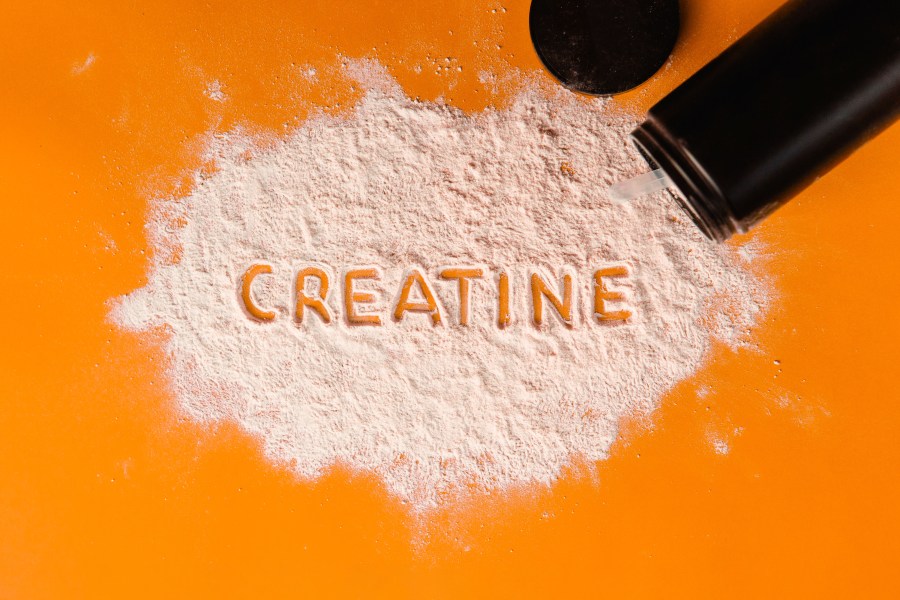
The most researched supplement in sports nutrition has spent 30 years being sold as a gym tool. For those 50 and above, however, it might be more useful off the weights floor than on it
Words: Ed Cooper Pics: Shutterstock
Creatine has earned its place in the supplement canon the hard way — through over 1,000 peer-reviewed studies, a safety record the International Society of Sports Nutrition describes as having “no compelling evidence of detrimental effects,” and a price per gram that makes every other performance supplement look embarrassing. At roughly £0.05 to £0.10 per daily dose, it’s the rare case where the cheapest option is also the most evidence-backed.
That said, the fitness industry has always pitched creatine at gym-goers and high performance athletes and fairly — it does demonstrably build strength and power output — but the biology of your fifties creates a specific and compelling case for creatine that has nothing to do with lifting heavier.
After 50, testosterone drops by roughly 1 to 2 per cent per year, dragging muscle mass with it and reducing the body’s primary creatine reservoir in the process. Endogenous creatine synthesis — the term for your body naturally manufacturing its own creatine — slows and the brain, which runs on the same phosphocreatine energy system as your muscles, starts operating with less reserve.
It’s proof that while creatine levels decline measurably with age, the research on what happens when you top them back up — specifically in your fifties and beyond — makes for worthwhile reading.
Memory upgrade
The most important thing the research has established about creatine and cognition is also the least reported: the older you are, the more it works.
A 2023 meta-analysis in Nutrition Reviews found that creatine supplementation improved memory performance overall — but the effect in adults aged 66 to 76 was dramatically larger than in younger participants. Forward number recall, long-term memory, spatial recall — improvements showed up across the board in older adults.
The reason this was baseline depletion. A solid omnivorous diet provides around 1 to 2 grams of creatine daily — sufficient when your body is young and efficient, less so when both start sliding.
Fighting mental fatigue
The particular kind of tiredness that descends after a long day of thinking — where processing speed drops, patience frays and every task requires more effort than it should — has a metabolic explanation.
Sustained cognitive demand burns through adenosine triphosphate (ATP), the brain’s primary energy currency, faster than it can be replenished. Here, creatine’s job is to accelerate that replenishment.
A randomised double-blinded crossover trial in Scientific Reports found that a single high dose of creatine during 21 hours without sleep partially reversed the brain’s metabolic deterioration — phosphocreatine levels held, cognitive performance and processing speed improved versus placebo. A 2026 study replicated the finding at a more moderate dose, with meaningful protection across logical reasoning, numerical tasks and language processing speed.
Additionally, the cognitive debt that accumulates over weeks and months of a busy life can start to feel a little more manageable with regular creatine dosing. While not a stimulant, after several weeks of consistent creatine supplementation, the back half of your day doesn’t feel quite as written off as it used to.
Mood changes
Studies using magnetic resonance spectroscopy have found measurably lower phosphocreatine levels in the brains of people with depression — suggesting the mood circuits aren’t just struggling chemically but energetically.
An observational study of over 22,000 US adults found a significant inverse relationship between dietary creatine intake and depression risk, while a 2025 meta-analysis in the British Journal of Nutrition found creatine supplementation was associated with meaningfully lower depression scores versus placebo, though it rated the evidence as low certainty given the small samples involved.
A caveat: creatine is not an antidepressant; but for men carrying the kind of low-grade mood drag that doesn’t qualify as clinical depression but still makes life feel heavier than it should, the case for creatine doing something useful is rather compelling.
How to take it
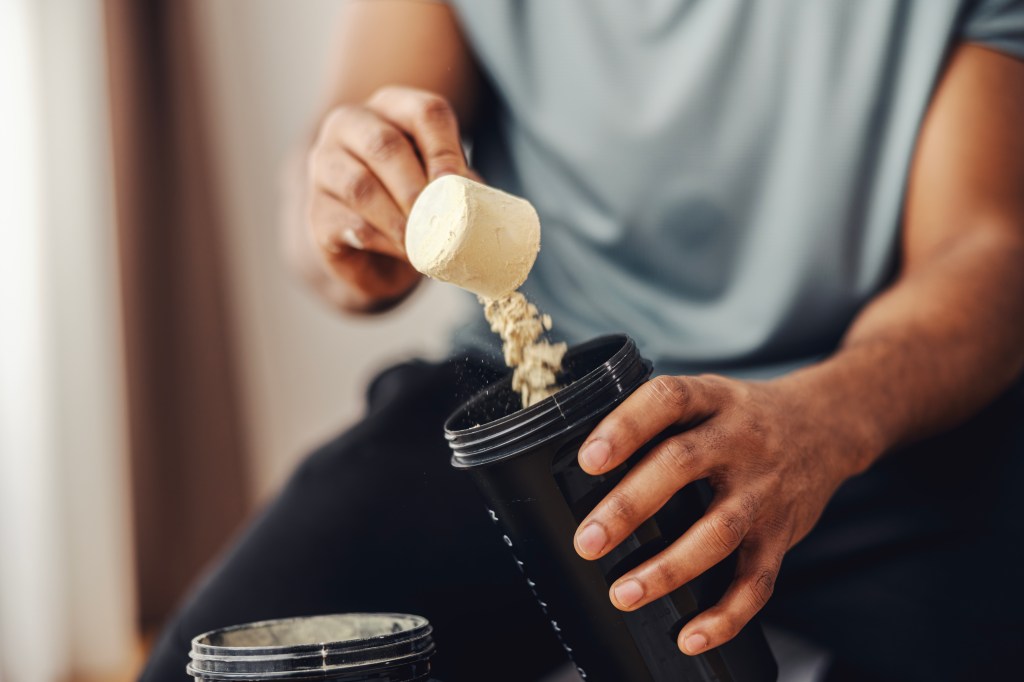
Taking 3g-5g of creatine monohydrate daily is the dose the research supports. Timing doesn’t matter — so aim for consistency instead. Avoid anything that isn’t plain monohydrate; no alternative form has meaningfully outperformed it in research and look for Creapure® – the gold standard for creatine with 99.9% purity — on the label as a quality marker.
Lastly, give it around six weeks before drawing conclusions. The brain saturates slowly and variably —if the benefits show up. For example, the quality of a Tuesday afternoon when your inbox is overflowing and, somehow, you haven’t completely fallen apart three-and-a-half days from the weekend.