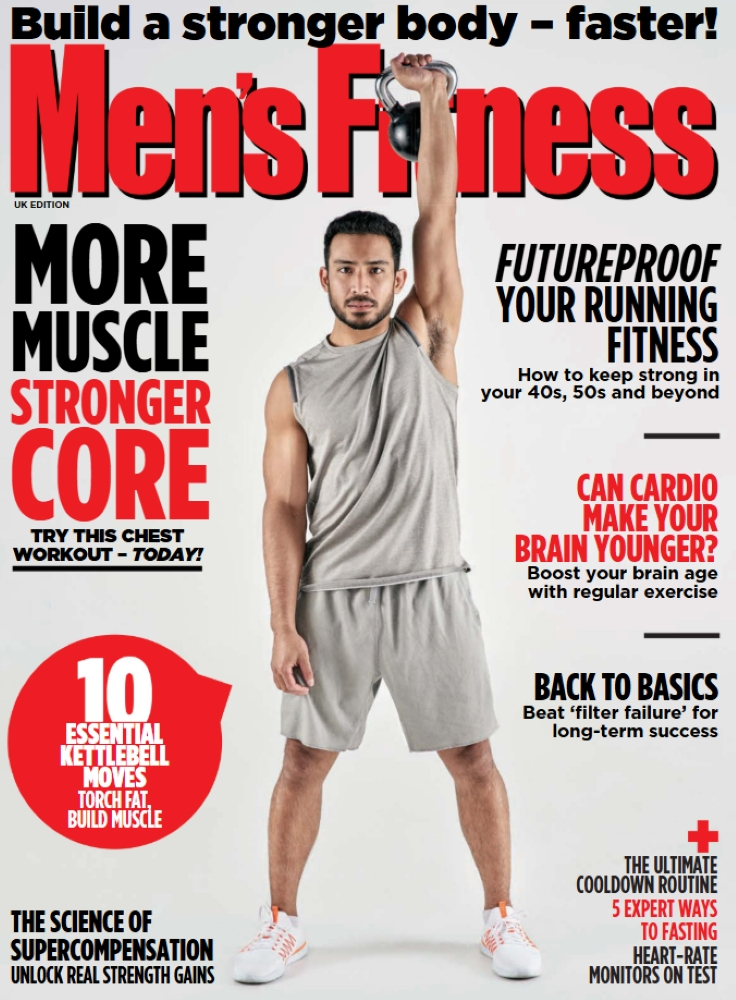


Forget superhero muscle. Christian Pulisic has built a body for speed, power and endurance – and it could be the most useful physique in sport
PICS: Getty Images
Spend enough time on social media and you’d be forgiven for thinking every aspirational male physique now falls into one of two categories: action hero or superhero.
The first is all broad shoulders and movie-star confidence. The second is built around eye-popping transformations and shirtless magazine covers. Then there’s Christian Pulisic.
At first glance, the Christian Pulisic physique doesn’t seem particularly extraordinary. He’s not towering over opponents. He isn’t carrying the kind of muscle mass that dominates Instagram feeds. Yet put a football at his feet and suddenly you understand why coaches, sports scientists and fitness experts are fascinated by the way he’s built.
Because every inch of his physique has a purpose.
The American star has spent his career beating defenders with acceleration, balance and explosive movement. His body isn’t designed to look impressive standing still. It’s designed to perform at full speed.
And in an era when more men are becoming interested in athleticism than pure aesthetics, that makes Pulisic’s physique more relevant than ever.
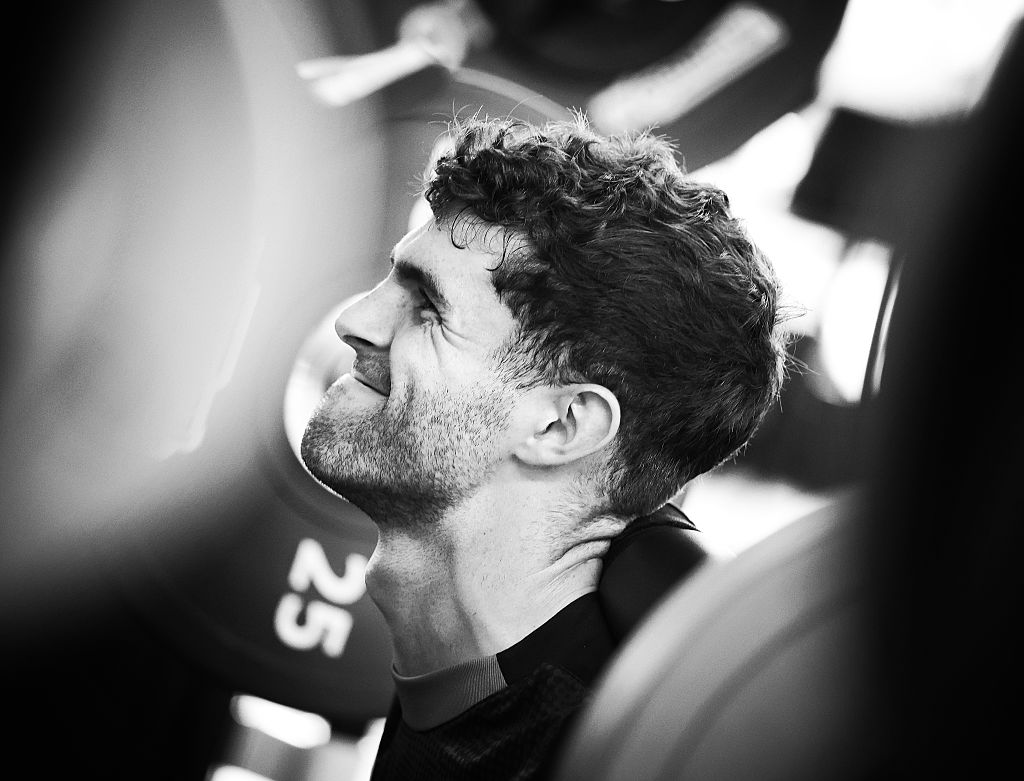
Built for movement
Watch Pulisic for five minutes and a pattern quickly emerges. He rarely overpowers opponents physically. Instead, he glides past them.
One sharp change of direction. One burst of acceleration. One perfectly timed run. Those moments look effortless, but they’re the product of years of highly specific training.
Unlike a bodybuilder, whose goal is to maximise muscle growth, Pulisic has spent most of his professional life trying to become more efficient. Faster. More explosive. More resilient.
That means every pound of muscle has to earn its place. Too much size can slow a player down. Too little strength leaves them vulnerable to injury and physical battles.
Elite footballers exist in a carefully managed middle ground, and Pulisic may be one of the best examples of that balance.
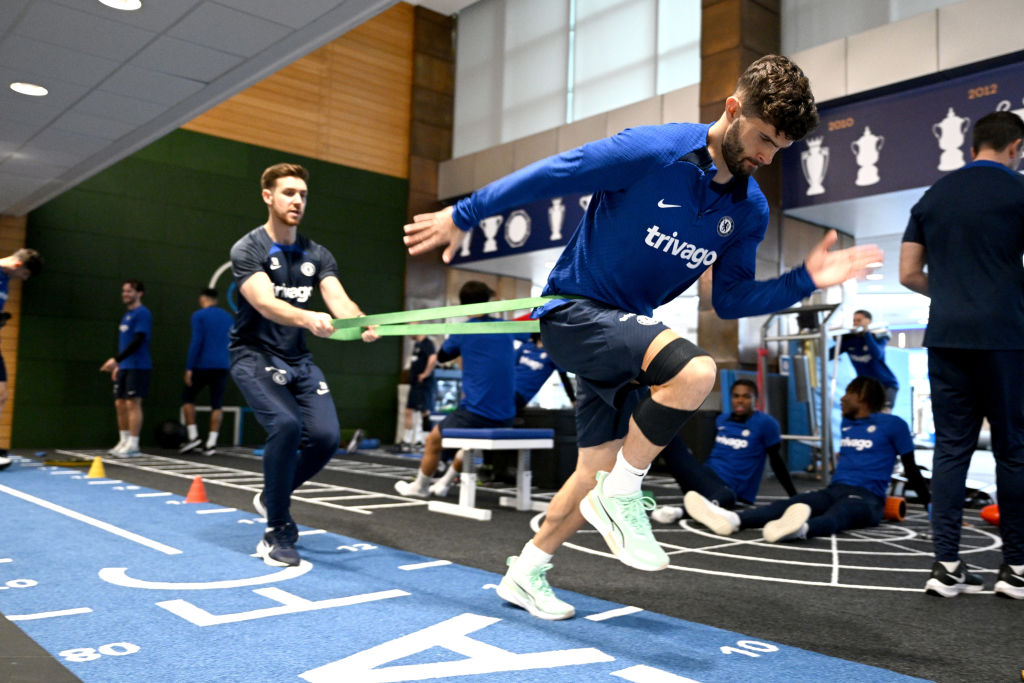
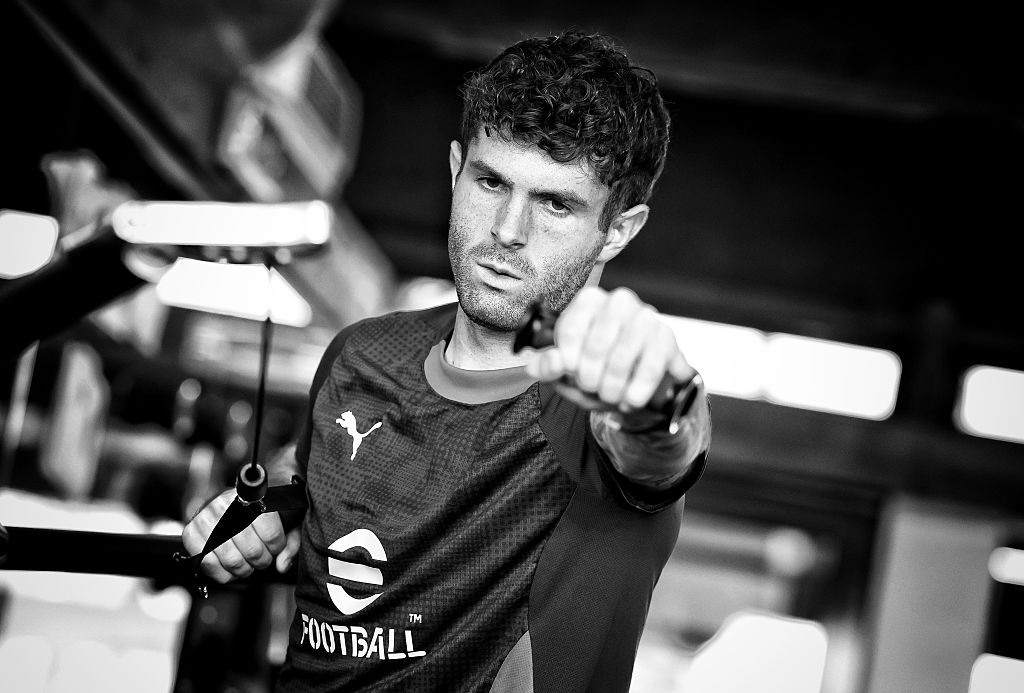
When discussing his training in interviews, he has spoken about enjoying explosive exercises such as box jumps and resistance-band work. That preference tells you a lot about the way he approaches fitness. The focus isn’t on how much weight he can move. It’s on how effectively he can move his own body.
Why footballers train differently
One of the biggest misconceptions in fitness is that professional footballers simply run a lot. The reality is far more complicated.
Modern football demands repeated high-intensity efforts. Players must sprint, stop, twist, jump, tackle and accelerate again, often hundreds of times during a match. The physical demands are closer to a series of short athletic events than a traditional endurance sport.
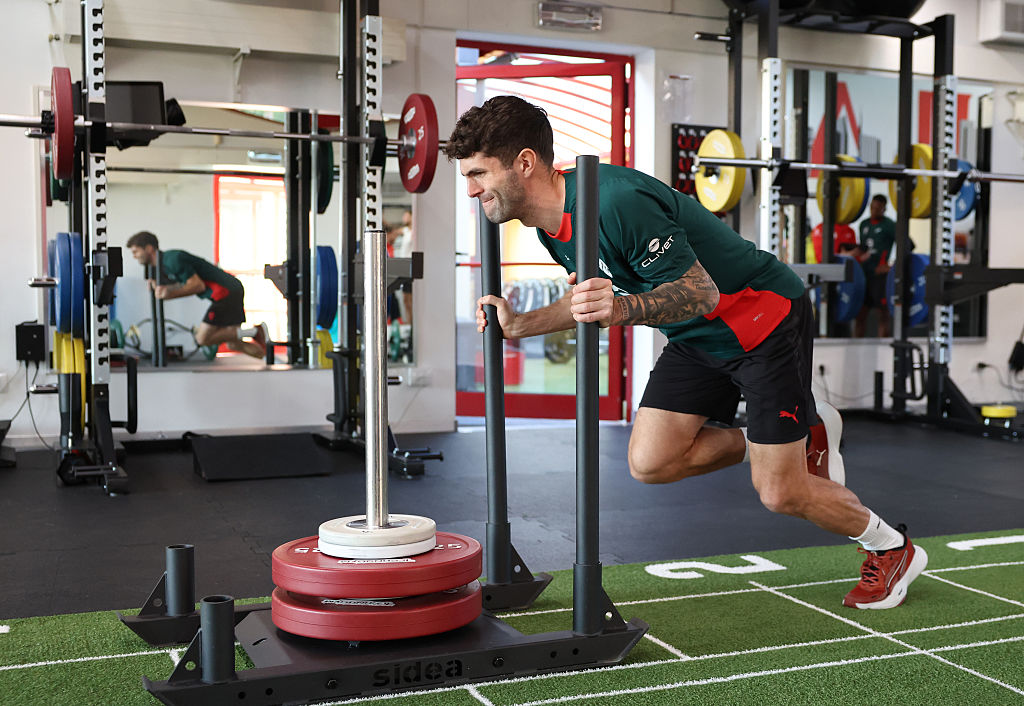
As a result, training has evolved. Players like Pulisic spend significant time developing lower-body power, core strength and movement quality. Gym sessions are designed to support what happens on the pitch, not distract from it.
That’s why you’ll rarely see footballers following traditional bodybuilding splits. There is no obsession with chest day or arm day. Instead, the focus is on movement patterns, athletic qualities and injury prevention.
It’s not the most glamorous approach to training. But it works.
Learning the hard way
Perhaps the most interesting chapter of Pulisic’s fitness journey came through injury.
Early in his career, injuries interrupted his momentum on multiple occasions. Like many elite athletes, he discovered that training harder wasn’t always the answer.
Recovery became just as important as effort. Over time, he appears to have developed a much more sophisticated approach to managing his body. Massage work, mobility training, recovery sessions and carefully planned rest all became part of the equation.
That philosophy was visible again last year when he chose recovery over additional international matches after a long club season. It was a decision that sparked debate among fans but reflected something many elite athletes now understand: longevity is a skill.
The ability to stay available is often more valuable than the ability to push harder.
The nutrition principle most men miss
When people hear the words “elite athlete diet”, they often imagine impossible levels of discipline.
The reality is usually much simpler.
Pulisic’s nutritional approach appears to revolve around the same fundamentals followed by countless elite performers: quality protein, whole-food carbohydrates, fruit, vegetables and consistency.
Nothing revolutionary. No miracle supplements. No secret hacks. Just the same good decisions repeated day after day.
It’s not particularly exciting. But neither is brushing your teeth. And like brushing your teeth, the results compound over time.
The Men’s Fitness Pulisic workout
If you’re inspired by Pulisic’s athleticism, the goal shouldn’t be to train like a bodybuilder.
Train like an athlete.
A1. Box Jumps
4 sets x 6 reps
A2. Goblet Squats
4 sets x 10 reps
Rest 60 seconds.
B1. Walking Lunges
3 sets x 12 reps per leg
B2. Resistance-Band Sprints
3 sets x 20 metres
Rest 90 seconds.
C1. Pull-Ups
3 sets x max reps
C2. Hanging Knee Raises
3 sets x 15 reps
Rest 60 seconds.
Conditioning Finisher
Complete 5 rounds:
- 20-second sprint
- 10 squat jumps
- 30-second shuttle run
Rest 60 seconds.
Focus on maintaining speed and quality throughout.
The bigger lesson
The reason Christian Pulisic’s physique is so compelling isn’t because it’s the biggest or the most dramatic.
It’s because it represents a different idea of fitness. For years, many men have trained primarily to look athletic. Pulisic trains to be athletic. The distinction matters. His physique is the by-product of performance, not the other way around.
And perhaps that’s why it feels so relevant in 2026. As fitness culture shifts away from extremes and towards longevity, functionality and real-world capability, bodies like Pulisic’s are becoming increasingly aspirational.
Not because they’re built for the camera. But because they’re built for life.