

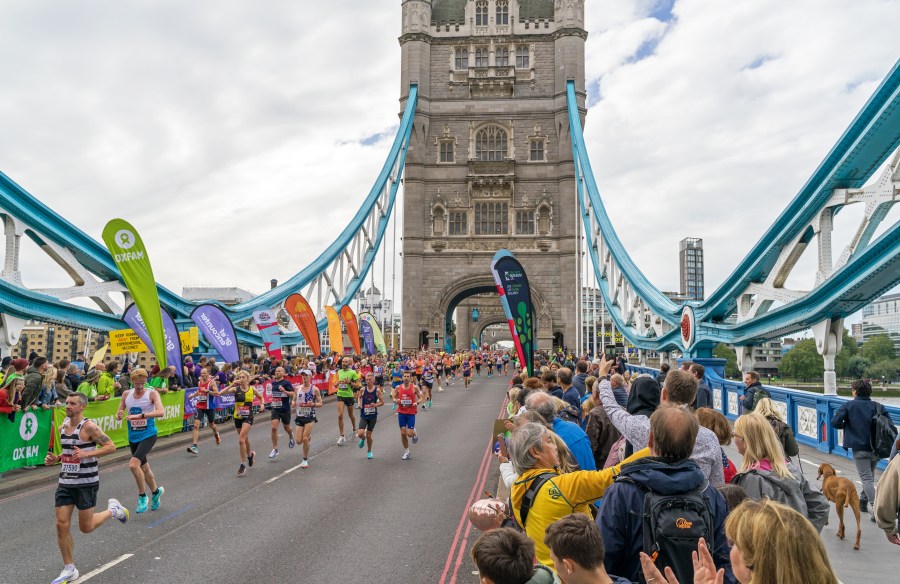
From sleepless nights to ‘maranoia’, pre-race stress is real – but with the right mental approach, you can arrive at the start line composed, ready to perform and beat marathon anxiety
Running the TCS London Marathon is as much a mental challenge as it is a physical one. In the final week before race day, training is largely done – but the mind rarely gets the memo.
Doubts creep in, sleep becomes patchy, and a strange phenomenon known among runners as “maranoia” can take hold: the irrational fear that something – anything – will derail months of preparation.
For first-time marathoners especially, this period can feel overwhelming. You might question your fitness, obsess over minor aches, or mentally rehearse worst-case scenarios. It’s normal – but it’s also manageable. You can beat marathon anxiety
According to hypnotherapist Vicky Carlier, the key is not to eliminate nerves entirely, but to channel them. “Stress before a big event is simply energy,” she says. “With the right techniques, you can redirect that energy into focus, confidence, and calm.”
Here’s how to do exactly that, with a simple, structured plan for the week leading up to race day.
Monday: Acknowledge the nerves
Start by accepting that anxiety is part of the process. Trying to suppress it often makes it louder.
“Your subconscious mind doesn’t respond well to resistance,” says Vicky. “Instead, acknowledge the feeling and gently reframe it as excitement.”
Spend five minutes in quiet reflection, noticing your thoughts without judgement. This is the foundation for the rest of the week.
Tuesday: Visualise success
Visualisation is a cornerstone of hypnotherapy. Take 10 minutes to mentally rehearse race day from start to finish.
Picture yourself calm at the start line, steady in the middle miles, and strong at the finish.
“The brain doesn’t distinguish much between vividly imagined experiences and real ones,” Vicky explains. “You’re effectively priming your nervous system for success.”
Develop a mantra for yourself. Click here for Vicky’s suggested one – but you can create your own.
Wednesday: Use breath to reset
By midweek, nerves can spike again. Controlled breathing is one of the fastest ways to calm your system.
Try this: inhale for four seconds, hold for four, exhale for six. Repeat for five minutes.
“Lengthening the exhale tells your body it’s safe,” says Vicky. “It shifts you out of stress mode and into recovery.”
Thursday: introduce a self-hypnosis cue
Choose a simple word or phrase—like “steady” or “calm”—and pair it with a relaxed state.
Sit quietly, breathe deeply, and repeat the word as you relax your body.
“You’re creating an anchor,” Vicky says. “By race day, that word alone can trigger a sense of calm and control.”
Friday: Limit negative inputs
This is when “maranoia” often peaks. Resist the urge to scroll forums or compare your preparation to others.
“What you feed your mind matters,” Vicky notes. “Protect your mental space like you would your physical recovery.”
Instead, focus on positive reinforcement – review your training log or recall your best runs.
Saturday: rehearse calm confidence
The day before the race is about quieting the mind, not hyping it up.
Spend 10 minutes in a relaxed state, repeating affirmations such as: I am ready. I am capable. I trust my training.
“Confidence isn’t something you suddenly feel,” says Vicky. “It’s something you practise.”
Keep everything else simple – logistics, nutrition, and rest.
Sunday (Race Day): stay present
On race morning, nerves will be there – but they don’t have to control you.
Use your breathing, your cue word marathon mantra, and your visualisation.
“At the start line, bring your focus back to the present moment,” Vicky advises. “Not the miles ahead, not the crowd—just your breath and your body.”
Remember: you’ve already done the hard work.
The final week before a marathon can feel like an emotional rollercoaster – but it’s also an opportunity. By using simple hypnotherapy-based techniques, you can transform anxiety into clarity and step onto the start line not just physically prepared, but mentally composed.
Because when the gun goes off, it’s not just your legs that carry you forward – it’s your mind.