

Your body isn’t built for the chair-bound life. These 20 simple ways will help you move more, boost your metabolism, and reduce the health risks of sitting too long – at work and at home
Modern life has engineered movement out of our daily routine. We sit to work, sit to travel, and sit to relax—and the cumulative effect is taking a toll on our health in ways that aren’t always obvious.
Even if you hit recommended exercise targets – around 75 minutes of vigorous activity or 150 minutes of moderate exercise per week – long, uninterrupted periods of sitting can still negatively impact your body. This is because inactivity affects key systems that exercise alone doesn’t fully counteract.
One of the most immediate issues is circulation. Movement helps pump blood back toward the heart through muscular contractions, particularly in the legs. When you sit for extended periods, this “muscle pump” becomes inactive, allowing blood to pool in the lower limbs. Over time, this can increase the risk of conditions such as deep vein thrombosis (DVT).
Your metabolism also takes a hit. The largest muscles in your body – your glutes, hamstrings, and quadriceps – are essentially switched off when you sit. This reduces overall energy expenditure and makes it easier for excess calories to be stored as fat, particularly around the waist.
There’s also a deeper, cellular-level consequence. When muscles are inactive, the electrical activity within them drops significantly. This affects enzymes responsible for breaking down fats in the bloodstream, leading to higher levels of circulating blood lipids – a known risk factor for cardiovascular disease.
The takeaway is simple: your body thrives on regular movement, not just structured workouts. The good news? You don’t need drastic changes. Small, frequent actions throughout your day can dramatically improve how your body functions.
Here’s how to start.
AT WORK
1. Walk instead of emailing a colleague
- Why it’s beneficial: Breaks sedentary time, improves circulation, and boosts mental clarity through brief movement.
- Muscles used: Calves, hamstrings, quadriceps, glutes.
- Alternatives: Take the stairs en route or do a quick lap of the office before returning.
2. Regular trips to the water fountain
- Why: Encourages hydration and forces you to stand and move regularly.
- Muscles: Lower body stabilisers, core (light engagement while walking).
- Alternatives: Set a timer to stand and stretch if water isn’t nearby.
3. Use the furthest toilet
- Why: Adds extra steps effortlessly, increasing daily energy expenditure.
- Muscles: Glutes, quads, calves.
- Alternatives: Add a short detour loop on the way back.
4. Stand while on phone calls
- Why: Improves posture, increases calorie burn vs sitting.
- Muscles: Core stabilisers, lower back, legs (light activation).
- Alternatives: Pace while talking.

5. Stair bursts before coffee
- Why: Short bursts of intensity elevate heart rate and metabolism.
- Muscles: Quads, glutes, calves.
- Alternatives: Bodyweight squats or step-ups.
6. Stretch during conversations
- Why: Reduces stiffness, improves mobility, relieves tension.
- Muscles: Depends on stretch (hamstrings, chest, shoulders common).
- Alternatives: Desk mobility routine every hour.
7. Incline press-ups on the photocopier
- Why: Adds upper-body strength work into your day.
- Muscles: Chest, shoulders, triceps, core.
- Alternatives: Wall push-ups or desk push-ups.
8. Swap chair for a fitness ball
- Why: Improves posture and core engagement.
- Muscles: Core (abdominals, obliques, lower back).
- Alternatives: Use a standing desk intermittently.
9. Walking meetings
- Why: Boosts creativity, reduces sitting time.
- Muscles: Lower body, core.
- Alternatives: Stand-up meetings.
10. Seated stretches at your desk
- Why: Maintains flexibility and reduces muscular tightness.
- Muscles: Neck, shoulders, hamstrings, lower back.
- Alternatives: Stand and perform dynamic stretches.
11. Adjustable standing desk
- Why: Alternating positions reduces strain and improves circulation.
- Muscles: Core, legs (isometric engagement).
- Alternatives: DIY standing setup with a raised platform.
AT HOME
12. Stand during TV ad breaks
- Why: Breaks prolonged inactivity and improves circulation.
- Muscles: Postural muscles, legs.
- Alternatives: March on the spot.
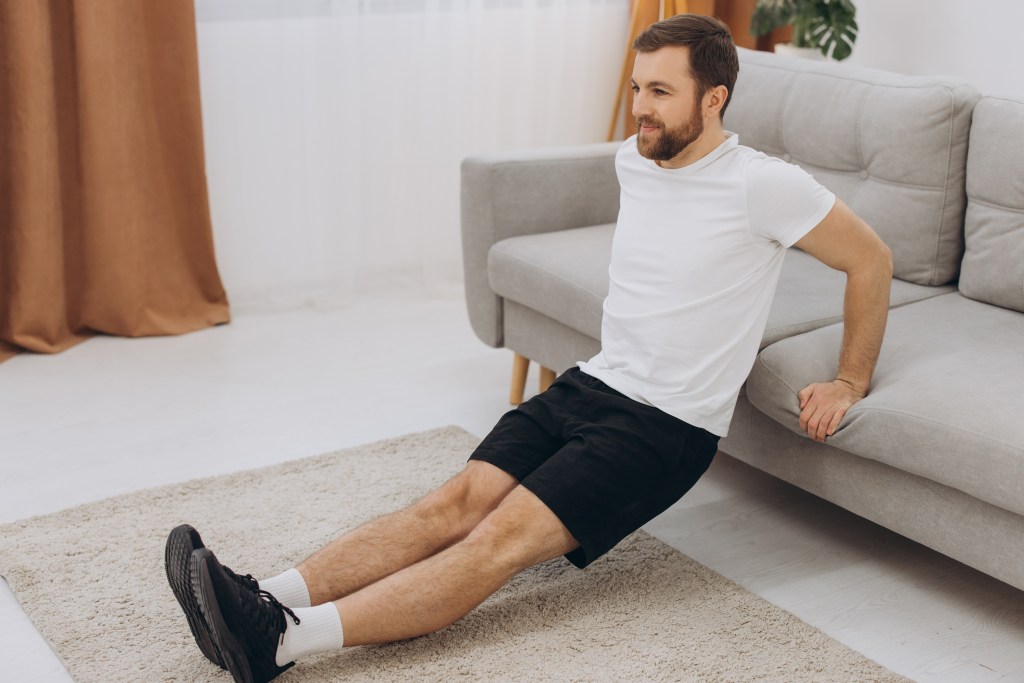
13. Triceps dips off the couch
- Why: Builds upper-body strength with minimal setup.
- Muscles: Triceps, shoulders, chest.
- Alternatives: Bench dips or chair dips.
14. Balance on one leg during theme tunes
- Why: Improves balance, coordination, and ankle stability.
- Muscles: Calves, core, stabilisers.
- Alternatives: Single-leg Romanian deadlifts (bodyweight).
15. Kettlebell swings while cooking
- Why: Full-body movement that boosts cardiovascular fitness.
- Muscles: Glutes, hamstrings, core, shoulders.
- Alternatives: Jump squats or hip thrusts.
16. Wash your car by hand
- Why: Functional movement + calorie burn.
- Muscles: Arms, shoulders, core, legs.
- Alternatives: Gardening or outdoor chores.
17. Walk the dog more often
- Why: Consistent low-intensity activity supports fat loss and heart health.
- Muscles: Lower body, core.
- Alternatives: Brisk solo walks or hikes.
18. Active play with kids
- Why: Combines fitness with fun and unpredictability.
- Muscles: Full body depending on activity.
- Alternatives: Sports drills or backyard circuits.
19. Gardening or DIY on weekends
- Why: Keeps you moving for extended periods with varied movement patterns.
- Muscles: Full body (especially back, legs, shoulders).
- Alternatives: Home workouts or long walks.
You don’t need to overhaul your life to undo the damage of sitting—you just need to interrupt it.
Movement isn’t just something you schedule for the gym. It’s something your body craves throughout the day. The more often you answer that call, the better you’ll feel, perform, and function.
If you want, I can tighten this further for magazine layout, add expert quotes, or make it more punchy/edgy depending on the publication style.